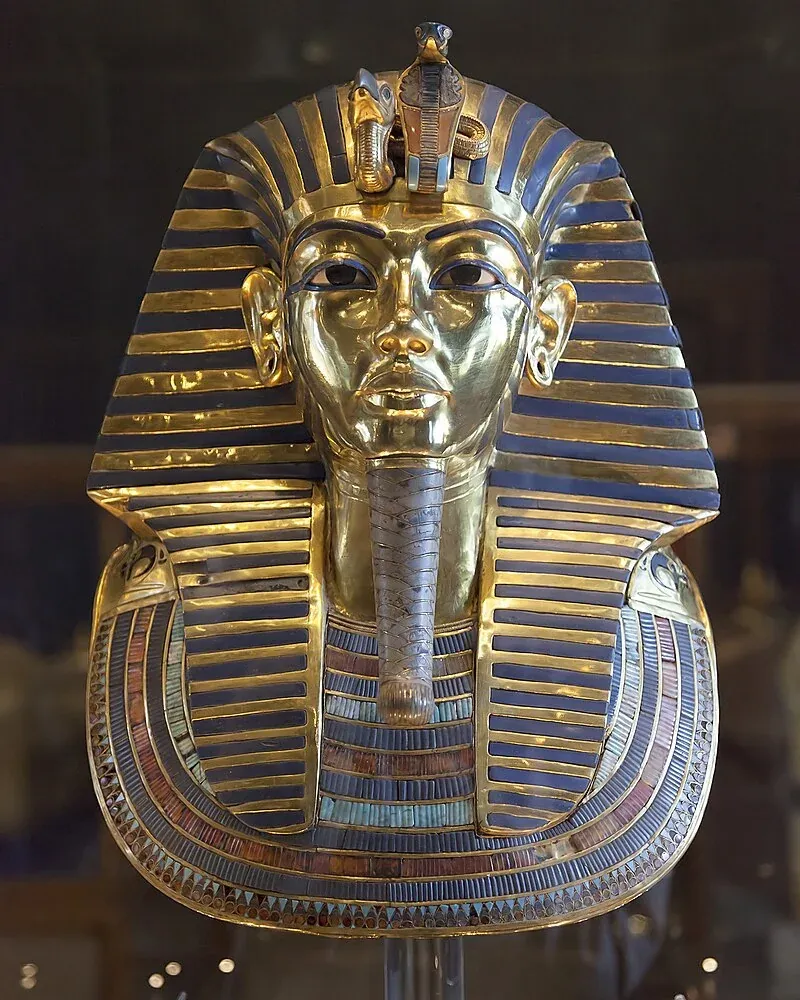
1. History & Underground Architecture
Inaugurated in May 1997 by the Egyptian Supreme Council of Antiquities under the leadership of Dr. Zahi Hawass, the Mummification Museum (متحف التحنيط بالأقصر) occupies a unique subterranean position along the East Bank Corniche of Luxor, directly overlooking the river Nile.
The architectural concept simulates the descent into an authentic royal New Kingdom burial chamber. Visitors walk down a sloping stone ramp into a dimly illuminated, temperature-controlled subterranean gallery lined with dark granite and muted lighting, recreating the solemn atmosphere of the ancient Per-Nefer (the "House of Rejuvenation" or embalming workshop).
Spanning over 2,000 square meters, the museum focuses with surgical precision on a single, vital discipline of Egyptian culture: the biological, chemical, religious, and anatomical science of preserving the human and animal body for eternity.
2. The Philosophy of Resurrection: Ba, Ka & Akh
To understand why the ancient Egyptians committed such immense technological resources to embalming, one must understand their metaphysical concept of the human soul. For the ancient Theban, human existence did not terminate at bodily death; rather, the spirit was composed of distinct spiritual components:
- The Khat (الجسد المادي): The physical corpse, which had to be protected from decay, putrefaction, and biological rot so that the spiritual components could recognize and re-inhabit it.
- The Ka (القرين / الروح الحيوية): The spiritual double and life-force that required physical sustenance, offerings, and an intact physical body to dwell within.
- The Ba (الشخصية / الروح الطائرة): The personal soul depicted as a human-headed bird, which flew freely by day between the earthly tomb and the cosmos, but had to return to the physical body every night.
- The Akh (النوراني / الروح المتجلية): The transfigured, immortal intellect that united with the stars in the circumpolar heavens alongside Osiris.
3. The 70-Day Embalming Protocol
The museum's primary narrative follows the precise 70-day timeline of mummification described by Greek historians Herodotus and Diodorus Siculus, and corroborated by modern radiological examinations of New Kingdom royal mummies:
- Days 1–3: The Purification (Ibu): The deceased is transported across the Nile to the West Bank and taken to the Ibu en-Wahset (the "Tent of Purification"). The body is washed with sacred Nile water infused with natron salt and purified with incense.
- Days 4–15: Evisceration (Wabet): In the embalming workshop, the brain is extracted through the nostrils using bronze cranial spatulas. A precise incision is made in the left flank using a ceremonial obsidian or flint blade to extract the liver, lungs, stomach, and intestines. The heart, considered the seat of intelligence, conscience, and memory, is left undisturbed inside the chest.
- Days 16–55: Desiccation (The 40-Day Natron Salt Bath): The body cavity is rinsed with palm wine and spices, then completely submerged in dry natron salt (a natural compound of sodium carbonate, sodium bicarbonate, sodium chloride, and sodium sulfate). Over 40 days, the natron extracts every drop of moisture and body fat without dissolving skin or connective tissues.
- Days 56–70: Anointing & Bandaging: The dehydrated, blackened corpse is washed with water from the sacred lake, stuffed with sawdust, linen packs, and aromatic herbs to restore natural anatomical form, and massaged with molten cedar resin, frankincense, myrrh, and beeswax. The body is then methodically wrapped in hundreds of meters of fine linen bandages, with protective gold amulets inserted between the layers, culminating in the "Opening of the Mouth" ceremony.
4. Embalmer's Toolkit & Chemical Agents
The museum displays the world's most complete collection of authentic, in-situ embalming instruments and chemical reagents discovered in Upper Egyptian workshops:
- Bronze Cranial Chisels & Spatulas: Slender bronze rods with curved hook ends used by the chief embalmer (acting as the priest of Anubis) to liquefy and extract the brain through the ethmoid bone of the nasal cavity without damaging the facial profile.
- Obsidian & Flint Evisceration Knives: Ritual ceremonial blades used to perform the flank incision. Tradition held that the embalmer who made the incision was ritually chased and pelted with stones for harming the royal body.
- Anatomical Spoons, Scissors & Needles: Bronze instruments used to extract visceral fat and sew the flank incision closed before sealing it with beeswax or an embossed gold amulet plaque bearing the Eye of Horus (Wedjat).
- Chemical Reagents on Display: Authentic crystalline natron salts from the salt lakes of Wadi al-Natrun, dried Nile mud, solid bitumen from the Dead Sea, mastic, frankincense resin lumps, juniper berries, and fragrant Lebanese cedarwood oil.
5. Canopic Jars & The Four Sons of Horus
Because the internal organs contained the highest moisture content and would accelerate putrefaction, they were removed, mummified separately, and placed inside Canopic Jars (الأواني الكانوبية):
Each jar was carved from alabaster, limestone, or painted wood, protected by one of the Four Sons of Horus, who were in turn protected by four cardinal guardian goddesses:
• Imsety (Human-Headed): Guardian of the Liver, protected by the goddess Isis (South).
• Hapi (Baboon-Headed): Guardian of the Lungs, protected by the goddess Nephthys (North).
• Duamutef (Jackal-Headed): Guardian of the Stomach, protected by the goddess Neith (East).
• Qebehsenuef (Falcon-Headed): Guardian of the Intestines, protected by the goddess Serket (West).
The museum displays complete canopic sets, including the pristine alabaster canopic jars of Padiamun, a High Priest of Amun from the 21st Dynasty, alongside carved wooden canopic shrine boxes decorated with winged protective deities.
6. Sacred Animal Mummification
One of the most fascinating galleries in the museum is dedicated to animal mummies. The ancient Egyptians did not worship animals as beasts, but revered them as earthly vessels and living avatars of specific cosmic deities:
- Crocodile Mummies (The God Sobek): Giant mummified Nile crocodiles discovered at Kom Ombo and Gebelein, with their scaly hides preserved under thick black resin and linen wrappings, honoring the primordial water god Sobek.
- Baboon Mummies (The God Thoth): Mummified hamadryas baboons seated with folded paws, representing Thoth, the patron of wisdom, mathematics, and hieroglyphic writing.
- Cat Mummies (The Goddess Bastet): Lovingly bandaged domestic cats adorned with elaborate geometric criss-cross linen patterns and painted feline face masks, offered to Bastet, goddess of domestic protection and fertility.
- Ram Mummies (The God Khnum): Sacred rams crowned with gilded horn headdresses from Elephantine Island, embodying Khnum, the creator god who shaped humanity upon his potter's wheel.
- Avian & Aquatic Mummies: Mummified sacred ibises (Thoth), falcons (Horus), and Nile perch (Lates niloticus) encased in gilded bronze and wooden reliquaries.
7. Human Mummies: Masaharta & Sarcophagi
While NMEC in Cairo displays the great pharaohs of Egypt, the Mummification Museum in Luxor showcases an exceptional, superbly preserved human mummy:
The human remains gallery also features:
- The Anthropoid Coffin of Padiamun: An outer wooden sarcophagus covered in bright yellow varnish and intricate vignettes from the Book of the Dead showing the weighing of the heart in the Hall of Ma'at;
- Gilded Cartonnage Masks: Linen and plaster mummy masks gilded with gold foil, designed to provide the deceased with an idealized, divine face for eternity;
- The Winged Scarab Pectoral: Heart scarabs carved from green basalt placed over the heart, inscribed with Chapter 30B of the Book of the Dead urging the heart: "O my heart, do not stand up as a witness against me before the tribunal of Osiris."
8. Curatorial Masterpieces Matrix
The following matrix details the primary masterworks exhibited across the Mummification Museum:
| Gallery Section | Masterwork Title | Period & Origin | Material & Significance |
|---|---|---|---|
| Human Remains | Mummy of Masaharta | Dynasty 21 (c. 1050 BC) | High Priest of Amun; supreme example of 21st Dynasty subcutaneous tissue padding. |
| Embalming Tools | Bronze Brain Extraction Spatulas | New Kingdom (c. 1300 BC) | Cast bronze; slender curved cranial surgical tools used through the nasal cavity. |
| Animal Gallery | Mummified Nile Crocodile | Ptolemaic Period (c. 200 BC) | Intact crocodile with linen bands; embodiment of the crocodile god Sobek from Kom Ombo. |
| Visceral Relics | Canopic Jars of Padiamun | Dynasty 21 (c. 1000 BC) | Carved calcite alabaster; complete set representing the Four Sons of Horus. |
| Deity Statuary | Anubis Embalming Mask | Late Period (c. 600 BC) | Painted terracotta; helmet mask worn by the chief embalmer impersonating Anubis. |
| Chemicals | Pure Natron Salt Deposits | Ancient Thebes / Wadi Natrun | Natural sodium salts; the primary chemical desiccant of Egyptian mummification. |
9. Visitor Practical Logistics & Hours
Visiting the Mummification Museum is convenient and rewarding, especially when combined with an evening stroll along the Luxor riverfront:
- Location & Access: Situated on Corniche el-Nil in downtown Luxor, located approximately 500 meters north of Luxor Temple (facing the public Nile ferry pier and Mina Palace Hotel). Easily reached on foot from any central Luxor hotel.
- Split Opening Hours: Operating on Upper Egypt’s two-shift schedule:
• Morning Shift: 9:00 AM – 2:00 PM (Ticket office closes at 1:15 PM).
• Evening Shift: 5:00 PM – 9:00 PM (Ticket office closes at 8:15 PM).
Tip: The evening shift offers a cool, intimate experience after a day exploring the sun-drenched monuments of the West Bank. - Strictly Cashless Ticketing: Paper banknotes are rejected at the entrance ticket booth. All tickets must be purchased using an international credit or debit card (Visa or Mastercard).
- Luxor Pass Coverage: The Mummification Museum is fully included in both the Standard and Premium versions of the official Luxor Pass.
- Photography Policy: Smartphone photography without flash is permitted. Flash photography is strictly forbidden to preserve delicate organic resins, linen fibers, and mummified tissues.
- Duration: A thorough visit takes approximately 1 to 1.5 hours, making it an ideal companion to the larger Luxor Museum.
10. Guided Excursions with Ultra Egypt Travel
Because the Mummification Museum focuses on complex anatomical terms, ancient organic chemistry, and nuanced funerary theology, visiting with a scholar unlocks its full depth.
Under Ministry License #874 (Class A), Ultra Egypt Travel provides private guided excursions:
- Pre-arranged electronic priority entry vouchers bypassing public ticketing lines;
- Personal academic Egyptologist guides holding specialized degrees in ancient Egyptian religion and anthropology;
- In-depth explanations of the Book of the Dead vignettes, hieroglyphic embalming papyri, and chemical preservation processes; and
- Seamless bespoke itineraries pairing the Mummification Museum with Luxor Temple, the Luxor Museum, or a private sunset felucca sail across the Nile.