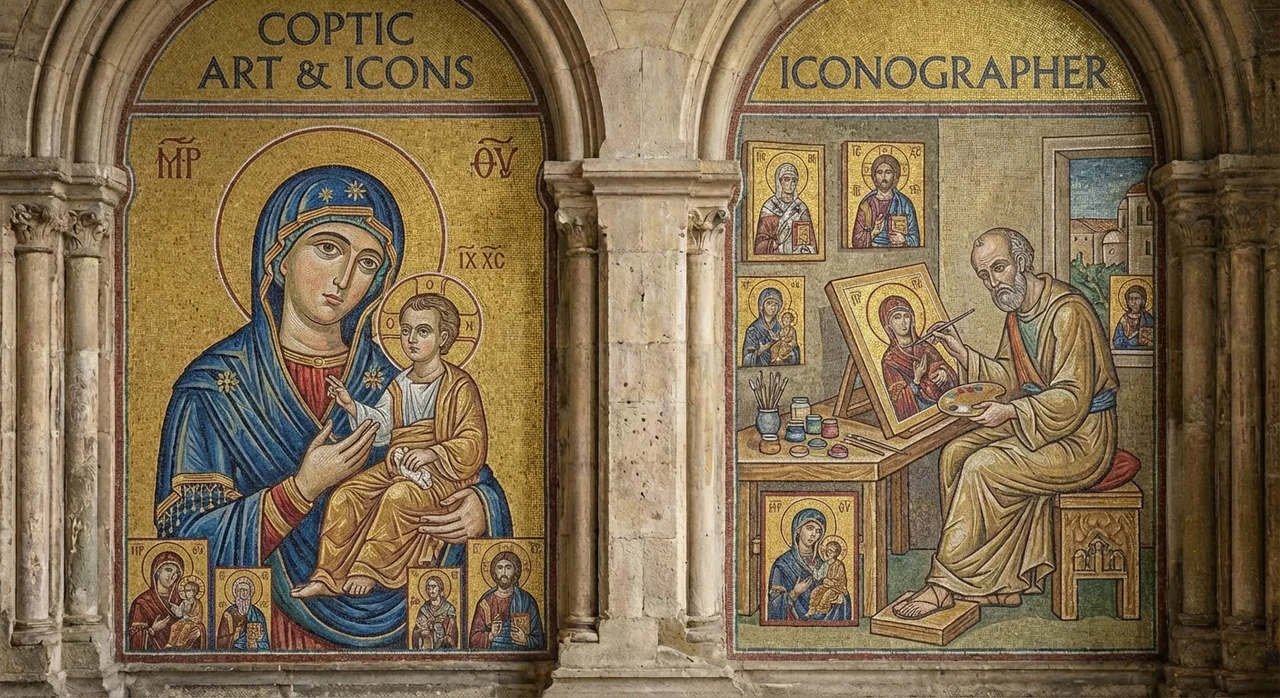
1. Foundation by Marcus Simaika Pasha
The Coptic Museum (المتحف القبطي) owes its existence to the visionary dedication of Egyptian nationalist and scholar Marcus Simaika Pasha (1864–1944). At the beginning of the twentieth century, Simaika recognized that while Pharaonic monuments were preserved at Tahrir and Islamic masterpieces were curated at Bab al-Khalq, Egypt's early Christian heritage was scattered across decaying desert monasteries and vulnerable historic churches.
Backed by Pope Cyril V (Kyrillos V) of the Coptic Orthodox Church, Simaika secured ecclesiastical land nestled between the ancient towers of the Roman Fortress of Babylon. The museum was officially inaugurated in 1910 under Khedive Abbas Helmy II. In 1931, the institution transitioned to state custody under the Supreme Council of Antiquities, cementing Coptic art as an indispensable, continuous chapter in Egypt's national cultural identity.
Today, the museum houses the most extensive and significant assembly of Christian Egyptian art in the world, cataloging over 16,000 priceless artifacts spanning the 1st through 18th centuries AD.
2. Architecture & The Roman Fortress
The museum is unique not only for its exhibits, but for its integration into the historic urban fabric of Old Cairo:
- The Roman Bastion of Babylon: The museum incorporates the preserved stone and red-brick masonry of the Roman fortress towers erected by Emperor Trajan around 98 AD and reinforced by Arcadius. The northern gate and circular bastions remain visible within the museum gardens.
- Architectural Salvage: Simaika Pasha actively rescued historic architectural fragments from threatened Ottoman-era Coptic townhouses. The museum ceilings feature original painted wooden beams, gilded rosettes, and elaborate mashrabiya (wooden lattice) bay windows that filter daylight into the galleries.
- The Wing Architecture: The museum is structured across two wings: the Old Wing, notable for its classical wood-inlaid ceilings and courtyards, and the New Wing (inaugurated in 1947 and fully restored in 2006), which houses modern climate-controlled exhibition halls and security vaults.
3. The Nag Hammadi Library (Gnostic Papyri)
The Coptic Museum is the permanent global custodian of the Nag Hammadi Library, widely considered one of the most transformative manuscript discoveries of the twentieth century:
Unearthed by local farmers in December 1945 sealed inside a terracotta jar near the Upper Egyptian cliffs of Jabal al-Tarif, the collection comprises 13 leather-bound papyrus codices containing 52 predominantly Gnostic theological treatises written in the Sahidic dialect of the Coptic language.
While the original papyrus sheets are preserved in nitrogen-purged conservation vaults to safeguard their fragile fibers from light and humidity, facsimiles and rotated original codex leaves are displayed under specialized optical glass.
4. Monastery Murals & Bawit Frescoes
During the 5th and 6th centuries, Egypt's Western and Eastern Deserts witnessed the flourishing of Christian monasticism founded by Saint Anthony the Great and Saint Pachomius. The Coptic Museum preserves breathtaking monumental wall paintings rescued from these monastic complexes:
- Monastery of Saint Apollo at Bawit: Rescued from Middle Egypt, the reconstructed monastic chapel displays the renowned fresco of Christ in Majesty. The composition portrays Christ seated in a celestial mandorla supported by the four living creatures of the Apocalypse, while below, the Virgin Mary stands surrounded by the twelve apostles and local monastic fathers.
- Monastery of Saint Jeremias at Saqqara: Excavated near the Step Pyramid, this hall features carved limestone pulpits, painted apse niches, and capital columns depicting stylized acanthus leaves, peacocks, and braided vines.
5. Architectural Woodwork & Iconostases
Coptic craftsmen were legendary master woodcarvers, adapting cedar, sycamore, and ebony into sacred ecclesiastical furnishings:
- The Altar Canopy of Saint Sergius (Abu Serga): A magnificent 4th-century dome carved from cedar of Lebanon, supported by four slender wooden columns, featuring low-relief carvings of Christ and the cross.
- Carved Wooden Iconostases (Haykal Screens): Intricate wooden sanctuary partitions featuring geometric star patterns inlaid with ivory and bone, designed to separate the church nave from the altar sanctuary.
- The Entry Lintel of Al-Muallaqa: A carved wooden lintel dating to the 5th century depicting Christ’s Triumphal Entry into Jerusalem and the Ascension, illustrating the classical Mediterranean relief style.
6. Stone Reliefs & Symbolic Syncretism
The ground floor stone galleries illustrate the captivating visual transition from ancient Egyptian pagan religion to Christianity:
- Horus and Saint George: Stone carvings depict the Pharaonic myth of the falcon-god Horus spearing the chaotic crocodile Set, a composition that directly influenced early Christian equestrian icons of Saint George slaying the dragon.
- Isis and Horus to the Madonna: Funerary figures showing the goddess Isis nursing the infant Horus (Harpocrates), whose visual archetype laid the iconographic foundation for the early Christian depictions of the Virgin Mary breastfeeding the Christ Child (Maria Lactans).
- Nile Deities & Water Symbolism: Carvings featuring River Nile personifications, Nereids riding dolphins, and lush lotus plants, reinterpreted by early Christians as symbols of baptismal renewal.
7. Textiles, Metalwork & Daily Life
The second-floor galleries preserve the material culture, fashion, and domestic rituals of Christian Egyptians throughout the Byzantine and early Islamic eras:
- Coptic Textiles (Qibtiya): Egypt was the textile hub of the Mediterranean. On display are wool and linen tunics, roundels, and hanging curtains woven in Akhmim and Fayoum, depicting biblical scenes, hunting motifs, and floral arabesques that were prized throughout the Byzantine Empire.
- The David Coptic Psalter: The oldest complete parchment book of Psalms in the Coptic language, discovered in a child's grave at Al-Mudil, preserved with its original wooden binding and leather thongs.
- Liturgical Metalwork: Silver and bronze chalices, incense burners (shorya) shaped like miniature domed churches, processional crosses, and bridal crowns used in Coptic matrimonial ceremonies.
8. Curatorial Masterpieces Matrix
The following matrix details the primary masterworks exhibited across the Coptic Museum:
| Gallery / Room | Masterwork Title | Historical Era | Material & Curatorial Significance |
|---|---|---|---|
| Room 6 (Stone) | Funerary Stela with Crux Ansata | 4th–5th Century AD | Limestone; direct adoption of the Pharaonic ankh hieroglyph as the Christian cross of resurrection. |
| Room 9 (Fresco) | Christ in Majesty (Bawit Apse) | 6th–7th Century AD | Fresco plaster; monumental monastic mural of Christ enthroned above the Virgin and Apostles. |
| Room 13 (Wood) | Abu Serga Wooden Altar Canopy | 4th Century AD | Cedar wood; oldest surviving domed wooden ciborium altar canopy in the Christian world. |
| Special Vault | Nag Hammadi Codex II | 4th Century AD (c. 350 AD) | Papyrus in leather binding; contains the complete Gnostic Gospel of Thomas and Apocryphon of John. |
| Room 17 (Textiles) | Akhmim Tapestry Tunic (Clavus) | 5th–6th Century AD | Linen & dyed wool; polychrome tunic bands depicting biblical scenes and Mediterranean flora. |
| Room 14 (MSS) | The Mudil Coptic Psalter | 5th Century AD | Parchment; complete book of Psalms in Sahidic Coptic, discovered intact under a cemetery headrest. |
9. Visitor Practical Logistics
Visiting the Coptic Museum is straightforward and central to any exploration of historic Cairo:
- Location: Mar Girgis Street, Coptic Cairo (Misr Al-Qadima). Located right across from the exit of the Mar Girgis Metro Station on Cairo Metro Line 1.
- Operating Hours: Open daily from 9:00 AM to 5:00 PM. Ticket windows close strictly at 4:15 PM.
- Cashless Ticketing: The Ministry of Tourism and Antiquities operates a 100% cashless payment system. Cash is rejected; tickets must be purchased with Visa or Mastercard.
- Cairo Pass: The Coptic Museum is included in the standard 5-day official Cairo Pass ($130 USD).
- Photography: Handheld smartphone photography without flash is permitted free of charge. Tripods and commercial video cameras require a formal photography ticket from the main entrance office.
- Accessibility: The museum courtyard and the ground-floor stone and fresco galleries feature ramp access. Elevators service upper textile and manuscript levels with museum staff assistance.
10. Guided Old Cairo Walking Tours with Ultra Egypt Travel
The Coptic Museum should ideally be experienced as part of a curated, private walking itinerary through Coptic Cairo:
Under Ministry License #874 (Class A), Ultra Egypt Travel provides private guided excursions led by university-credentialed Egyptologists and heritage scholars:
- Private, climate-controlled chauffeured transfers directly to the pedestrian gates of Coptic Cairo;
- Seamless priority admission tickets pre-arranged by our operations desk, bypassing public ticketing queues;
- In-depth academic decoding of the Nag Hammadi Gnostic philosophies, Coptic linguistic evolution, and iconographic symbolism; and
- A complete walking tour linking the Coptic Museum with the Hanging Church (Saint Virgin Mary), the Church of Abu Serga (Holy Family Crypt), the Church of Saint Barbara, and the historic Ben Ezra Synagogue.