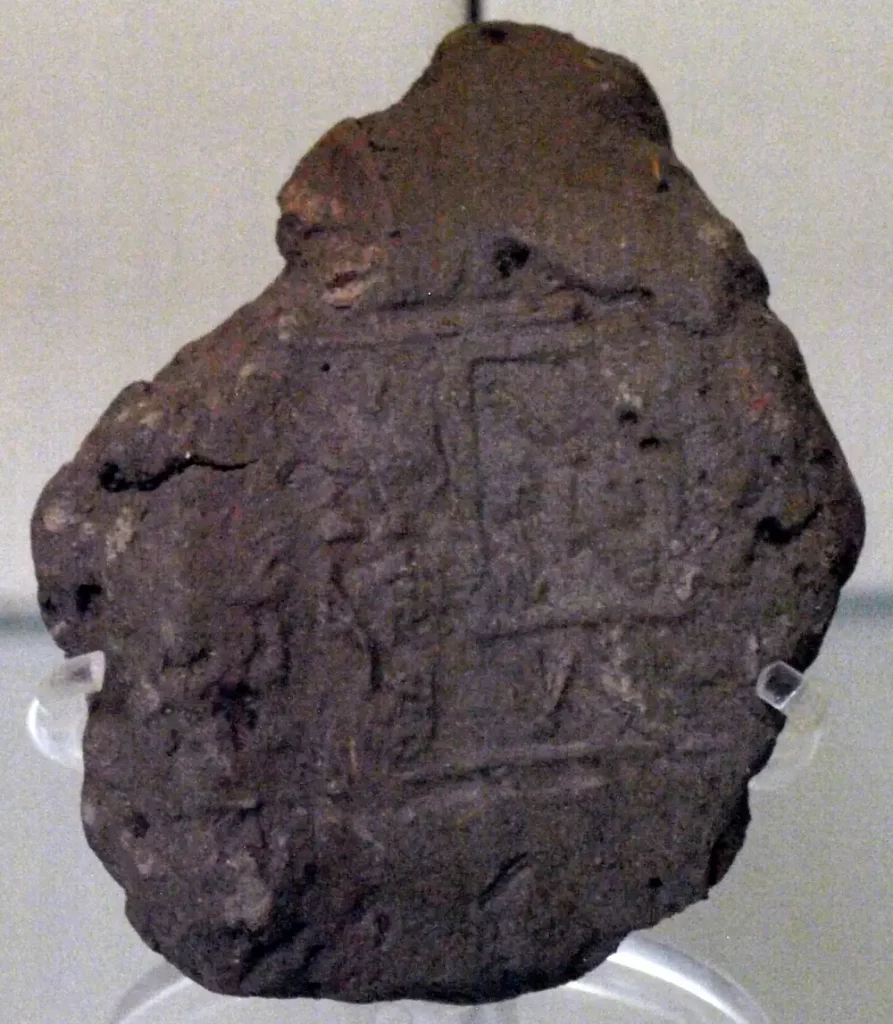
Chronological & Historical Context
King Anedjib ruled during the Early Dynastic Period, a time of state formation and institutional development. As the fifth pharaoh of the First Dynasty, he inherited a unified Egypt and focused on administrative consolidation.
- Reign: Approximately 2930 – 2920 BC (circa 8–10 years).
- Dynasty: 1st Dynasty, fifth pharaoh.
- Significance: Known for introducing the "Nisut-Bity" title and administrative reforms.
- Predecessor: King Den (his father).
- Successor: King Semerkhet (his son or half-brother).
Name, Titles, and Identity
🔹 Horus Name: Hor-Adjib
The king's Horus name is composed of the falcon (Hor) and the word Adjib, which means "brave-hearted" or "his heart is at peace."
➡️ Interpretation: "The one with a brave heart" or "He whose heart is steadfast."
🔹 Alternative Names and Variants
- Adjib, Anezib, Azib, Enezib, Andjyeb: Various spellings found in different sources.
- Nisut-Bity Name (Throne Name): Nisut-Bity-Nebuy-Merbiape — "King of Upper and Lower Egypt, the one of the Two Lords, beloved of the bronze throne."
- Abydos King List: Merybiap ("Beloved of the bronze throne").
- Saqqara King List: Merybiapen (the Saqqara list begins with Anedjib).
- Turin King List: Merygeregipen.
- Manetho: Recorded as Miebîdós.
Egypt Before Anedjib
By the time Anedjib ascended the throne, Egypt had been unified for over a century. His father Den had enjoyed a long and prosperous reign, leaving a stable administrative framework.
- Predecessors: Narmer, Hor-Aha, Djer, Djet, and Den had established the foundations of the state.
- State of the Realm: Egypt was a centralized state with a growing bureaucracy, a developed royal cult, and an expanding network of trade and administration.
- Challenges: The unification was still being consolidated, and there were likely regional tensions, especially in the Delta.
Reign & Administrative Reforms
Anedjib's reign was marked by significant administrative changes and the introduction of new royal titulary. He is considered a reformer who sought to strengthen the central government.
📜 New Royal Titles
- Nisut-Bity Title: Anedjib formalized the title "King of Upper and Lower Egypt" as a key part of the royal protocol.
- "Nebuy" Epithet: He added "the Two Lords" (referring to Horus and Seth) to his throne name, symbolizing the dual nature of kingship and the balance between the Two Lands.
- This innovation would become a permanent feature of Egyptian royal titulary.
⚙️ Administrative Overhaul
- New Bureaucratic Offices: He established new administrative positions, including "overseer of the royal estate."
- Reorganization of Estates: He restructured the system of royal estates and agricultural production to improve tax collection and resource distribution.
- Official Buildings: He ordered the construction of several new official buildings, though none have survived.
Internal Challenges & Rebellion
Despite his reforms, Anedjib's reign faced internal difficulties. Evidence suggests he may have had to suppress a rebellion in Lower Egypt (the Delta region).
- Rebellion in the North: The Delta may have resisted central authority, requiring military action.
- Consolidation Efforts: Anedjib worked to reinforce the unity of the Two Lands.
- Limited Resources: His relatively short reign and the need to address unrest may have limited his ability to undertake large-scale building projects.
Family and Royal Lineage
Anedjib's family connections are partially known and remain a subject of scholarly debate:
- Father: Most likely King Den (his predecessor). Some scholars suggest he could have been a son of Djet.
- Mother: Possibly Seshemetka (a wife of Den) or Merneith (the queen who may have ruled as regent).
- Consort: Likely Betrest (also known as Batirytes), believed to be the mother of his successor.
- Successor: His son (or half-brother) Semerkhet, who succeeded him.
Other Attestations
Anedjib is attested through a variety of archaeological sources:
- Tomb X at Abydos: His burial tomb and its associated cult enclosure.
- Stone Vessels: Several stone vessels inscribed with his name have been found at Abydos and Saqqara.
- Ivory and Ebony Labels: Commemorative labels bearing his name and year-events (such as the founding of a royal palace or a religious festival).
- Copper Tools: Tools bearing his name, found in subsidiary tombs around his burial complex.
- Mastaba Tombs: At Saqqara belonging to high officials who served during his reign.
- Ivory Plaque: A small ivory plaque depicting him performing a ritual, now in the British Museum.
Governance & Administration
Anedjib's administrative reforms were central to his reign. He sought to create a more efficient and centralized state apparatus:
- Centralization: He reinforced the king's authority over the nomarchs and local officials.
- Taxation: The reorganization of royal estates improved the collection of taxes and tribute.
- Record Keeping: The use of labels and seal impressions indicates a sophisticated system of record keeping.
- Official Titles: He created or formalized new bureaucratic positions, such as "overseer of the royal estate."
Religion & Ideology
Anedjib's religious innovations were as significant as his administrative ones. He formalized the concept of the "Two Lords" (Horus and Seth) in royal titulary.
- Horus and Seth: By invoking both gods, he emphasized the unity of Upper and Lower Egypt and the dual nature of kingship.
- Royal Titulary: His addition of "Nebuy" ("the Two Lords") to his throne name became a lasting tradition.
- Funerary Cult: His tomb at Abydos and the associated offerings reflect the importance of the royal funerary cult.
Key Artifacts of Anedjib
Several significant artifacts from Anedjib's reign have survived, offering glimpses into the material culture of the First Dynasty:
- Ivory Plaque (British Museum): Depicting Anedjib performing a ritual.
- Stone Vessels: Inscribed with his name and titles, found at Abydos and Saqqara.
- Ivory Labels: Commemorating events such as the founding of a royal palace.
- Copper Tools: From subsidiary tombs, bearing his name.
- Seal Impressions: Found at various sites, providing evidence of his administrative reach.
Tomb & Burial: Tomb X at Abydos
Anedjib was buried at Umm el-Qa'ab in Abydos, the royal necropolis of the First Dynasty kings. His tomb is designated Tomb X.
- Location: Umm el-Qa'ab, Abydos.
- Structure: A brick-lined pit, smaller and less elaborate than his predecessor Den's tomb, reflecting his shorter reign.
- Features: A burial chamber surrounded by subsidiary graves of retainers and servants (retainer sacrifice was still practiced).
- Offering Chapel: The tomb complex included an offering chapel with stelae bearing his name.
- Defacement: Many of his stone vessels and artifacts were found erased or re-carved – his successor Semerkhet deliberately defaced and replaced Anedjib's name on several monuments, perhaps due to a dynastic feud.
Art in the Age of Anedjib
The art of Anedjib's reign continued the established conventions of the First Dynasty, with some innovations in titulary and iconography:
- Relief Carving: Stone vessels and labels feature fine hieroglyphic inscriptions.
- Iconography: The king is depicted in ritual scenes, often with the Horus falcon.
- Titulary Emphasis: The introduction of the "Nebuy" epithet appears on his monuments.
- Quality: Artifacts from his reign show a consistent level of craftsmanship, though less elaborate than his father Den's.
Legacy & Historical Significance
Anedjib's legacy is one of innovation amid instability. Despite his relatively short reign and the subsequent damnatio memoriae by his successor, his contributions were lasting:
- Royal Titulary: He successfully introduced the "Two Lords" concept, which would continue throughout Egyptian history.
- Administrative Reforms: His reorganization of the bureaucracy set a precedent for future dynasties.
- Centralization: He strengthened the central government, reinforcing the king's authority.
- Historical Importance: He bridges the gap between the foundational work of his predecessors and the later consolidations of his successors.
📌 Comprehensive Summary
👑 Name: Anedjib (Hor-Adjib — Brave-hearted)
🕰️ Era: Early Dynastic Period (c. 2930 – 2920 BC)
🏛️ Dynasty: 1st Dynasty, 5th Pharaoh
⚙️ Greatest Legacy: Administrative Reforms & Introduction of "Nebuy" Title
👪 Family: Father Den → Consort Betrest → Successor Semerkhet
⚰️ Burial: Tomb X at Umm el-Qa'ab, Abydos