Chronological & Historical Context
King Semerkhet ruled during the Early Dynastic Period, but his reign was marked by political turmoil and a contested succession. He is one of the most controversial figures of the First Dynasty.
- Reign: Approximately 2920 – 2910 BC (circa 9–18 years, estimates vary).
- Dynasty: 1st Dynasty, sixth pharaoh.
- Significance: Known for usurping the throne and systematically erasing the name of his predecessor Anedjib.
- Predecessor: Anedjib (whom he erased from monuments).
- Successor: Qa'a (the last king of the 1st Dynasty).
Name, Titles, and Identity
🔹 Horus Name: Hor-Semerkhet
The king's Horus name is composed of the falcon (Hor) and the word Semerkhet, meaning "wise companion" or "friend."
➡️ Interpretation: "The wise friend of Horus" or "The one with a wise companion."
🔹 Alternative Names and Variants
- Semempses: The Greek form recorded by Manetho.
- Semsem, Semerket: Variant spellings.
- Throne Name (Nisut-Bity): Nisut-Bity-Iry-Nebty — "King of Upper and Lower Egypt, the one who acts for the Two Ladies (Nebty)."
- Abydos King List: Iry-Nebty ("The one who acts for the Two Ladies").
- Turin King List: Semsem (partially damaged).
- Notable Omission: Semerkhet is completely absent from the Saqqara King List, a deliberate act of damnatio memoriae by later Egyptians.
Egypt Before Semerkhet
By the time Semerkhet came to power, the First Dynasty had already seen several kings, including the reformer Anedjib. However, Anedjib's reign was relatively short, and his administrative reforms may have caused unrest.
- Predecessors: Narmer, Hor-Aha, Djer, Djet, Den, and Anedjib had established the state.
- State of the Realm: Egypt was a centralized state, but the succession was not always smooth. Anedjib's reforms may have alienated some factions.
- Succession Crisis: The transition from Anedjib to Semerkhet was likely contested, leading to Semerkhet's usurpation.
Reign & Usurpation
Semerkhet's reign was defined by his controversial rise to power and his subsequent actions to legitimize his rule.
⚡ Usurpation
- Not the Heir: Semerkhet was likely not the direct heir to Anedjib. He may have seized power through intrigue or a palace coup.
- Illegitimacy: His absence from the Saqqara King List strongly suggests that later Egyptians considered his reign illegitimate.
- Motivation: He likely wanted to present himself as the restorer of order after a failed king (Anedjib).
🗑️ Damnatio Memoriae
- Systematic Erasure: Semerkhet launched a campaign to obliterate Anedjib's memory.
- Methods: He had Anedjib's name and titles chiseled out or recarved on stone vessels, ivory labels, and monuments.
- Goal: To rewrite history and present himself as the rightful successor, directly linking himself to Den or earlier kings.
Political Turmoil & Unrest
Semerkhet's reign was likely marked by instability and the need to consolidate power after a disputed succession.
- Economic Hardship: Evidence suggests possible economic difficulties or political unrest during his reign.
- Consolidation: He worked to maintain the bureaucracy and secure the loyalty of officials.
- Administrative Continuity: Despite the turmoil, he continued many of the administrative reforms started by Anedjib, though he took credit for them.
Family and Royal Lineage
Semerkhet's family connections are murky, which is a key piece of evidence supporting his usurpation:
- Father: Uncertain. He is not clearly attested as Anedjib's son. He may have been a brother or half-brother, or even an unrelated noble.
- Mother: Possibly Betrest (Batirytes), but her identity is contested—some believe she was Den's wife, making Semerkhet a brother of Anedjib.
- Consort: Likely a woman named Semat, known from a stela found at Abydos.
- Successor: His son (or grandson) Qa'a, who became the last pharaoh of the First Dynasty.
Other Attestations (Archaeological Evidence)
Despite his controversial reign, Semerkhet left behind several archaeological remains:
- Tomb U at Abydos: A large, well-constructed brick-lined tomb, one of the larger royal tombs of the dynasty.
- Ivory and Ebony Year-Labels: Commemorative plaques recording events such as religious festivals and censuses.
- Stone Vessels: Many bearing his name, some originally made for Anedjib and recarved.
- Cylinder Seals: Found at Abydos and Saqqara, bearing his name.
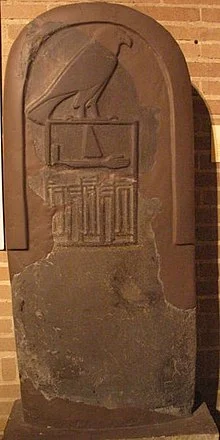
- Stela from His Tomb: Depicting him with the Horus falcon (now in the Egyptian Museum in Berlin).
- Mastaba Tombs: At Saqqara belonging to high officials who served under him.
Governance & Administration
Despite the political turmoil, Semerkhet maintained and continued the administrative structures of the state:
- Bureaucracy: He kept the network of officials and scribes functioning.
- Royal Estates: He managed the agricultural estates and taxation system.
- Record Keeping: The year-labels and seal impressions show that record keeping continued.
- Building Projects: He ordered the construction of official buildings, though none have survived intact.
Religion & Ideology
Semerkhet's religious policies were aimed at legitimizing his rule through divine association:
- Horus Cult: His Horus name emphasizes his connection to the falcon god, reinforcing his divine kingship.
- Nebty Title: His throne name "Iry-Nebty" ("Acts for the Two Ladies") invokes the goddesses of Upper and Lower Egypt, Nekhbet and Wadjet, to present him as a unifying ruler.
- Funerary Cult: His large tomb at Abydos and the accompanying stelae show that he maintained the royal funerary cult.
Key Artifacts of Semerkhet
Several significant artifacts from Semerkhet's reign have survived, many of which bear traces of his erasure campaign:
- Stone Vessels with Recarved Names: Some bear Semerkhet's name over erased inscriptions of Anedjib.
- Ivory Year-Labels: Recording events such as the "Appearance of the King" and religious festivals.
- Berlin Stela: A limestone stela from his tomb depicting Semerkhet with the Horus falcon.
- Cylinder Seals: Found at multiple sites, providing evidence of his administrative reach.
- Copper Tools and Implements: From subsidiary tombs around his burial complex.
Tomb & Burial: Tomb U at Abydos
Semerkhet was buried at Umm el-Qa'ab in Abydos, the royal cemetery of the First Dynasty. His tomb is designated Tomb U.
- Location: Umm el-Qa'ab, Abydos.
- Structure: A large brick-lined pit with a wooden-roofed burial chamber, measuring about 29.5 x 20.8 meters.
- Features: Surrounded by subsidiary graves of retainers and servants who were sacrificed to accompany him (a practice still in decline).
- Boat Burial: One subsidiary grave contained a well-preserved boat-shaped pit, suggesting a solar or funerary boat tradition.
- Robbery: The tomb was robbed in antiquity, but fragments of fine stone vessels, ivory objects, and seal impressions were recovered.
- Stelae: The entrance featured a pair of stelae bearing his Horus name, now largely destroyed.
Art in the Age of Semerkhet
The art of Semerkhet's reign continued the conventions of the First Dynasty, with a focus on royal iconography and titulary:
- Relief Carving: The Berlin stela shows fine raised relief work.
- Inscriptions: Hieroglyphs are well-executed on vessels and labels.
- Iconography: The king is often shown with the Horus falcon, emphasizing his divine status.
- Erasure Evidence: Many artifacts from his reign show signs of recarving, providing archaeological evidence of his damnatio memoriae against Anedjib.
Legacy & Historical Significance
Semerkhet's legacy is complex and largely negative, yet historically significant:
- Negative Legacy: He is remembered primarily as a usurper and destroyer of his predecessor's memory. His actions set a precedent for future dynastic struggles.
- Administrative Continuity: Despite the turmoil, he kept the state functioning and ensured a smooth succession to Qa'a.
- Archaeological Importance: His tomb and artifacts provide valuable insights into First Dynasty royal funerary practices and the political dynamics of early Egypt.
- Historical Lesson: His story illustrates that even in the earliest days of Egyptian civilization, kingship was not always stable—succession disputes, usurpations, and memory-erasure were tools of political survival.
- Exclusion from Saqqara List: The fact that later Egyptians omitted him from the Saqqara King List shows that his reputation remained tarnished for millennia.
📌 Comprehensive Summary
👑 Name: Semerkhet (Hor-Semerkhet — Wise friend of Horus)
🕰️ Era: Early Dynastic Period (c. 2920 – 2910 BC)
🏛️ Dynasty: 1st Dynasty, 6th Pharaoh
⚖️ Key Deed: Usurped throne; systematically erased Anedjib's name
🗑️ Notable Omission: Excluded from the Saqqara King List
👪 Family: Father uncertain → Consort Semat → Successor Qa'a
⚰️ Burial: Tomb U at Umm el-Qa'ab, Abydos