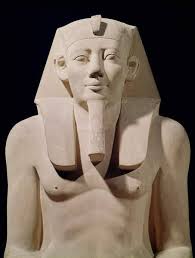
Basic Identity
Senusret I (also Sesostris I) presided over the most stable and prosperous phase of the Middle Kingdom. Building on the foundations laid by his father, he launched a massive program of temple construction, military expansion, and administrative reform that defined the era.
| Throne Name | Kheperkare (“The Ka of Ra Comes into Being”) |
|---|---|
| Horus Name | Ankhmesut (“Living of Births”) |
| Dynasty | 12th Dynasty |
| Reign | c. 1971–1926 BCE (45 Years) |
Learning to Rule
He served as co-regent with his father, Amenemhat I, for ten years. This period allowed him to gain vital experience in military command and administration. When his father was assassinated, the transition of power was decisive and swift, proving the wisdom of the co-regency system which became a dynasty standard.
The Story of Sinuhe
The famous literary work, "The Story of Sinuhe," is set during the accession of Senusret I. It describes how the prince, upon hearing of his father's murder while on a campaign in Libya, rushed back to the capital to secure the throne before any rivals could act, highlighting the perilous nature of power.
Consolidator of the Realm
Senusret I is important because he transformed a recovered state into an imperial power. He extended Egypt's borders deep into Nubia, established a network of fortresses, and initiated the first major temple building program at Karnak, setting the stage for Egypt's future grandeur.
The Iron Curtain of the South
Senusret I led campaigns into Lower Nubia (Wawat) to secure gold mines and trade routes. To hold this territory, he built a chain of massive mudbrick fortresses at strategic points like Buhen, Kuban, and Aniba. These forts served as military bases, trading posts, and administrative centers.
Defense & Diplomacy
Beyond Nubia, his foreign policy was defensive but active. He maintained control over the Sinai mines and protected the eastern Delta borders ("Walls of the Ruler"). Relations with the Levant (Syria-Palestine) were mostly trade-based, ensuring a steady flow of cedar and luxury goods.
Centralization
He continued to curb the independence of the provincial Nomarchs. By appointing royal officials to oversee local administration and standardizing the legal system, he ensured that all power flowed from Itjtawy. The state became efficient, predictable, and wealthy.
Agricultural Wealth
Under his reign, Egypt enjoyed agricultural abundance. Irrigation projects were expanded in the Faiyum, and trade expeditions brought in raw materials. This economic surplus allowed for his extensive building projects and the support of a growing class of artisans and scribes.
The Rise of Amun-Ra
Senusret I played a key role in the rise of Amun-Ra as the national deity. He integrated the Theban god Amun with the northern solar god Ra, creating a unified state theology. He built temples in every major city (Heliopolis, Memphis, Abydos), creating a sacred landscape that tied the country together.
Foundation of Karnak
He is the true founder of the Great Temple of Karnak as a monumental complex. Before him, it was a modest shrine. Senusret I laid out the primary axis and built the first significant limestone temple to Amun, establishing Karnak as the religious heart of the New Kingdom centuries later.
The Oldest Obelisk
At Heliopolis, the city of the sun, Senusret I erected two massive red granite obelisks to celebrate his jubilee. One still stands today—the oldest standing obelisk in Egypt. It symbolizes the connection between the king and the sun god Ra, a beacon of stability.
Pyramid at Lisht
He built his pyramid complex at Lisht, near his father's. It followed Old Kingdom models (like Pepi II) but introduced new engineering techniques, using stone walls radiating from the center to stabilize the structure. The complex included nine smaller pyramids for his queens and daughters.
Classical Style
Art from his reign is considered the "Classical Style" of the Middle Kingdom. Statues portray the king with a youthful, idealized body but a face that conveys calm confidence and alertness. The technical quality of sculpture reached a peak not seen since the 4th Dynasty.
The Father & The Son
| King | Amenemhat I | Senusret I |
|---|---|---|
| Role | System Builder | System Perfecter |
| Focus | Political Reform / Survival | Cultural Expansion / Building |
| Legacy | Founded the Dynasty | Defined the Golden Age |
📌 Comprehensive Summary
👑 Name: Senusret I (Kheperkare)
🕰️ Era: 12th Dynasty (Middle Kingdom)
⚔️ Achievement: Conquest of Nubia
🪨 Monument: White Chapel & Karnak Expansion