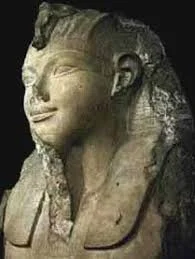
Basic Identity
Amenemhat I (Sehetepibre) is the true founder of the Middle Kingdom's "Golden Age." Rising from common origins to the throne, he reshaped the political, military, and religious landscape of Egypt, establishing a dynasty that would last for over 200 years.
| Throne Name | Sehetepibre (“Satisfied is the Heart of Ra”) |
|---|---|
| Horus Name | Wehemmesut (“Repeater of Births”) |
| Dynasty | 12th Dynasty (Founder) |
| Reign | c. 1991–1962 BCE (Approx. 30 Years) |
The Second Renaissance
Amenemhat I is significant for ending the lingering instability after the First Intermediate Period. He centralized power by stripping the provincial governors (Nomarchs) of their independence and creating a new, loyal bureaucracy. He is the architect of the "Classical" Egyptian state.
From Vizier to King
Unlike most pharaohs, Amenemhat was not born royal. He likely served as the Vizier (Prime Minister) to the last king of the 11th Dynasty, Mentuhotep IV. Ancient texts, like the "Prophecy of Neferti," justify his seizure of power by presenting him as a savior ("Ameny") foretold to rescue Egypt from chaos.
Propaganda & Legitimacy
Lacking royal blood, he used literature as a tool of legitimacy. He commissioned works that portrayed the previous era as a time of disaster and his own reign as the return of Ma'at (Order). This use of "political literature" is a hallmark of the 12th Dynasty.
Seizing the Two Lands
He moved the capital from Thebes (in the far south) to a new strategic city near the Faiyum entrance: Itjtawy ("Amenemhat-Seizes-the-Two-Lands"). This location allowed him to control both Upper and Lower Egypt effectively and to launch agricultural projects in the fertile Faiyum basin.
Taming the Nomarchs
He reorganized the internal administration, re-surveying the boundaries of the nomes (provinces) and strictly regulating the water rights for irrigation. By appointing loyalists to key positions, he slowly eroded the hereditary power of the provincial nobility.
Standing Army
Amenemhat I created the first true standing army since the Old Kingdom. He initiated campaigns into Nubia (Wawat) to secure gold mines and led expeditions against the Libyans in the west, ensuring that Egypt's wealth was protected by professional force, not just local levies.
The Coregency System
To prevent succession crises, he introduced the practice of Coregency. In the 20th year of his reign, he crowned his son, Senusret I, as king alongside him. This allowed the son to gain experience and established an unquestionable heir, a system followed by the rest of the dynasty.
Revival at Lisht
He revived the Old Kingdom tradition of pyramid building, constructing his monument at Lisht near the new capital. Unlike the solid stone pyramids of Giza, his was built with a core of mudbrick and loose stone, encased in limestone. Interestingly, he used stone blocks stolen from the Old Kingdom pyramids at Giza and Saqqara to build his own.
Agricultural Boom
His reign saw a massive investment in irrigation and agriculture. By stabilizing the Nile's flow into the Faiyum, he increased the amount of arable land, creating a breadbasket that would feed the nation and fund his building projects.
Murder in the Night
Despite his success, Amenemhat I met a tragic end. According to the "Teaching of Amenemhat," he was assassinated in his sleep by his own bodyguards while his son was away on a campaign. This event shocked the nation and led to the composition of literature warning future kings: "Trust no one."
A Ghost's Advice
The "Instructions of Amenemhat" is a unique literary work written from the perspective of the dead king's ghost speaking to his son. It is a cynical, political text advising the ruler to keep his distance from subjects and subordinates. It represents the birth of Realpolitik in ancient thought.
The Golden Age of Literature
Under his patronage, the Egyptian language reached its classical peak (Middle Egyptian). Works like "The Story of Sinuhe" (set in the aftermath of his death) were composed during this era. This cultural flourishing defined the Egyptian identity for centuries to come.
Hero vs. Architect
| King | Mentuhotep II | Amenemhat I |
|---|---|---|
| Role | The Unifier (Warrior) | The Organizer (Statesman) |
| Capital | Thebes | Itjtawy |
| Legacy | Restored Unity | Institutionalized the State |
📌 Comprehensive Summary
👑 Name: Amenemhat I (Sehetepibre)
🕰️ Era: 12th Dynasty (Founder)
⚔️ Achievement: Walls of the Ruler & Itjtawy
📜 Legacy: Instructions of Amenemhat