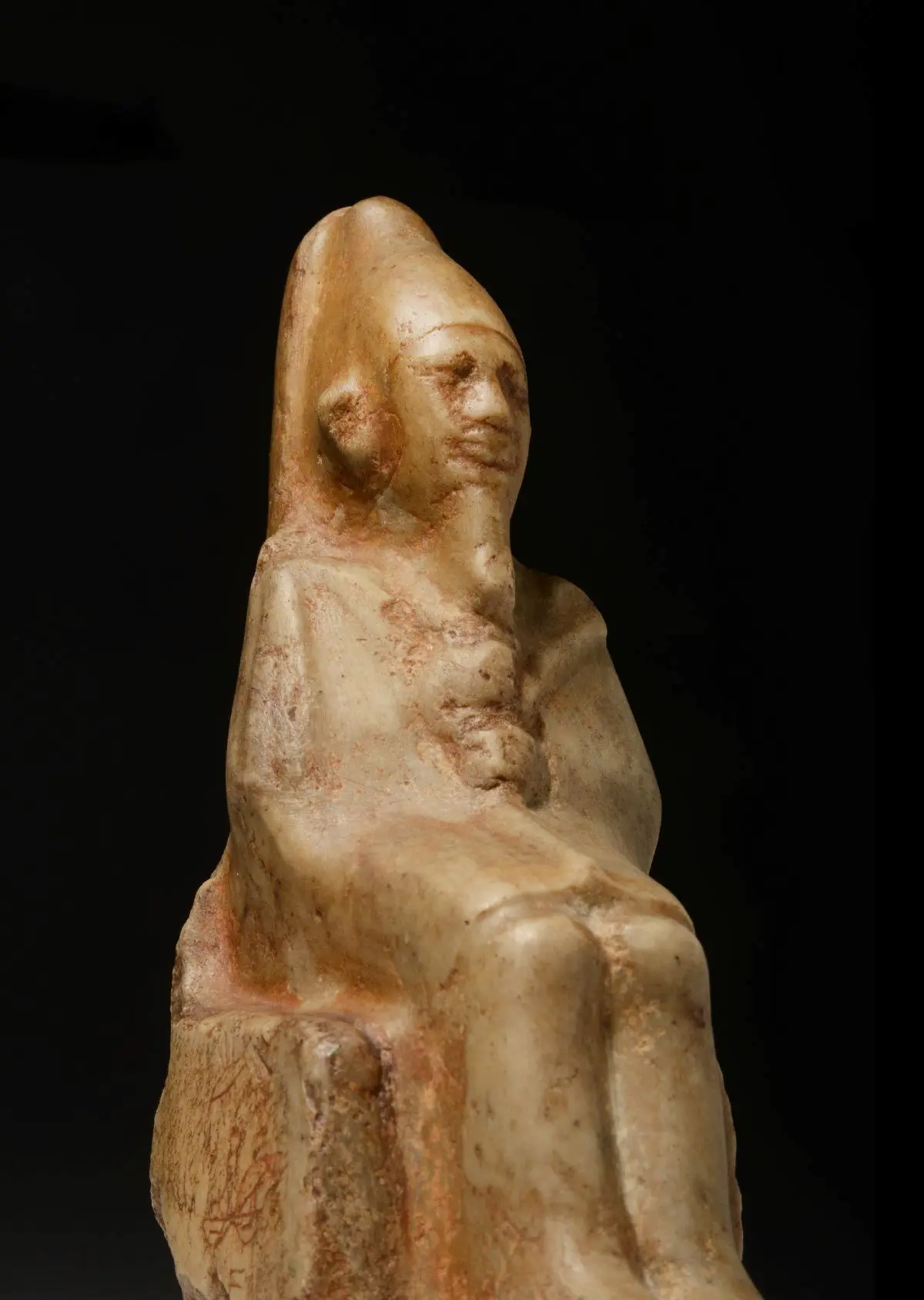
Chronological & Historical Context
King Nynetjer ruled during the Second Dynasty, a period of administrative consolidation and religious evolution. He succeeded Raneb (Nebra) and is one of the best-documented kings of the dynasty, thanks largely to the surviving fragments of the Palermo Stone.
- Reign: Approximately 2850 – 2800 BC (circa 45–47 years).
- Dynasty: 2nd Dynasty, third pharaoh.
- Significance: Longest-reigning king of the dynasty; formalized the dual administration of Upper and Lower Egypt.
- Predecessor: Raneb (Nebra).
- Successor: Uncertain (likely a period of dynastic division with Senedj, Peribsen, and Sekhemib).
Name, Titles, and Identity
🔹 Horus Name: Hor-Nynetjer
The king's Horus name is composed of the falcon (Hor) and the word Nynetjer, meaning "the one who belongs to the divine father" or "the god-like father."
➡️ Interpretation: "The protector of the god" or "He who is of the divine father."
🔹 Alternative Names and Variants
- Ninetjer, Nadjnetjer, Netjernety: Variant spellings.
- Nebty Name: One of the earliest kings to use a fully formalized Nebty name, associating him with Nekhbet and Wadjet.
- Abydos King List: Appears as Nynetjer.
- Saqqara King List: Appears as Nynetjer.
- Turin King List: Partially damaged, preserving ...netjer.
- Manetho: Recorded as Binothris (or Bienechis), with a reign of 47 years.
Egypt Before Nynetjer
The Second Dynasty began with Hotepsekhemwy, who succeeded the last king of the First Dynasty, Qa'a. He was followed by Raneb (Nebra), who pioneered solar kingship. Nynetjer inherited a stable and prosperous state.
- Predecessors: Hotepsekhemwy (founder) and Raneb (solar innovator).
- State of the Realm: Egypt was a mature centralized state with a developed bureaucracy, established religious institutions, and extensive trade networks.
- Religious Landscape: The cult of Horus remained dominant, but the sun cult of Heliopolis was gaining influence. Nynetjer continued the integration of solar theology.
Reign & Major Events
Nynetjer's 47-year reign was one of the longest of the Early Dynastic Period. The Palermo Stone provides invaluable details about his rule:
📅 Recorded Events
- Hed-sed Festival: He celebrated the Heb-sed jubilee, marking 30 years of rule—consistent with his long reign.
- Religious Festivals: Numerous feasts were recorded, indicating active religious patronage.
- Cattle Counts: The annals record periodic cattle censuses, a key administrative tool for assessing wealth and taxation.
- Building Projects: He commissioned the construction of temples and royal buildings, including a palace named "The House of the King."
⛏️ Expeditions & Economy
- Sinai Expeditions: Rock inscriptions at Wadi Maghara and Wadi Kharig confirm mining expeditions for turquoise and copper.
- Trade Networks: Stone vessels and imported materials attest to extensive trade connections.
- Economic Prosperity: The wealth of his reign reflects a thriving economy and well-organized administration.
The Administrative Reform: The Formal Division of Egypt
This is the most significant and defining achievement of Nynetjer's reign—a reform that would shape Egyptian governance for millennia.
📋 The Division
- Formal Split: Nynetjer formally divided Egypt's administration into two distinct regions—Upper Egypt (south) and Lower Egypt (north).
- Separate Bureaucracies: Each region had its own treasury, granaries, and high officials (including separate overseers).
- Evidence: The Palermo Stone explicitly records a year in which Nynetjer "divided the administration"—the earliest clear documentary evidence for a formalized dual governance structure.
🎯 Motivation & Impact
- Practical Efficiency: Managing the entire country from a single center became increasingly difficult. Division allowed for more localized governance.
- Political Balance: By giving each region its own apparatus, he aimed to reduce regional tensions and ensure both halves felt represented.
- Religious Ideology: The division reflected the "Two Lands" concept (Upper and Lower Egypt), turning a theological ideal into administrative reality.
- Long-Term Impact: This dual system remained a fundamental feature of Egyptian governance for over 3,000 years.
Family and Royal Lineage
Nynetjer's family background is poorly understood due to the general scarcity of Second Dynasty records:
- Predecessor: Raneb (Nebra). The transition appears to have been peaceful.
- Relationship to Raneb: Unknown. He may have been a son, a brother, or a close relative.
- Successor: The succession after Nynetjer is highly uncertain. He was followed by a period of dynastic instability with several shadowy kings—Senedj, Peribsen (who used the Seth-animal), and Sekhemib-Perenmaat. Some scholars believe these were rival rulers or co-regents.
- Consort/Wives: No queen is definitively attested for Nynetjer.
- Children: None are directly attested.
Other Attestations
Nynetjer is one of the most archaeologically well-attested kings of the Second Dynasty:
- The Palermo Stone: The most important source for his reign, preserving detailed records for several years.
- Stone Vessels: Numerous stone vessels (alabaster, diorite, breccia) inscribed with his name have been found at Saqqara and Abydos.
- Seal Impressions: Clay and mud seal impressions bearing his Horus name have been found at Saqqara, Abydos, and Elephantine.
- Ivory Labels: Several small ivory and ebony year-labels with his name and brief inscriptions have been recovered.
- Sinai Inscriptions: Rock inscriptions at Wadi Maghara and Wadi Kharig bear his name, confirming mining expeditions.
Governance & Administration
Nynetjer's administrative reforms were the defining feature of his reign, but he also maintained and expanded existing structures:
- Dual Bureaucracy: He established separate administrative hierarchies for Upper and Lower Egypt.
- Taxation & Tribute: The cattle counts recorded on the Palermo Stone show a sophisticated system of taxation and resource management.
- Record Keeping: The numerous year-labels and seal impressions indicate a highly organized system of record keeping.
- Royal Estates: The crown controlled vast agricultural estates that supported the court and funded building projects.
Religion & Ideology
Nynetjer's religious policies reinforced the divine status of the king and the unity of the Two Lands:
- Horus Cult: His Horus name emphasizes his connection to the falcon god, reinforcing divine kingship.
- Nebty Title: He formalized the use of the Nebty (Two Ladies) name, associating himself with Nekhbet and Wadjet.
- Solar Theology: He continued the integration of solar worship initiated by Raneb, though the sun god Ra was not yet as prominent as in later dynasties.
- Funerary Cult: Though his burial place remains unknown, he likely maintained the royal funerary cult.
Key Artifacts of Nynetjer
Several significant artifacts from Nynetjer's reign have survived, providing insight into his rule:
- Palermo Stone Fragments: The royal annals recording year-by-year events of his reign.
- Stone Vessels: Hundreds of fine stone vessels bearing his name, found at multiple sites.
- Seal Impressions: Clay seals bearing his Horus name, found across Egypt.
- Ivory Labels: Commemorative plaques with year inscriptions.
- Sinai Rock Inscriptions: At Wadi Maghara and Wadi Kharig, confirming his expeditions.
Tomb & Burial: The Unidentified Tomb
Unlike the First Dynasty kings, whose tombs at Abydos are well-documented, Nynetjer's burial place has not been conclusively identified:
- Shift from Abydos: The Second Dynasty kings appear to have abandoned Abydos as their primary burial site, reflecting a religious and political shift toward the Memphite region.
- Possible Location at Saqqara: Most Egyptologists believe Nynetjer was buried at Saqqara, the vast necropolis of Memphis. However, no tomb has been definitively attributed to him.
- Potential Candidates: Some scholars suggest that large, unexplored substructures beneath the Step Pyramid of Djoser or nearby mastabas may contain his tomb.
- Reason for Absence: Later building activities (especially Djoser's Step Pyramid) may have covered or destroyed his tomb, or it may have been robbed in antiquity.
Art in the Age of Nynetjer
The art of Nynetjer's reign reflects the high level of craftsmanship and the growing sophistication of royal iconography:
- Relief Carving: Fine raised relief work on stone vessels and labels.
- Inscriptions: Well-executed hieroglyphs, demonstrating the maturity of the writing system.
- Iconography: The Horus falcon remains prominent, and the Nebty title appears more frequently.
- Craftsmanship: Stone vessels and seal impressions reflect a high level of skill and artistic sophistication.
Legacy & The Succession Crisis
Nynetjer's legacy is substantial and enduring, though his long reign was followed by a period of considerable dynastic confusion:
- Administrative Pioneer: He formalized the dual governance of Upper and Lower Egypt, creating a bureaucratic model that would persist for over 3,000 years.
- Long and Stable Reign: His 47-year rule provided continuity, economic prosperity, and peace, allowing the state to consolidate its institutions.
- Economic Development: His expeditions to Sinai and his building projects demonstrate a thriving economy and a well-organized central government.
- Historical Recognition: He was honored in all later king lists (Abydos, Saqqara, Turin) as a legitimate and respected ancestor.
- Succession Crisis: After his death, Egypt entered a period of dynastic division with multiple kings (Senedj, Peribsen, Sekhemib) appearing in the records. Some scholars interpret this as evidence of a civil war between the followers of Horus and Seth, which was eventually resolved by Khasekhemwy.
📌 Comprehensive Summary
👑 Name: Nynetjer (Hor-Nynetjer — The one who belongs to the divine father)
🕰️ Era: Early Dynastic Period (c. 2850 – 2800 BC)
🏛️ Dynasty: 2nd Dynasty, 3rd Pharaoh
📜 Greatest Legacy: Formal division of Egypt's administration into Upper and Lower Egyptian bureaucracies
👪 Family: Predecessor Raneb → Successor uncertain (Senedj/Peribsen)
⚰️ Burial: Unknown (likely at Saqqara, but no tomb conclusively identified)