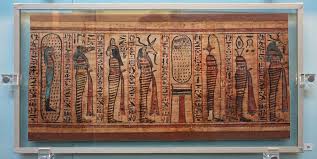
Definition & Origins
The Litany of Ra is a profound theological funerary text from the New Kingdom. Unlike the "Book of Gates" or "Amduat" which map the geography of the underworld, the Litany focuses on the identity of the Sun God. It is a praise poem invoking Ra in his many manifestations to ensure the King's union with the divine.
| Ancient Title | "The Book of Praying to Ra in the West" |
|---|---|
| Time Period | Early New Kingdom (c. 1500 BCE) |
| Location | Royal Tombs (First Corridors / Pillars) |
| Key Concept | Divine Multiplicity & Unity |
The Royal Entrance
This text appears prominently at the entrance of royal tombs in the Valley of the Kings, such as those of Thutmose III, Seti I, and Ramesses II. It was placed near the entrance so that the sun god (and the deceased king) could be greeted immediately upon entering the realm of darkness.
The Power of Naming
The primary purpose of the Litany is Identification. By knowing and reciting the secret names and forms of Ra, the deceased King claims power over them. He does not just worship Ra; he becomes Ra. The text declares: "The King is Ra... The King is these gods."
The 75 Forms of Ra
The core of the text is a list of 74 or 75 invocations to Ra in different aspects. These forms range from the majestic to the obscure, showing that the Sun God is present in all things. Some of the forms include:
| Form (Name) | Meaning/Aspect |
|---|---|
| Khepri | The Creator / Morning Sun |
| The Weeper | He who creates rain/humidity |
| The One of the Cat | Destroyer of serpents (Apophis) |
| The One of the Cavern | Dweller in the deep earth |
| The High One | Lord of the sky |
Solar Kingship
The text reinforces the doctrine of Solar Kingship. The Pharaoh is not merely a ruler of earth but a cosmic entity. By reciting the Litany, the King integrates himself into the solar cycle. He speaks with the authority of the sun, commanding the inhabitants of the Duat to provide him with food, protection, and a safe path.
Visual Repetition
Visually, the Litany is striking. It is often illustrated with rows of 75 small figures, each representing one of the forms of Ra. These figures are usually mummiform but have different heads (snakes, rams, birds, beetles), visualizing the concept that the One God (Ra) is Many.
Theological Context
While the Amduat and Book of Gates describe the journey, the Litany describes the traveler. It complements the other books by providing the theological definition of who Ra is. It is often placed at the beginning of the tomb to introduce the main character (the Sun God) before the narrative of his journey begins.
Knowledge is Life
The Litany symbolizes the Egyptian belief that Knowledge is Power. To name a thing is to control it. By naming every single aspect of the sun god—even his "corpse" and his "decay"—the deceased ensures that no part of the divine power is alien to him. It is a total assimilation of the divine nature.
The Divine Order
The text also functions as a "Great Decree." Ra issues commands to the gods of the underworld to care for his son, the King. It establishes the hierarchy of the afterlife, placing the King at the top, immune to the dangers that threaten ordinary souls.
Solar Monotheism Roots?
Some scholars argue that the Litany's focus on Ra as the single essence behind many forms paved the way for the later "Solar Monotheism" of Akhenaten. While traditional religion accepted many gods, the Litany suggests they are all ultimately manifestations of the one supreme solar force.
A Theological Goldmine
For modern Egyptologists, the Litany of Ra is crucial for understanding Egyptian pantheism. It explains how Egyptians could worship hundreds of gods yet see a unified power behind them. It provides a catalog of divine attributes that helps decode the imagery found in other temples and tombs.
Encyclopedia Summary
| Subject | Hymn to the Sun God |
|---|---|
| Core Component | 75 Invocations/Forms of Ra |
| Key Theology | Union of Ra (Soul) & Osiris (Body) |
| Location | Valley of the Kings (Entrances) |
| Purpose | Identification with Ra |