Definition & Origins
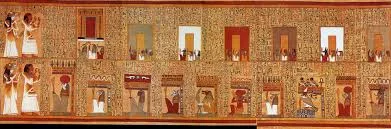
The Book of Gates is a major Ancient Egyptian funerary text from the New Kingdom. It narrates the passage of a newly deceased soul into the next world, corresponding to the journey of the sun god Ra through the underworld during the twelve hours of the night. Unlike the Amduat, which focuses on geography, the Book of Gates emphasizes the barriers (gates) that must be passed.
| Ancient Context | Guide to the Underworld (Duat) |
|---|---|
| Date | New Kingdom (c. 1300 BCE onward) |
| Location | Royal Tombs (Horemheb, Ramesses I, Seti I) |
| Key Feature | 12 Gates guarded by Serpents and Deities |
A New Theology
Appearing later than the Amduat (starting end of 18th Dynasty), the Book of Gates reflects a shift in theology. It moves away from the magical regeneration of the Amduat towards a more judicial and moral afterlife. It implies that simply being a king is not enough; one must also possess the knowledge to pass the tests of the guardians.
The Authorization to Pass
The text served to guide Ra (and the deceased Pharaoh) safely through the night. Its primary function was to equip the soul with the names of the gatekeepers. In Egyptian magic, knowing the name of a being gave one power over it. Without this knowledge, the gates would remain shut, and the soul would be trapped in darkness.
Structure of the Night
The text is divided into twelve hours, each separated by a massive gate. The narrative follows the solar barque as it travels hour by hour. The text is highly structured, with registers showing the blessed receiving rewards and the damned receiving punishment.
The Watchers
Every hour ends with a gate protected by three figures: a Gatekeeper, a Watcher, and a Herald. They are often depicted as terrifying, knife-wielding demons or fire-breathing serpents. To pass, Ra (and the King) must speak their secret names, proving his divine authority.
| Role | Function | Symbolism |
|---|---|---|
| Gatekeeper | Physical Barrier | Defense of the threshold. |
| Watcher | Observer | Vigilance against chaos (Isfet). |
| Herald | Announcer | Permission to enter. |
The Lake of Fire
The Book of Gates contains some of the most graphic depictions of the "Hell" concept in ancient Egypt. It introduces the Lake of Fire (in the 6th Hour). For the blessed, the waters are cool and refreshing. For the enemies of Ra, the waters turn into a burning sea of destruction. This enforces the concept of Ma'at: cosmic justice is absolute.
The Righteous
Those who passed judgment lived in the presence of Ra. They are depicted receiving rations of grain and clothing. They assist Ra in towing his boat, acting as part of the cosmic crew that keeps the universe running. Their reward is existence itself.
The Cosmic Ruler
The King identifies completely with Ra. By knowing the text, he becomes the judge, the traveler, and the ruler of the night. It reinforced the Pharaoh's role not just as a political leader, but as a cosmic entity responsible for maintaining the order of the universe even after death.
Visual Style
The art style of the Book of Gates is distinct from the Amduat. It uses clear registers and detailed figures rather than stick figures. The scenes are dramatic, showing bound captives, decapitated enemies, and giant serpents, emphasizing the peril and power of the journey.
The Underworld Corpus
The Book of Gates is part of a larger library of "Books of the Netherworld," including the Amduat, the Book of Caverns, and the Book of the Earth. While they share themes, the Book of Gates is unique in its focus on the architectural barriers (gates) and the classification of humanity.
Divine Cast
Besides Ra, the text features Osiris prominently as the judge in the Hall of Judgment (6th Hour). Other key figures include:
- Sia & Heka: Personifications of Perception and Magic who travel with Ra.
- Apophis: The chaos serpent who must be bound and defeated.
- Horus: Often shown overseeing the punishment of the enemies of his father Osiris.
Order vs. Chaos
The Book of Gates symbolizes the triumph of Order over Chaos. The gates represent the barriers of ignorance and impurity. passing them symbolizes the attainment of knowledge and purity. It teaches that eternity is not a right, but a reward earned through righteousness and wisdom.
Egyptological Importance
Scholars study this text to understand Egyptian concepts of justice, race, and the geography of the afterlife. The alabaster sarcophagus of Seti I (now in the Sir John Soane's Museum in London) is carved with the complete text of the Book of Gates, making it one of the most valuable sources for this composition.
Encyclopedia Summary
| Subject | Underworld Guide with 12 Gates |
|---|---|
| Central Figure | Ra (Sun God) |
| Key Concept | The Four Races of Mankind |
| Key Location | Lake of Fire (Punishment) |
| Requirement | Knowledge of Guardians' Names |