The Era of Fusion

For nearly a thousand years (332 BC – 641 AD), Egypt was the beating heart of the Mediterranean. It began when Alexander the Great liberated Egypt from Persian rule and was crowned Pharaoh. It flourished under the Ptolemies, who built Alexandria into a beacon of science and culture. It later became the personal property of the Roman Emperors, serving as the granary that fed Rome.

This period saw the birth of a unique multicultural society where Egyptian gods wore Greek robes, Roman emperors were depicted as Pharaohs, and Coptic Christianity emerged from the deserts to conquer the soul of the nation.

332 BC Alexander Conquers Egypt
305 BC Ptolemaic Dynasty Begins
30 BC Death of Cleopatra / Roman Rule
641 AD Arab Conquest Ends Era

Encyclopedia Sections

Greco-Roman Egypt: A Complete Historical Overview

Greco-Roman Egypt began with Alexander the Great's conquest in 332 BC and continued through the Ptolemaic kingdom and Roman rule, ending with the Arab conquest in the 7th century AD. Egypt became a meeting point of Egyptian, Greek, Roman, Jewish, and later Christian traditions, with Alexandria serving as a major center of scholarship, trade, culture, and political power.
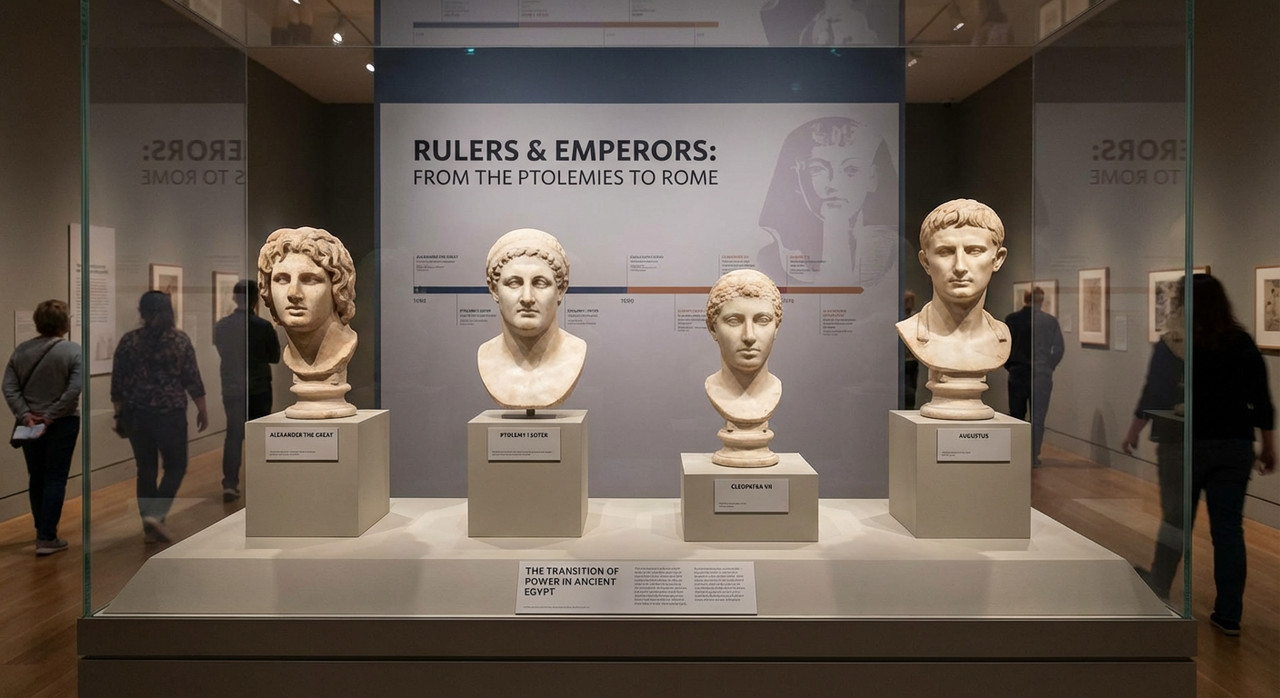
Rulers

Rulers & Emperors

From the Ptolemies to Roman Emperors. Alexander the Great, Ptolemy I Soter, Cleopatra VII, and Augustus.

Meet the Rulers
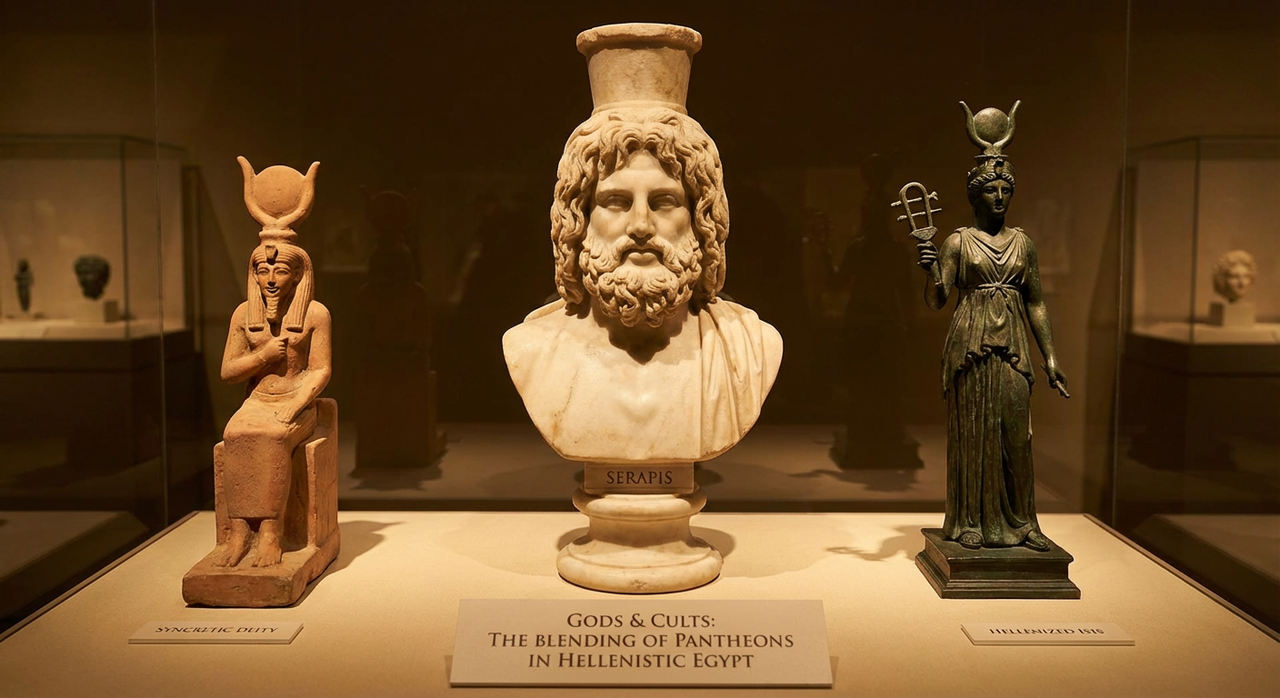
Serapis

Gods & Cults

The rise of Serapis, the Hellenized Isis, and the blending of Greek and Egyptian pantheons.

Explore Cults
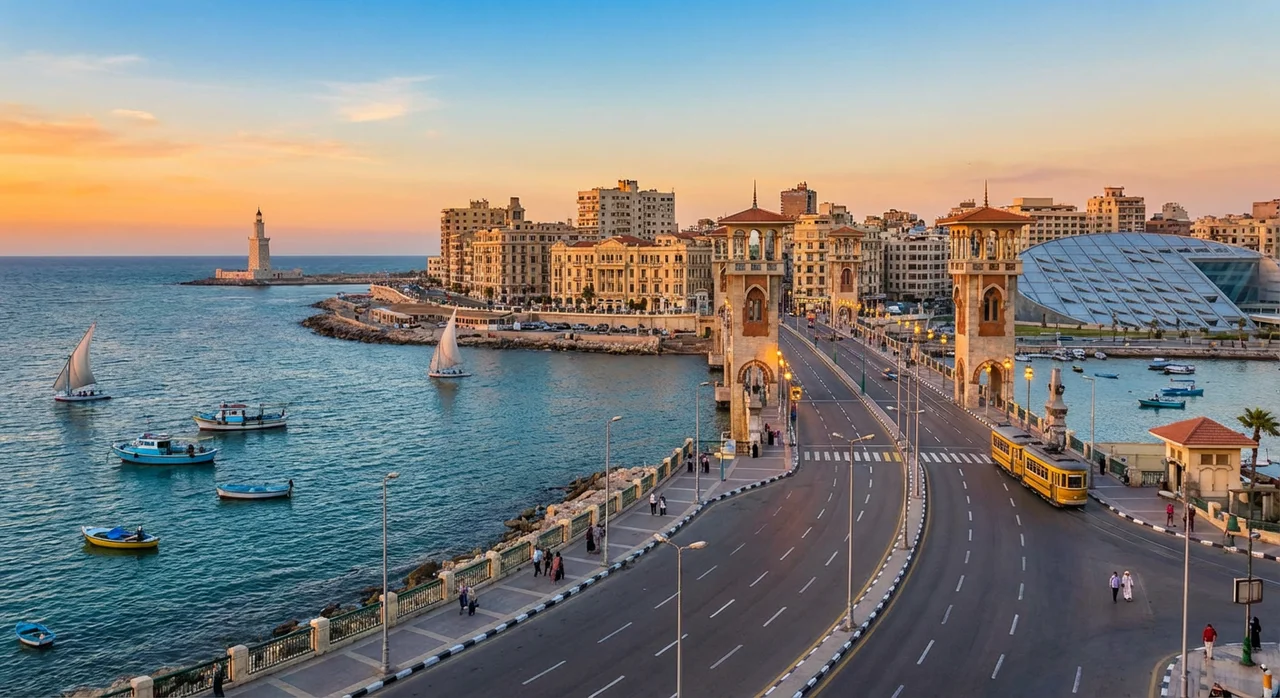
Alexandria

Alexandria

The intellectual capital of the world. The Mouseion, the Great Library, and the Pharos Lighthouse.

Visit the City
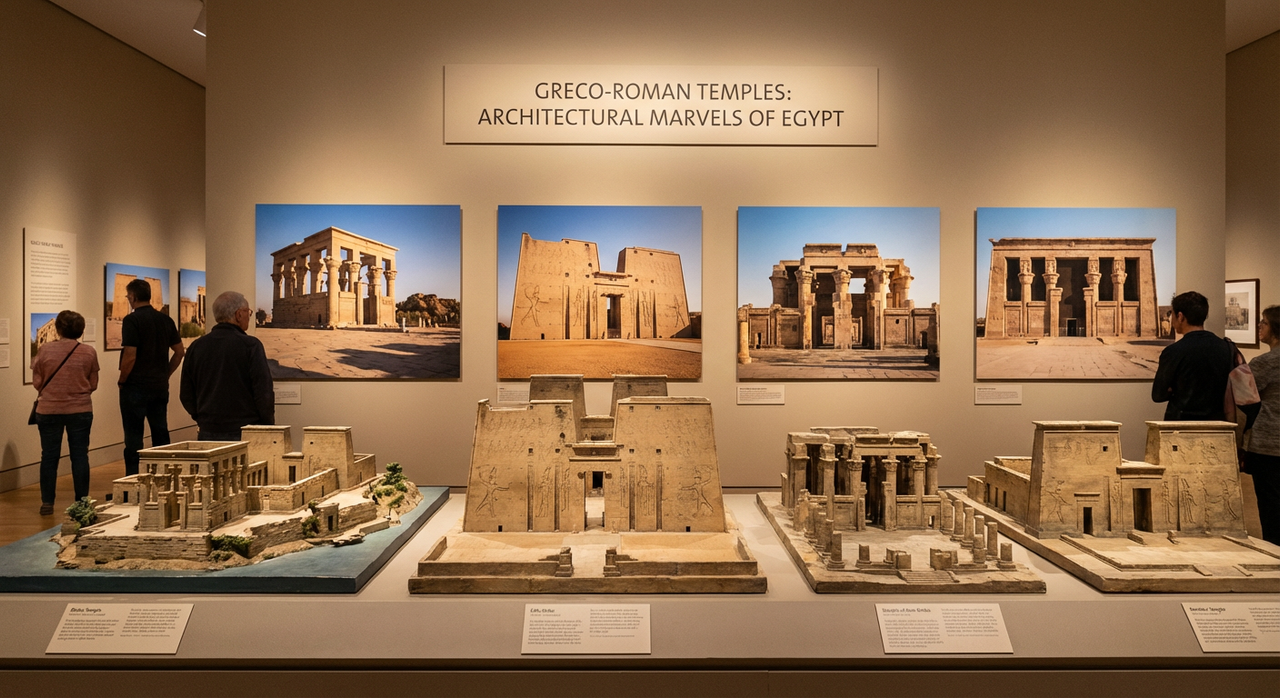
Philae

Greco-Roman Temples

Architectural marvels built during this era: Philae, Edfu, Kom Ombo, and Dendera.

View Temples
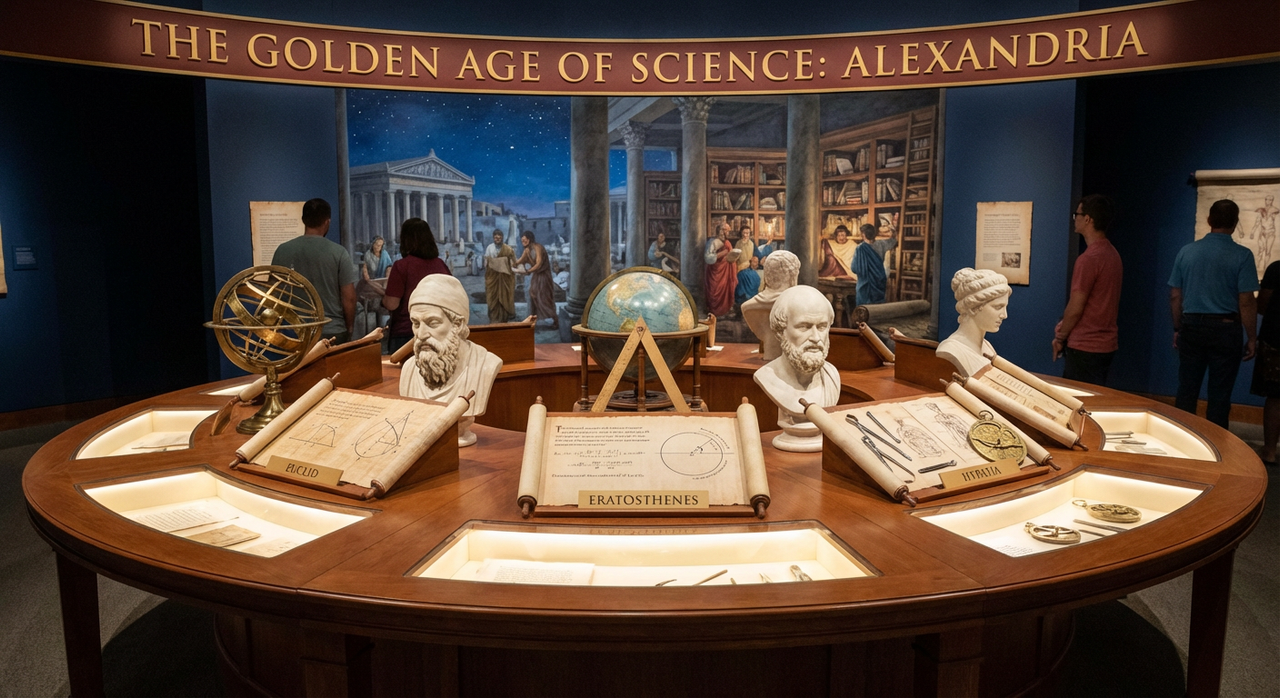
Science

Science & Knowledge

The golden age of astronomy, mathematics, and medicine. Euclid, Eratosthenes, and Hypatia.

Learn More
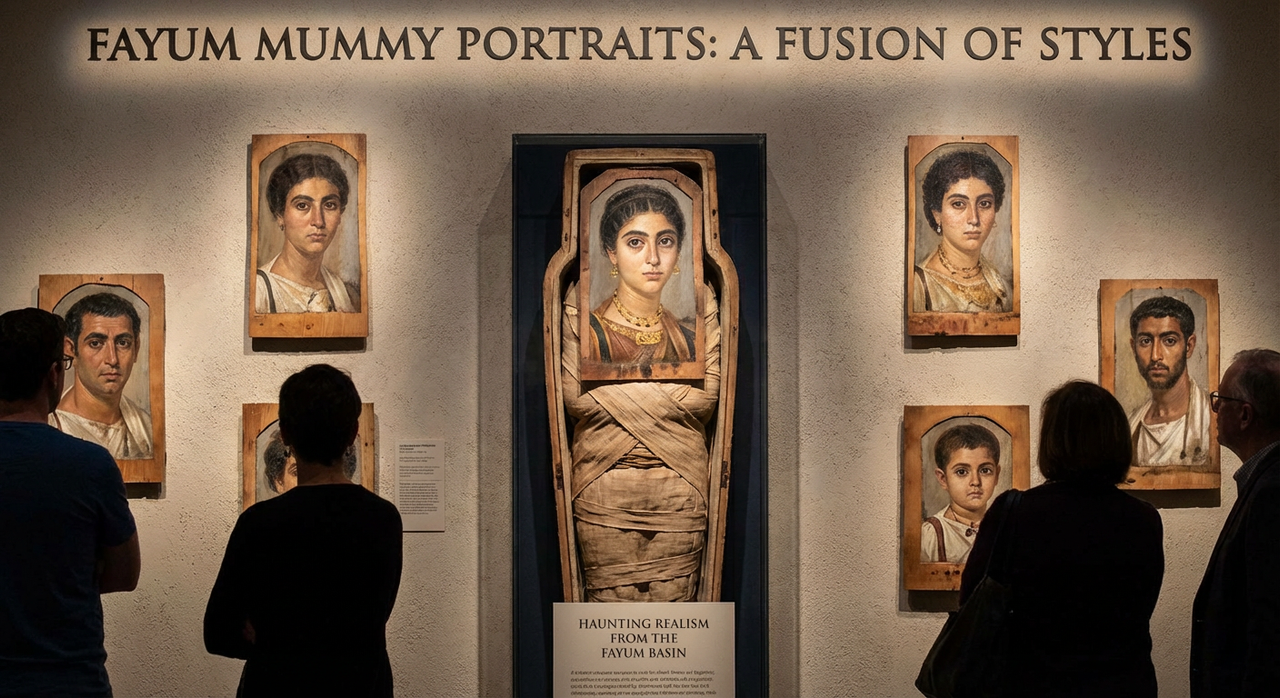
Fayum Portraits

Art & Fayum Portraits

The hauntingly realistic Mummy Portraits of Fayum, representing a unique fusion of styles.

View Art
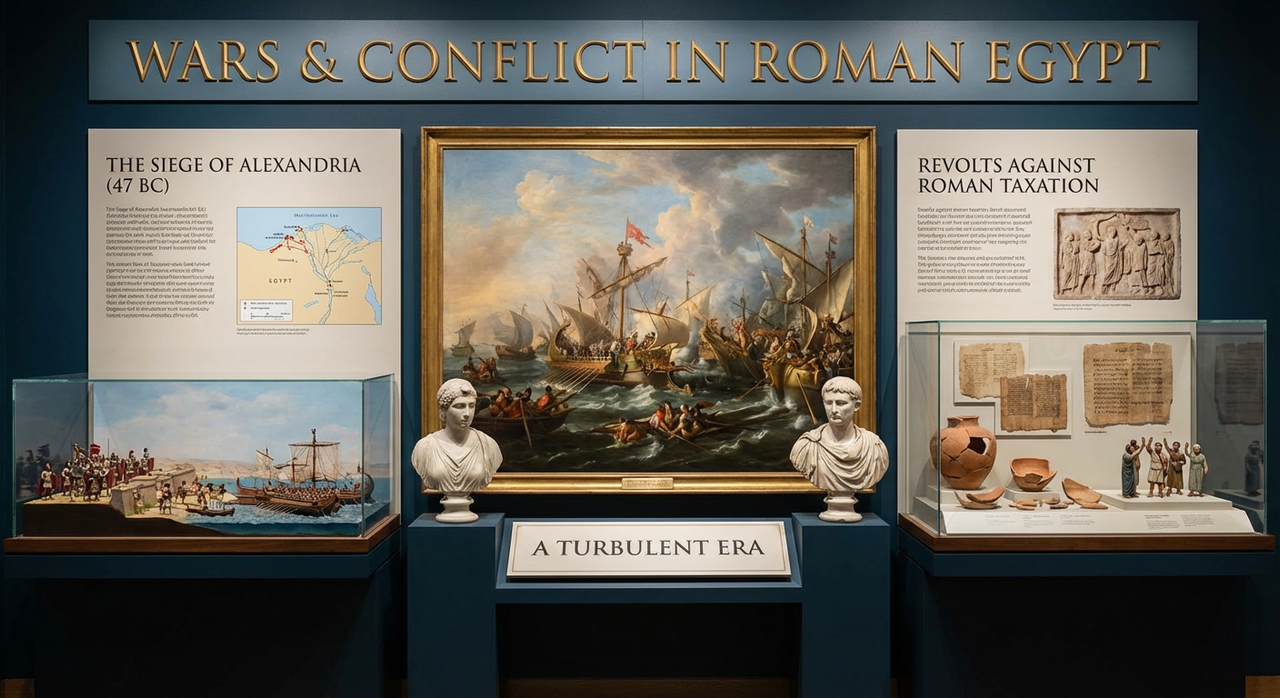
Wars

Wars & Conflict

The Siege of Alexandria, the Battle of Actium, and revolts against Roman taxation.

Read History
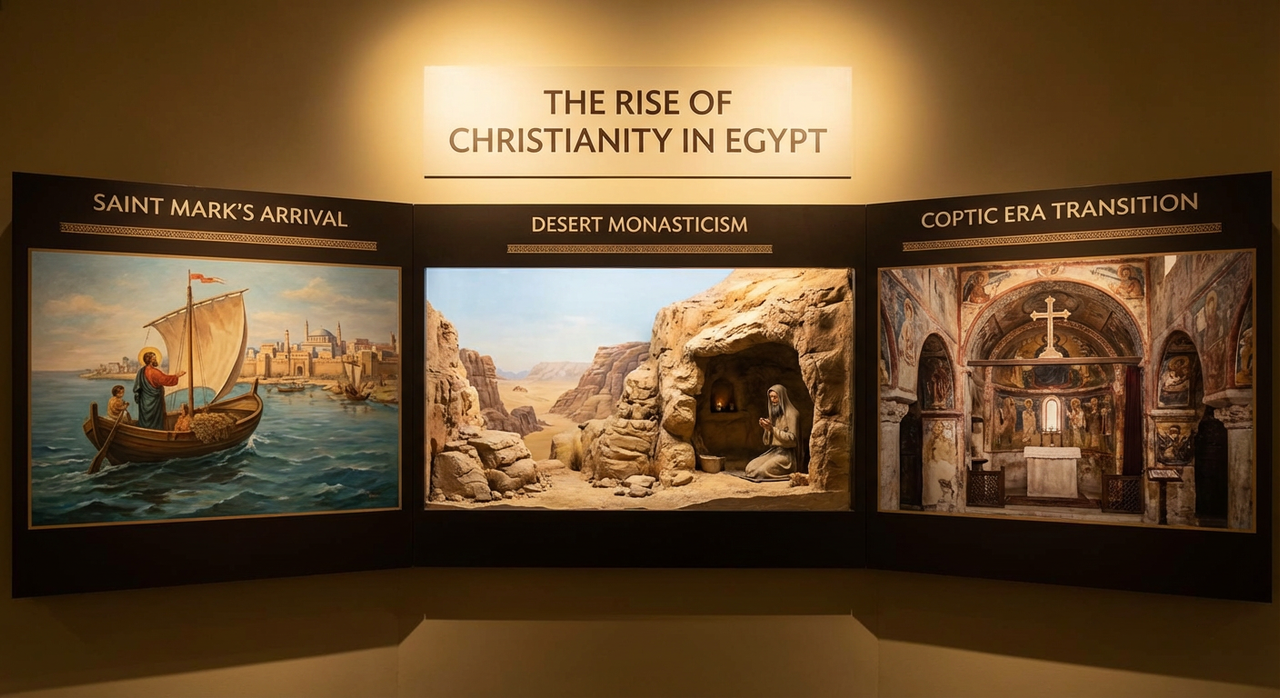
Coptic

Rise of Christianity

Saint Mark's arrival, the birth of Monasticism in the desert, and the transition to the Coptic era.

Explore Faith
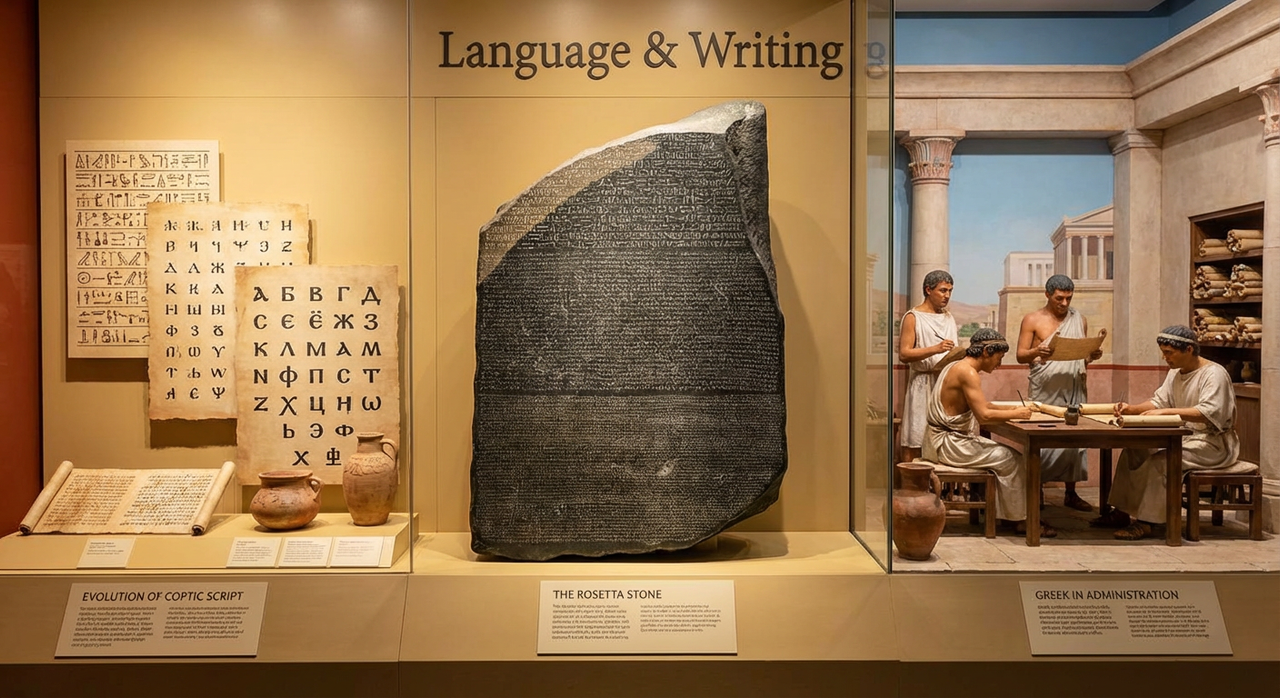
Language

Language & Writing

The Rosetta Stone, the use of Greek in administration, and the evolution of the Coptic script.

Read Scripts
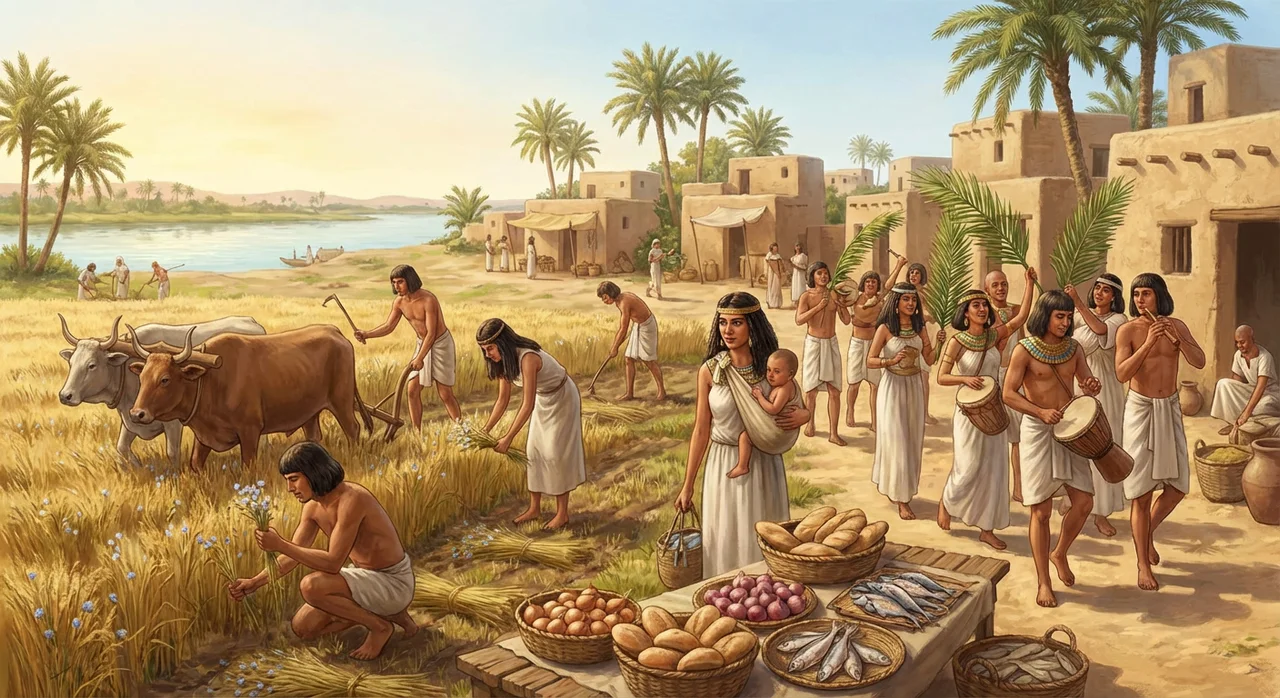
Daily Life

Daily Life

Life in cosmopolitan Alexandria vs. the countryside. Fashion, theaters, and baths.

Explore Life
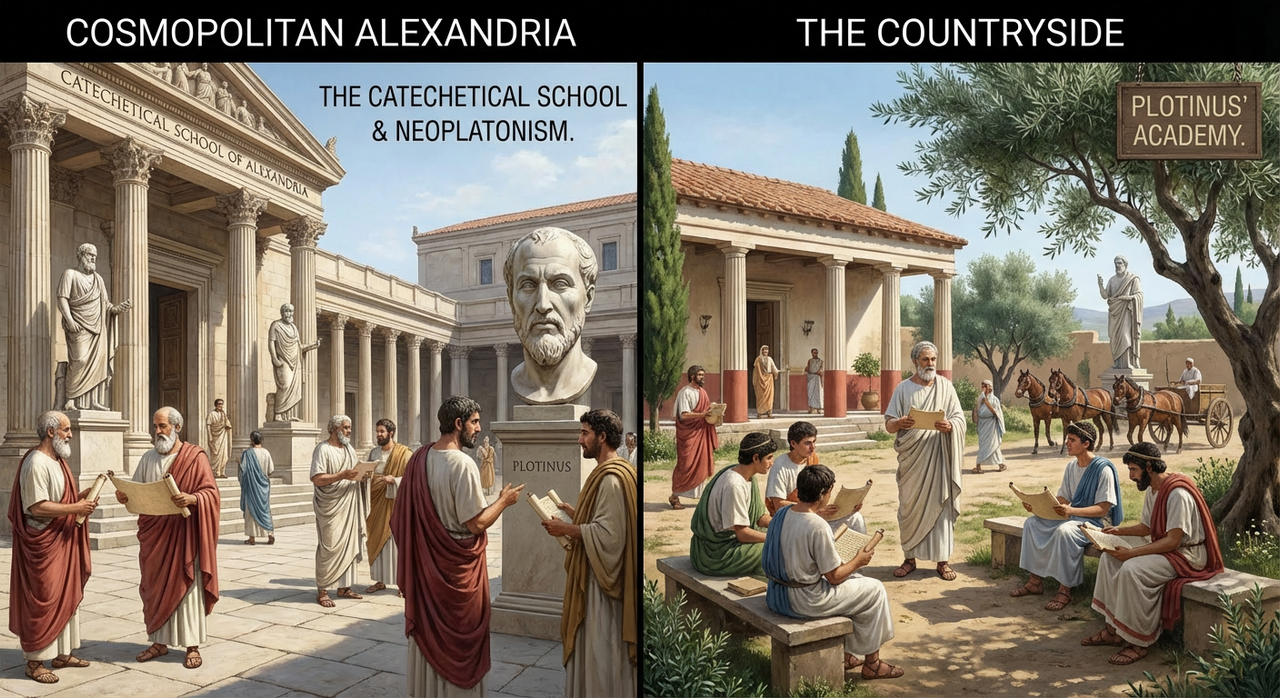
Philosophy

Philosophy & Schools

The Catechetical School of Alexandria, Neoplatonism, and the intellectual legacy of Plotinus.

Learn More
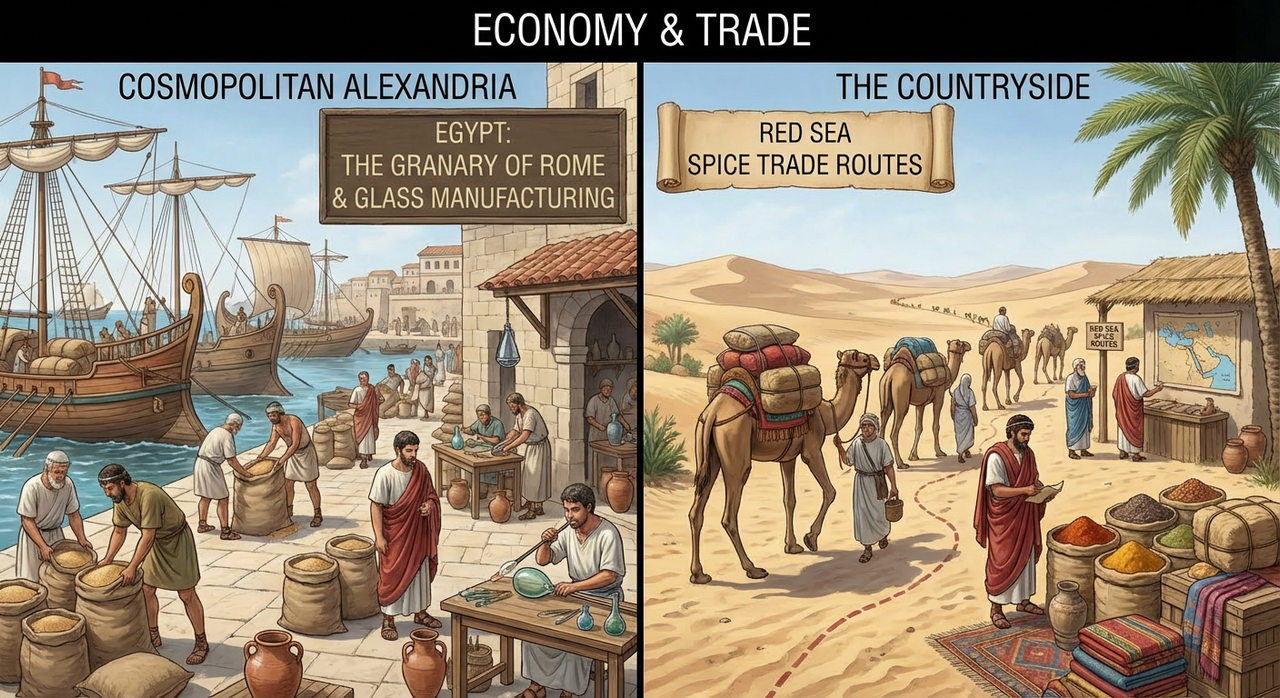
Economy

Economy & Trade

Egypt as the granary of Rome, glass manufacturing, and the Red Sea spice trade routes.

Explore Trade
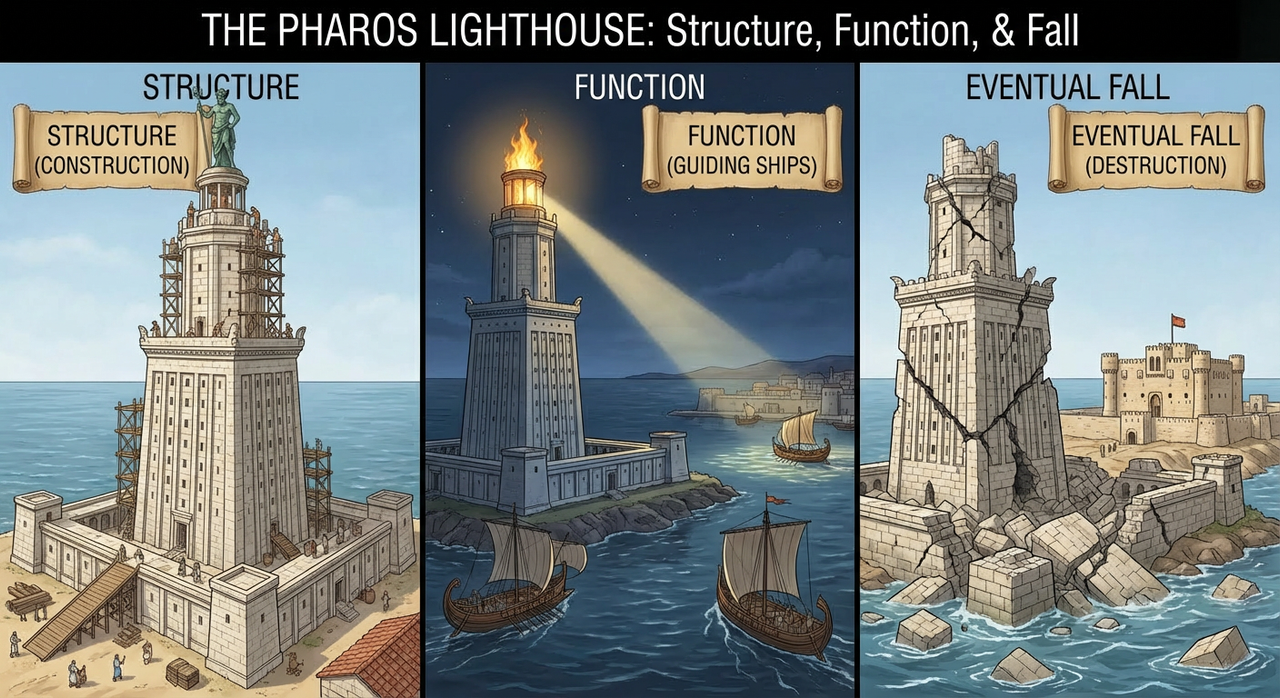
Lighthouse

The Pharos Lighthouse

One of the Seven Wonders of the Ancient World. Its structure, function, and eventual fall.

See Wonder
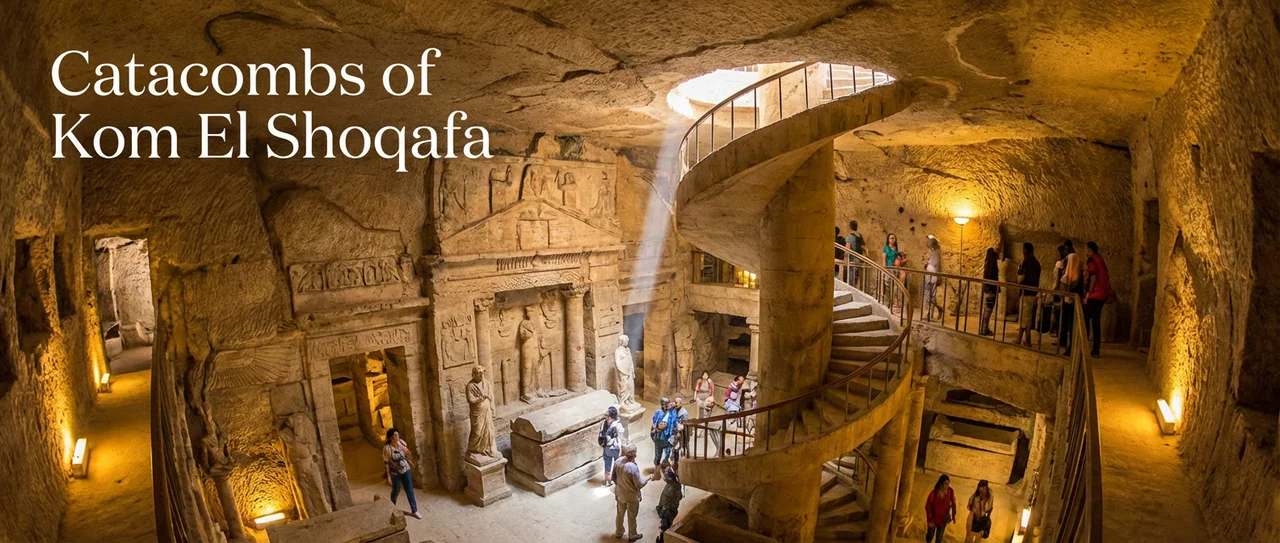
Catacombs

Catacombs of Kom El Shoqafa

A subterranean wonder in Alexandria where Egyptian, Greek, and Roman art collide.

Descend

Greco-Roman Egypt FAQ

When did the Greco-Roman period in Egypt begin?

It began with Alexander the Great's conquest of Egypt in 332 BC and developed through the Ptolemaic kingdom and subsequent Roman rule.

Why was Alexandria important in Greco-Roman Egypt?

Alexandria was a major Mediterranean center of scholarship, trade, culture, and political life. Its intellectual heritage is closely associated with the Mouseion, the Great Library, and the Pharos Lighthouse.

Who was Cleopatra VII?

Cleopatra VII was the last active ruler of the Ptolemaic Kingdom of Egypt and one of the best-known figures of the Greco-Roman period.

What happened to Egyptian religion during this period?

Egyptian religious traditions continued while interacting with Greek and Roman beliefs. Deities and cults such as Serapis and the Hellenized form of Isis illustrate this cultural blending.

What are the most important Greco-Roman sites in Egypt?

Important sites associated with the era include Alexandria, the Pharos Lighthouse, Philae, Edfu, Kom Ombo, Dendera, and the Catacombs of Kom El Shoqafa.

How did Greco-Roman Egypt influence science and knowledge?

The period contributed to major traditions in astronomy, mathematics, medicine, geography, philosophy, and scholarship, with Alexandria playing a particularly important intellectual role.

Plan Your Egypt Experience

After exploring Greco-Roman Egypt, discover the modern destinations and archaeological sites connected with Alexandria, the Nile Valley, ancient temples, museums, and Egypt's wider historical heritage.

Plan Your Egypt Trip on WhatsApp

Editorial team: Egypt Lover Team

Last updated: August 8, 2026

Connect With Us