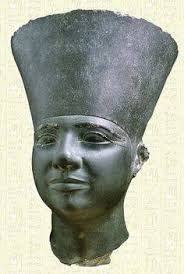
Identification
The Statue of King Userkaf is a key artifact from the beginning of the Fifth Dynasty. Though surviving only in fragments, it represents a crucial moment in Egyptian art and history, marking the shift from the monumental pyramid age to a new era of solar-centered ideology.
| Object | Statue of King Userkaf |
|---|---|
| Date | Fifth Dynasty (c. 2494–2487 BCE) |
| Material | Limestone (fragments known) |
| Original Location | Pyramid complex and Sun Temple, Abusir/Saqqara |
| Current Location | Egyptian Museum, Cairo (attributed fragments) |
Historical Importance
The statue of Userkaf is historically important because it marks the beginning of the Fifth Dynasty. It reflects the significant shift from a pyramid-centered focus to a solar-centered ideology. The changes in royal representation and scale signal the dawn of a new religious and artistic era.
King Userkaf
Userkaf was the founder of the Fifth Dynasty and the builder of a pyramid at Saqqara. He was the first king to build a separate Sun Temple dedicated to Ra at Abusir. He strongly emphasized the title "Son of Ra," and his reign is defined by the ascendancy of solar ideology.
Discovery
Statues of Userkaf survive only in fragments. These were found during excavations at his pyramid complex in Saqqara and his Sun Temple at Abusir. Identification has been made through inscriptions and stylistic analysis, making even these fragmentary finds historically crucial.
Original Context
Userkaf’s statues originally stood in his pyramid mortuary temple and in the ritual areas of his Sun Temple. They were placed in offering chapels, indicating that the royal cult now incorporated direct solar worship alongside traditional funerary rites.
Function of the Statue
The statue functioned as a cult image of the king and a vessel for his Ka. Uniquely, it also served as a participant in solar rituals, representing the king as he worshiped Ra eternally, bridging the gap between the funerary and solar cults.
Description
Based on surviving fragments, Userkaf was depicted either seated or standing, wearing traditional royal regalia. He is shown in a formal, frontal pose. While the form remains conservative and traditional, the meaning imbued within it had shifted significantly.
Artistic Style
The statue is notably smaller in scale than the monumental works of the Fourth Dynasty. There is less emphasis on sheer size and more on simplified carving and increased standardization. This reduction in scale reflects the ideological shift where the temple of Ra became more important than the king's own memorial.
Facial Features
Fragments suggest the face was idealized with less refined modeling compared to earlier masterpieces. There is reduced individuality, prioritizing the symbol of kingship over a portrait of the man. The art serves the office and the god, rather than the personality.
Material and Technique
Limestone was preferred over the hard stones (like diorite) used by Khafre and Menkaure. This less labor-intensive choice reflects practical artistic decisions and the redirection of national resources towards the construction of Sun Temples.
Religious Meaning
In Fifth Dynasty belief, the king is the Son of Ra, distinct from the god himself. Solar rebirth replaces the earlier emphasis on absolute divinity. Statues were essential to support the daily solar ritual, marking a change in the theological hierarchy.
Funerary Beliefs
Userkaf’s statues reflect increased solar afterlife beliefs. There is an integration of sun worship with the traditional mortuary cult. While Ka statues were still needed, the concept of the afterlife became predominantly solar in nature.
Artistic Context
Compared to Shepseskaf, Userkaf's art shows more explicit solar symbolism. There is less focus on royal individuality and more on religious standardization. Ideology now dominates art, shaping the form to fit the function of the solar cult.
Archaeological Significance
The statue helps scholars understand the transition from the Fourth to the Fifth Dynasty. It provides evidence of early solar cult art and the decline of hard-stone royal sculpture, marking a significant turning point in Egyptian history.
Condition
The statue survives only in fragments, with many pieces damaged or reused in later periods. It is studied primarily through reconstruction. The absence of a complete statue tells its own story about the changing priorities of the era.
Comparison: Fourth vs. Fifth Dynasty
| Dynasty | Style | Focus |
|---|---|---|
| Fourth Dynasty | Monumental, Divine | Absolute Power |
| Fifth Dynasty | Smaller, Standardized | Solar Ritual |
A clear shift from the stone mountain to the sun temple.
Educational Value
This statue is used to teach religious change in art, political shifts, and the evolution of royal ideology. It is essential for dynastic studies, illustrating how art adapts to serve new theological realities.
Simplified Summary
The Statue of Userkaf represents the beginning of solar kingship. It marks a time when royal art became less monumental in scale but more religiously focused, opening a new chapter in the spiritual history of Egypt.