Identification
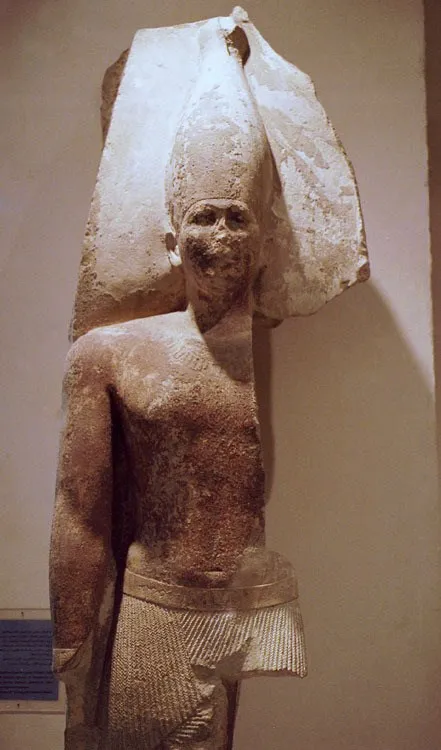
The Statue of King Sneferu is a significant piece from the Fourth Dynasty, representing the first fully mature Old Kingdom royal style. It marks the transition from experimental forms to confident, classical royal sculpture.
Historical Importance
The statue of Sneferu is historically crucial as it reflects the ideology of perfected kingship. It shows the transition from experimental to confident royal sculpture, marking the visual foundation for later Fourth Dynasty art that would be emulated by his successors, including Khufu.
King Sneferu
Sneferu was the founder of the Fourth Dynasty and the father of Khufu (builder of the Great Pyramid). He was a prolific builder, constructing three major pyramids: the Meidum Pyramid, the Bent Pyramid, and the Red Pyramid. Known as a just and successful ruler, his statues project stability and prosperity.
Discovery and Context
These statues were found in pyramid and temple contexts, likely placed in mortuary temples or subsidiary chapels. They served specific cultic and funerary functions, acting as integral parts of the royal cult system established to worship the king after death.
Function of the Statue
The statue functioned as a physical embodiment of the king and a resting place for the Ka (life force). It acted as a recipient of offerings and rituals, ensuring Sneferu’s eternal presence and ability to interact with the living world through the priesthood.
Description
Sneferu is typically depicted seated on a throne, wearing the White Crown of Upper Egypt. His hands rest on his knees or hold royal insignia. The posture is upright and balanced, defined by a sense of calm authority and timelessness.
Artistic Style
The style exhibits clear frontality and balanced proportions. The anatomy is more naturalistic than in earlier statues, showing controlled but confident carving. This represents the Old Kingdom style in its fully formed state.
Facial Features
The king's face is rounded with a calm, idealized expression. There is subtle modeling of the cheeks and eyes, giving him a youthful, timeless appearance. The aim was to portray the king as eternally perfect rather than aging.
Religious Meaning
In Egyptian belief, statues housed the Ka, allowing the king to receive offerings. This ensured his continued participation in ritual life. The statue was not just stone; it was a "living image" capable of spiritual interaction.
Funerary Beliefs
The statue connects directly to mortuary cult practices. It ensured the survival of the Ka and Ba by providing a physical anchor for the soul. It was a guarantee of immortality, eternal nourishment, and remembrance.
Artistic Development
Compared to earlier kings, Sneferu’s sculpture is more refined than that of Khasekhemwy and more confident than Djoser's. It laid the foundation for the art of Khufu and later kings, representing a key evolutionary step in Egyptian art history.
Material and Technique
These statues were carved from fine limestone with smooth surfaces. Originally, they would have had traces of paint. The craftsmanship shows a significant improvement in the handling of stone compared to previous dynasties.
Condition
Many statues of Sneferu survive only as fragments, though some heads and torsos remain intact. Despite their fragmentary nature, they are invaluable for understanding the period and have been carefully conserved.
Archaeological Significance
The statue helps scholars understand Fourth Dynasty royal ideology and the development of pyramid cults. It demonstrates the standardization of royal imagery, serving as a cornerstone of Old Kingdom art studies.
Comparison
| King | Style | Context |
|---|---|---|
| Khasekhemwy (Dynasty 2) | Transitional | Experimental form |
| Djoser (Dynasty 3) | Foundational | Step Pyramid Serdab |
| Sneferu (Dynasty 4) | Classical Maturity | True Pyramid Complex |
The model is set for the Golden Age.
Educational Value
This statue is used to teach Old Kingdom sculpture, royal symbolism, and the development of the artistic canon. It is essential for art history students to understand the shift towards the classic "Egyptian style."
Simplified Summary
The Statue of Sneferu is one of the earliest fully developed royal statues, expressing confidence, order, and eternal kingship. It defines what a pharaoh should look like for generations to come.