Abu Simbel Day Trip from Aswan
Great Temple of Ramesses II · Temple of Nefertari · Lake Nasser
Private Guided
UNESCO World Heritage
Full-Day Excursion
Great Temple of Ramesses II · Temple of Nefertari · Lake Nasser
Exclusive Offer
Grab The Deal
Get a Custom Quote Today
Full Day
Departs Early Morning
Private Tour
Your group only
By Road or Flight
Aswan ⇄ Abu Simbel
Expert Guide
Egyptologist
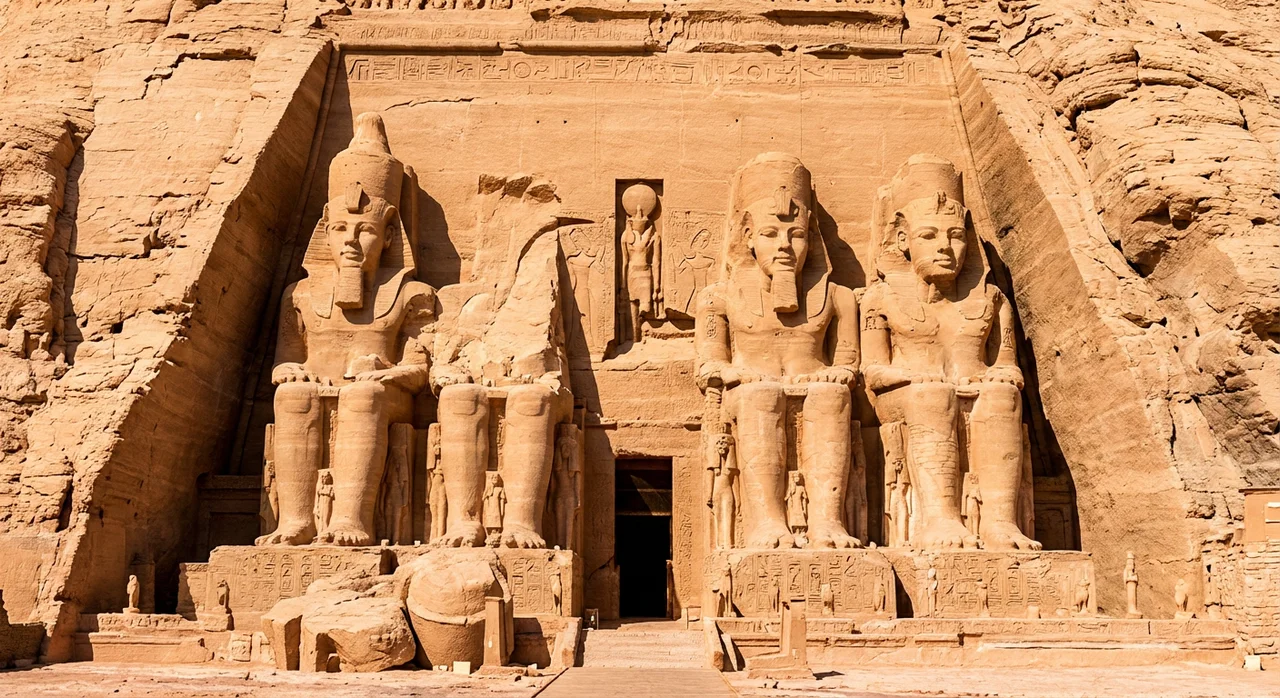
Venture deep into the Nubian desert on this private full-day trip from Aswan to Abu Simbel, one of Egypt's most spectacular UNESCO World Heritage Sites. Standing on the western shore of Lake Nasser near the Sudanese border, the twin rock-cut temples were carved directly into the mountainside by Ramesses II more than 3,000 years ago and later rescued from the rising waters of Lake Nasser in a remarkable UNESCO relocation project during the 1960s. Face the four colossal seated statues that guard the Great Temple, then step inside the more intimate Temple of Nefertari, one of the few Egyptian monuments ever dedicated to a queen.
Travel with a private Egyptologist guide either by road in an air-conditioned vehicle through the scenic desert convoy route, or by a short domestic flight for those short on time. Both options include hotel pick-up and drop-off in Aswan, all entrance fees, and plenty of time to explore the temples and photograph the desert scenery along Lake Nasser. This excursion pairs perfectly with our Aswan and Nile Valley itineraries, or can be booked as a standalone day trip.
Our representative picks you up from your Aswan hotel in the very early morning for the journey to Abu Simbel, roughly 280 km (174 miles) south along the shore of Lake Nasser.
Explore the larger of the two rock-cut temples, guarded by four colossal seated statues of Ramesses II, each standing around 20 meters tall.
Visit the smaller, more intimate temple that Ramesses II dedicated to his Great Royal Wife, Queen Nefertari, and the goddess Hathor.
Enjoy free time along the lakeside promenade before heading back to Aswan.
Abu Simbel sits roughly 280 km south of Aswan, close to the Sudanese border, on the western shore of Lake Nasser. The site's two rock-cut temples were commissioned by Ramesses II around the 13th century BC: the Great Temple, fronted by four seated colossi of the pharaoh, and the smaller Temple of Hathor, dedicated to his wife Queen Nefertari. Rediscovered in the early 19th century, the temples faced permanent submersion as Lake Nasser filled behind the newly built Aswan High Dam. Between 1964 and 1968, an international team coordinated by UNESCO cut both temples into more than a thousand blocks and reassembled them on higher ground, preserving the alignment that lets sunlight reach the inner sanctuary on two days each year.
Aswan, Egypt's southernmost major city, is the natural starting point for a visit to Abu Simbel and a relaxed destination in its own right. The Aswan High Dam, completed in 1970, created Lake Nasser, one of the largest artificial lakes in the world, stretching hundreds of kilometers south into Sudan. Beyond the dam, Aswan is known for its Nubian villages, the Unfinished Obelisk quarry, and felucca sailing on the Nile — a gentler, more colorful counterpart to the monumental desert scenery of Abu Simbel itself.
Contact our travel experts to arrange your private day trip and make it truly unforgettable.