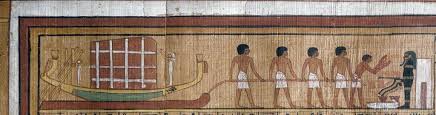
"Egypt was not an isolated island in the desert. It was the hub of the ancient world. The Nile was the artery, pumping grain, gold, and stone throughout the kingdom, while Red Sea ports opened the doors to the exotic riches of Africa and Asia."
The Nile River was more than just a source of water; it was the nation's economic spine. Internal trade involved the relentless movement of massive resources: barges laden with grain from the Delta, granite obelisks from Aswan, and limestone from Tura. But the river also served as the launchpad for international commerce, connecting Egypt to the wider world.
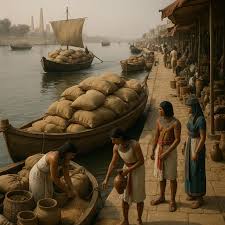
Moving Mountains: Internal Trade
The unification of Egypt was maintained by the constant flow of goods.
- Grain (The Currency): Wheat and barley were the primary form of payment. Fleets of state ships collected the harvest tax and redistributed it to temples and workers across the country.
- Stone: The most impressive feat of Nile transport was the movement of stone. During the flood season, massive barges could float right up to the quarries to load 500-ton obelisks and transport them hundreds of miles to Luxor or Giza.
Gateway to the World
Egypt lacked key resources like good timber and certain metals, making foreign trade essential.
The Red Sea & Punt
Expeditions to the mysterious "Land of Punt" (likely Somalia/Eritrea) launched from Red Sea ports like Mersa Gawasis. Ships were built on the Nile, dismantled, carried across the desert, and reassembled at the coast to return with frankincense, myrrh trees, and exotic animals.
Nubia (Land of Gold)
To the south, Nubia was the primary source of gold ("Nub" means gold). Heavily guarded convoys and fortresses protected this vital flow of wealth, along with ivory, ebony, and ostrich feathers.
The Mediterranean: Timber and Oil
The Delta ports connected Egypt to the Levant and the Aegean.
- Byblos (Lebanon): Egypt's oldest trading partner. Ships returned laden with massive Cedar logs essential for building temple doors, royal barges, and flagpoles, as Egypt had no large trees.
- Aegean: Trade with Minoan Crete and Mycenaean Greece brought olive oil, silver, and painted pottery in exchange for Egyptian grain, papyrus, and linen.