📜 Timeline of Egyptian History
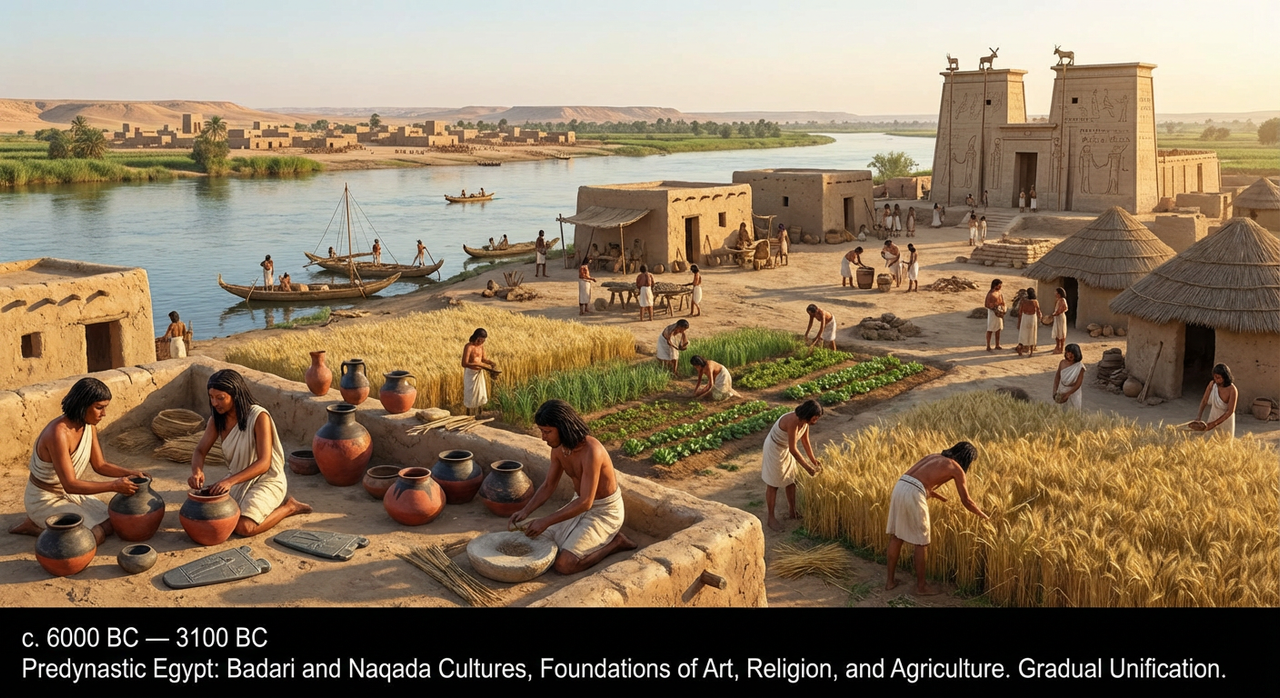
Predynastic Egypt
Before the Pharaohs, there were the cultures of Badari and Naqada. This era laid the foundations of Egyptian art, religion, and agriculture. The gradual unification of settlements along the Nile set the stage for the first nation-state in history.
Explore Predynastic Era →
Ancient Egypt (Pharaonic)
The unification of Upper and Lower Egypt by King Narmer began 30 dynasties of glory. This era saw the building of the Pyramids (Old Kingdom), the military expansion (New Kingdom), and the golden age of Rameses II and Tutankhamun. It is the era of gods, temples, and mummies.
Explore Pharaonic Era →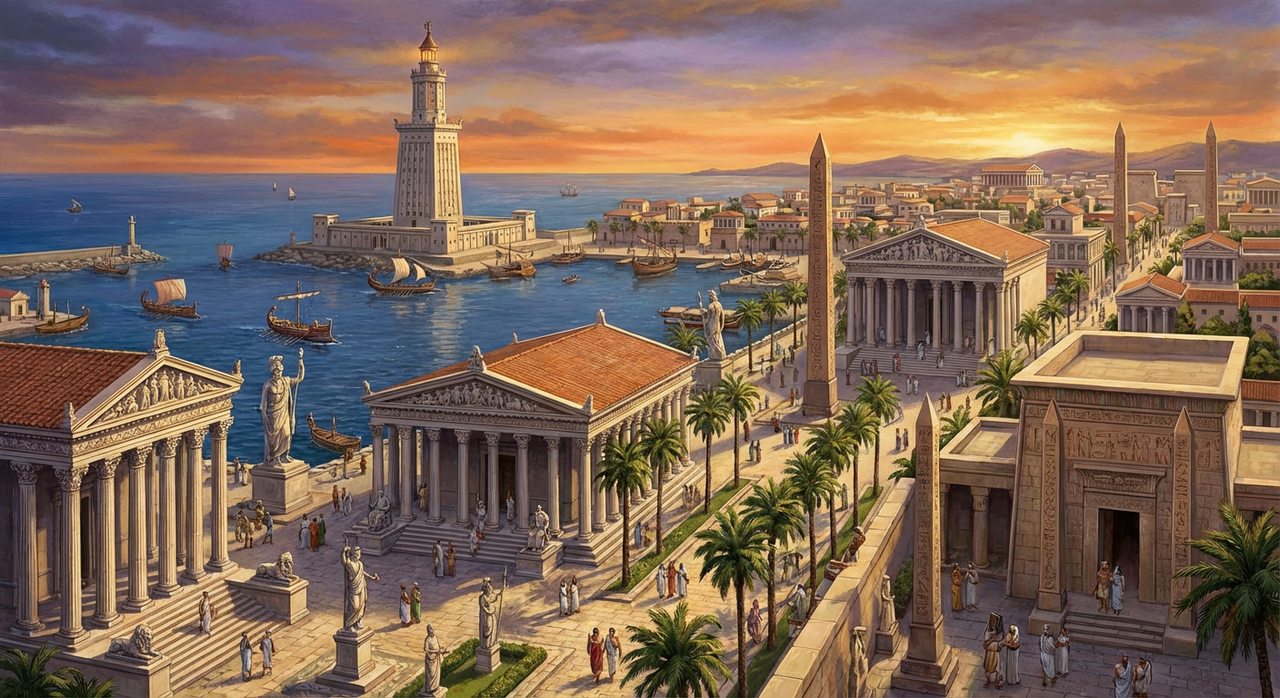
Greco-Roman Period
Alexander the Great liberated Egypt from the Persians and founded Alexandria. The Ptolemies ruled as Greek Pharaohs, making Egypt a beacon of science and culture. Later, Rome made Egypt its personal granary. This was a time of cultural fusion, philosophy (Neoplatonism), and architectural marvels like the Pharos Lighthouse.
Explore Greco-Roman Era →
Coptic Era
Christianity entered Egypt through Saint Mark. Egypt became the birthplace of Monasticism, with desert fathers like St. Anthony shaping Christian thought globally. The Coptic language (the final stage of Ancient Egyptian) flourished, preserving the link to the pharaonic past.
Explore Coptic Era →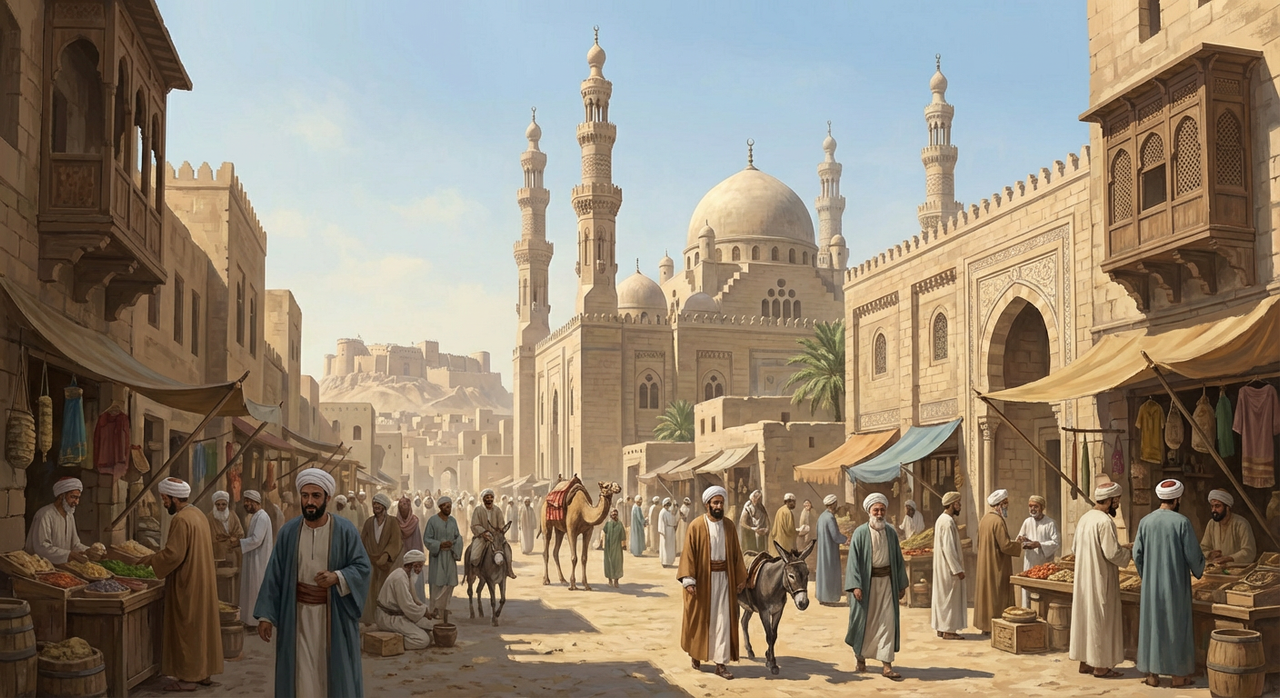
Islamic Era
The Arab conquest brought Islam and the Arabic language. This long era saw the rise of magnificent empires: the Fatimids who founded Cairo and Al-Azhar, the Ayyubids under Saladin, and the Mamluks who defended Egypt against Mongols and Crusaders, leaving behind breathtaking architecture.
Explore Islamic Era →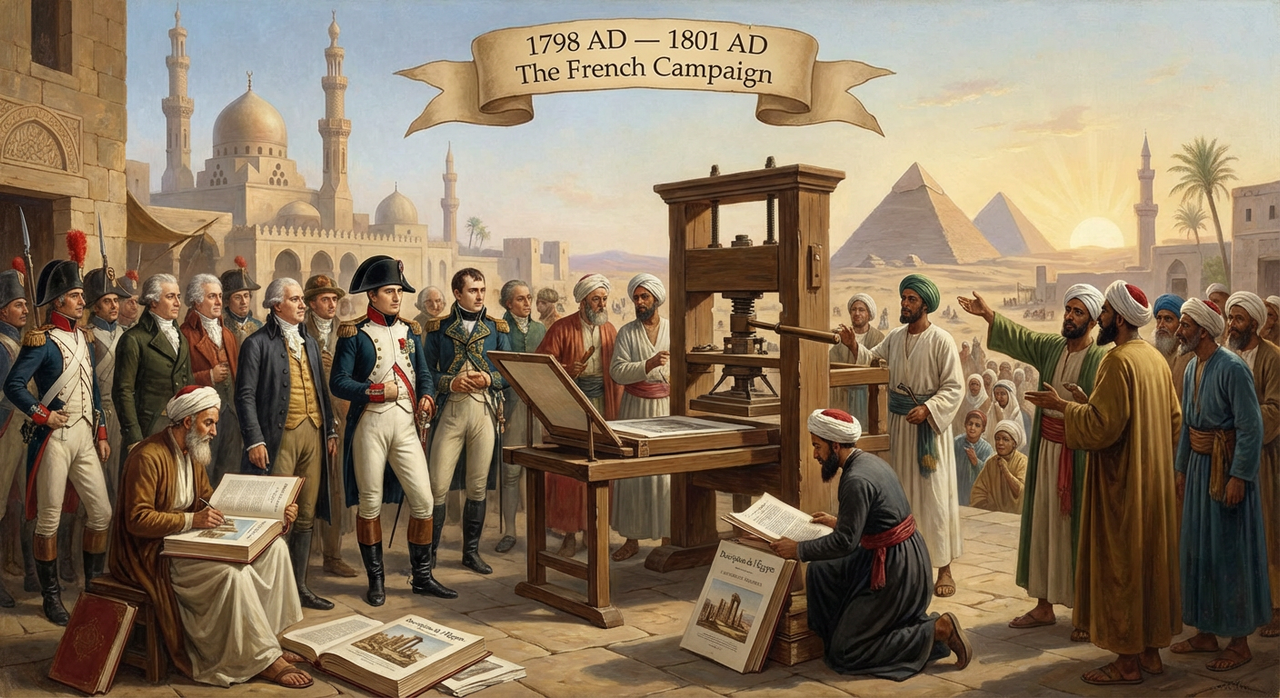
The French Campaign
Though brief, Napoleon's expedition was a turning point. It brought the printing press and the Description de l'Égypte, sparking global interest in Egyptology and awakening Egypt's desire for modernization and independence from the Ottoman Empire.
Explore French Era →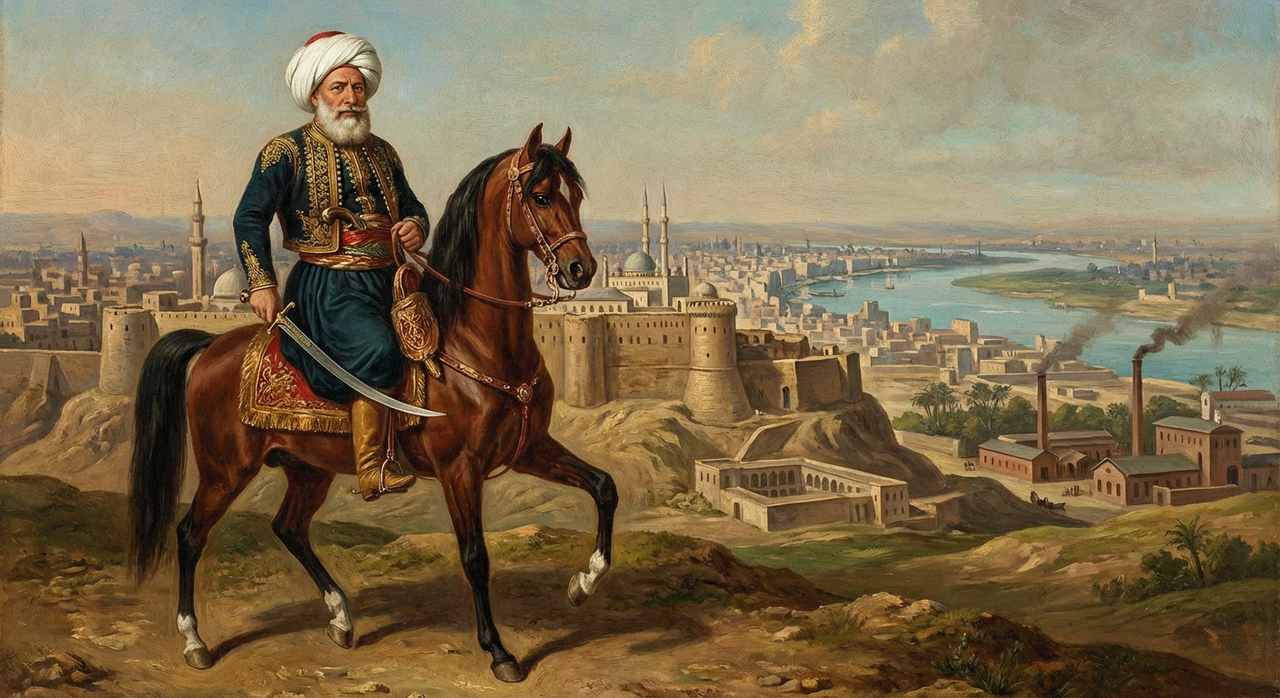
Modern Egypt (The Dynasty)
Founded by Muhammad Ali Pasha, the father of modern Egypt. This era saw the building of the Suez Canal, the modernization of the army and education, and the rise of nationalist movements like the 1919 Revolution against British occupation.
Explore Modern Era →
Contemporary Egypt (The Republic)
The 1952 Revolution established the Republic. Leaders like Nasser, Sadat, and Sisi have shaped the nation's path through the High Dam, the October 1973 Victory, and today's ambitious mega-projects like the New Administrative Capital.
Explore Contemporary Era →🏛️ Key Takeaways from Egyptian History
- Egyptian civilization spans over 5,000 years of continuous recorded history.
- The unification of Upper and Lower Egypt around 3100 BC created the first nation-state.
- Egypt was a global center of science, medicine, and architecture for millennia.
- The country's strategic location made it a crossroads of empires and cultures.
- Modern Egypt preserves its ancient heritage while embracing contemporary development.
- Visiting Egypt offers a unique journey through layered history, from pharaonic temples to Islamic Cairo.
📱 Plan Your Historical Tour of Egypt
Contact us on WhatsApp to book private guided tours, custom itineraries, and exclusive packages to Egypt's most iconic historical sites.
Chat with us on WhatsApp❓ People Also Ask About Egyptian History
Who was the first pharaoh of Egypt?
King Narmer (also known as Menes) is widely considered the first pharaoh, credited with unifying Upper and Lower Egypt around 3100 BC and establishing the First Dynasty.
What is the oldest pyramid in Egypt?
The Pyramid of Djoser at Saqqara, built during the 27th century BC, is the oldest colossal stone building in Egypt and the earliest known pyramid.
Why is Egypt called the "Mother of the World"?
Egypt is called the "Mother of the World" (Om el-Dunya in Arabic) because it is one of the oldest continuous civilizations, with a rich history that has influenced global culture, science, and religion for millennia.
What language did ancient Egyptians speak?
Ancient Egyptians spoke the Egyptian language, which evolved through several stages: Old Egyptian, Middle Egyptian, Late Egyptian, Demotic, and finally Coptic, which is still used in the Coptic Orthodox Church today.
When was the Suez Canal built?
The Suez Canal was built between 1859 and 1869 under the supervision of French engineer Ferdinand de Lesseps, during the reign of Khedive Ismail of Egypt.
📌 Frequently Asked Questions About Egypt's History
Practical answers for travelers and history enthusiasts planning to explore Egypt's rich heritage.
What is the best time of year to visit Egypt's historical sites?
The ideal time to visit Egypt's historical sites is from October through April, when daytime temperatures range from 20–25°C (68–77°F). This makes exploring outdoor monuments like the Pyramids, Karnak Temple, and the Valley of the Kings comfortable and enjoyable.
How many days do I need to see Egypt's main historical attractions?
For a comprehensive historical tour, plan at least 10–14 days. This allows you to explore Cairo (Egyptian Museum, Pyramids), Luxor (Karnak, Valley of the Kings), Aswan (Abu Simbel), and optionally Alexandria or the Red Sea coast.
Is it safe to travel to Egypt as a tourist?
Egypt is generally safe for tourists, with dedicated tourism police and security at all major historical sites. It's always recommended to book through reputable tour operators and follow local guidance for the safest experience.
What should I wear when visiting temples and mosques in Egypt?
Dress modestly when visiting religious sites: shoulders and knees should be covered. Comfortable walking shoes are essential, and a hat, sunglasses, and sunscreen are recommended year-round.
Can I book a private guide for Egyptian historical tours?
Yes, Egypt Lover offers private, licensed Egyptologist guides for personalized historical tours. Contact us via WhatsApp at +201009305802 to arrange a custom itinerary.