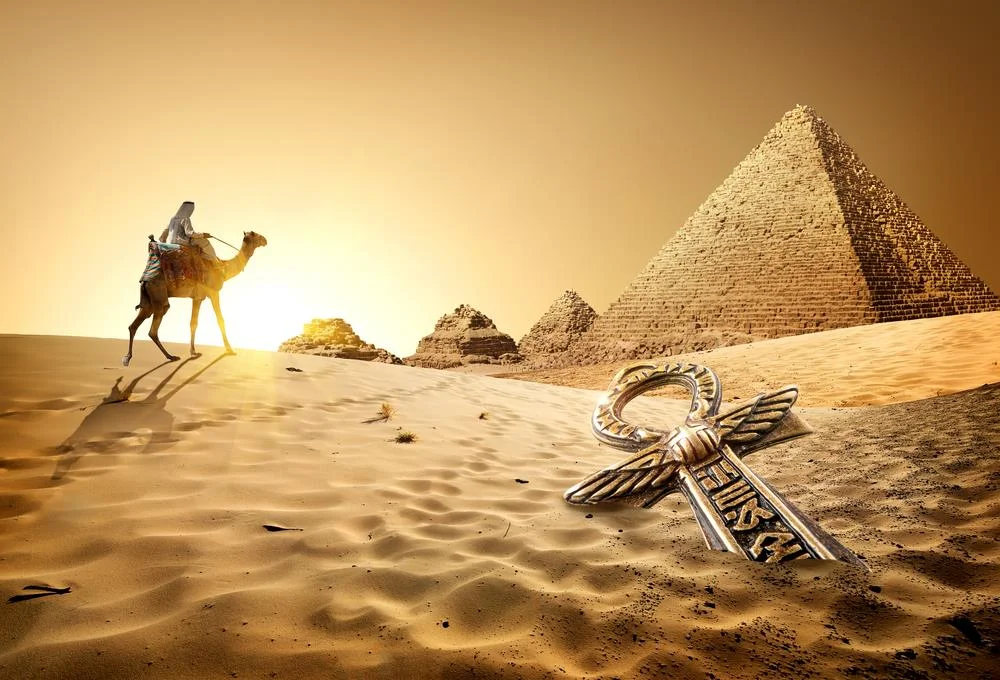
"O Living One on earth who passes by this tomb... I have built this house of eternity, I have carved my name in stone, that my name may live forever."
To the Ancient Egyptians, a house on earth was merely a temporary lodging, built of mudbrick to last a lifetime. A tomb, however, was a Per-Djet ("House of Eternity"), built of stone to last forever. It was not a place of death, but a machine designed to sustain the life of the soul (Ka) indefinitely.
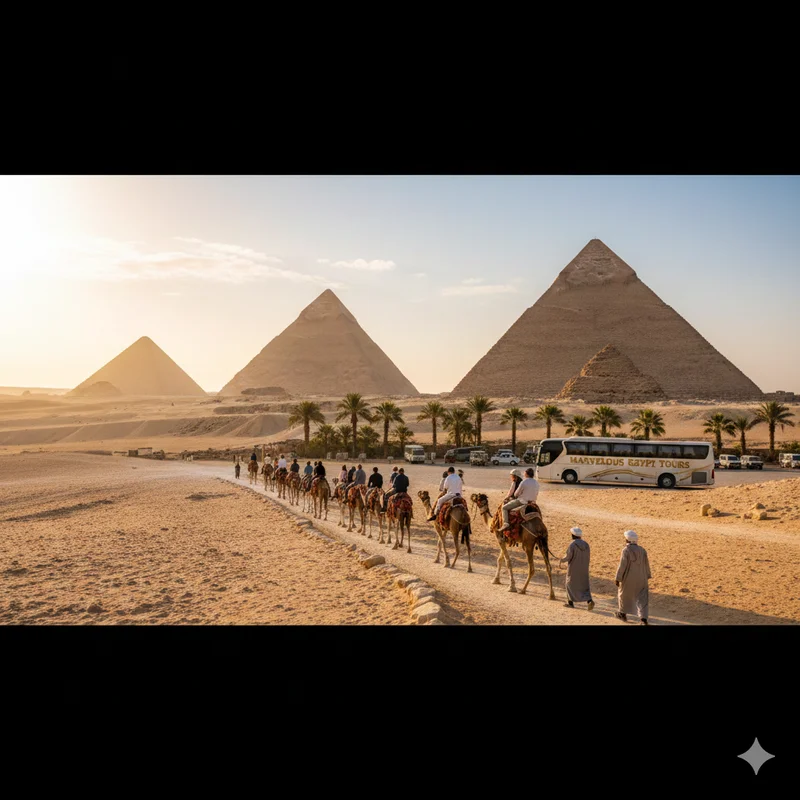
The Mastaba: The Early House
In the Early Dynastic Period and Old Kingdom, nobles and even early kings were buried in Mastabas (Arabic for "bench"). These were rectangular structures with sloping sides, built of mudbrick or stone.
- Structure: Above ground was a chapel for offerings and a "Serdab" (a sealed room containing a statue of the deceased). Below ground was the burial shaft where the mummy rested.
- Function: It served as a home for the Ka, complete with a "False Door" through which the spirit could pass to consume offerings.
The Pyramid: Stairway to Heaven
The tomb evolved dramatically in the Old Kingdom to reflect the King's divine status and his ascent to the sun god Ra.
The Step Pyramid
Designed by Imhotep for King Djoser at Saqqara. It was essentially six mastabas stacked on top of each other, forming a giant staircase for the king's soul to climb to the stars.
The True Pyramid
Culminating in the Great Pyramids of Giza. These smooth-sided structures represented the Benben (primordial mound) and the rays of the sun (Aten) turning to stone, allowing the king to merge with Ra.
The Hidden Tombs of Thebes
By the New Kingdom, Pharaohs realized that pyramids were giant advertisements for tomb robbers. They moved their burials to a remote desert canyon in Thebes (Luxor): the Valley of the Kings.
Here, tombs were cut deep into the limestone cliffs. On the outside, they were invisible. On the inside, they were palaces of art. Long corridors descended into the earth, covered in texts like the Amduat and the Book of Gates, guiding the king through the underworld.
Art for the Afterlife
The decoration of a tomb was functional, not just aesthetic.
-
Daily Life Scenes: In noble tombs, walls showed farming, fishing, and banquets. By magic, these scenes would come to life, providing the deceased with food and joy forever.
-
Religious Texts: In royal tombs, walls were covered with spells and maps of the Duat to help the king navigate past demons and unite with the gods.