Complete guide to transport and mobility in Egypt
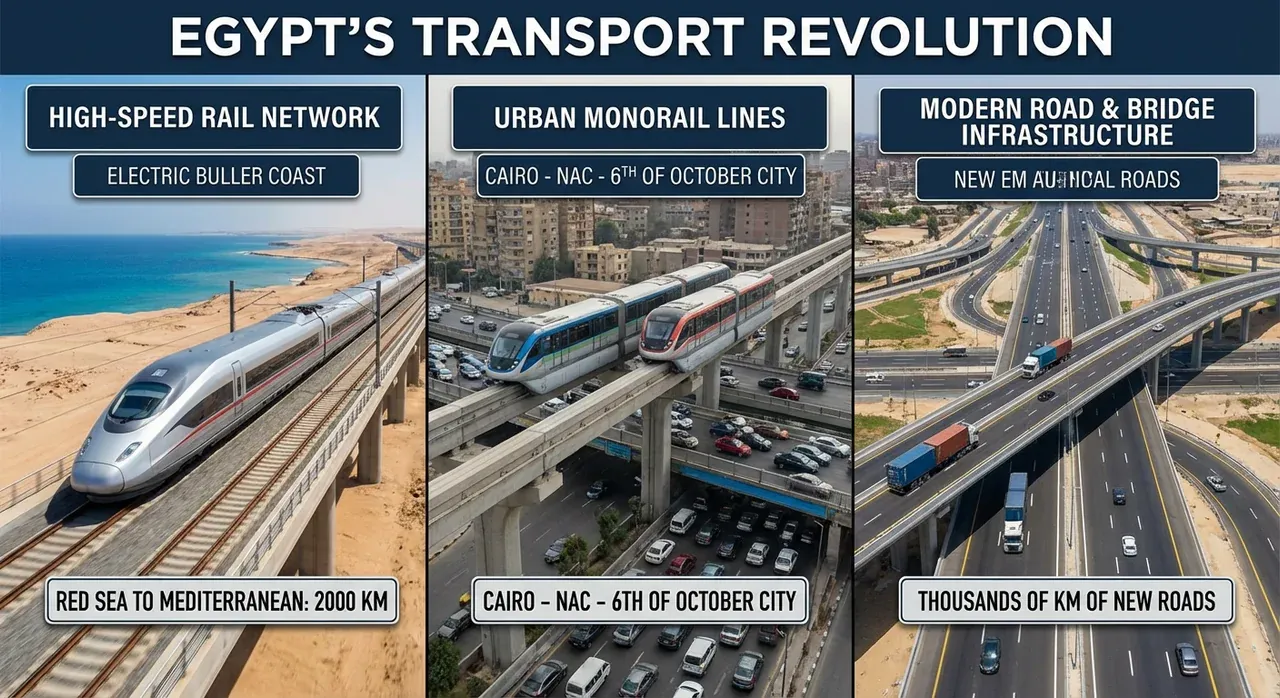
Das Transportsystem in Egypt hat in den letzten Jahren einen beispiellosen historischen Boom erlebt. Von der Modernisierung von Straßennetzen, Autobahnen und Brücken über den Ausbau von U-Bahn- und Stadtbahnlinien (LRT) bis hin zur Entwicklung der Eisenbahnflotte und dem Aufbau des Hochgeschwindigkeits-Einschienenbahnnetzes sowie der Verfügbarkeit eines hervorragenden inländischen Luftverkehrsnetzes and intelligent Lieferfahrzeuge.
A guide to transportation in Egypt
Domestic flights
The fastest way to travel between Cairo, Luxor, Aswan, Hurghada and Sharm El-Sheikh, with regular flights that do not exceed one hour.
Luxury sleeper trains for Upper Egypt
A comfortable and classic experience that combines travel and accommodation in equipped sleeping cabins that will take you overnight from Cairo to Luxor and Aswan, with two meals included.
Metro in Greater Cairo
The fastest and cheapest way to avoid traffic jams in the capital; A modern, air-conditioned network connects Tahrir with ancient Egypt, the Opera and Maadi.
Smart delivery applications (Uber)
The safest and most reliable option for transportation within cities; Transparent electronic pricing and payments by credit card or cash without the hassle of negotiating.
Intercity buses
Modern Touristenbusunternehmen (Go Bus and Super Jet) are comfortable and kostengünstige Reisen in Hurghada, Sharm El Sheikh and Alexandria.
Private tourist cars with driver.
Tourist transportation services licensed by Ultra Egypt Travel guarantee privacy and maximum comfort during your daily tours.
Geographic, ecological and tourist infrastructure characteristics.
This destination has a unique strategic location that combines historical richness and attractive environmental diversity, making it an essential pillar on Egypt's developed tourism map. In recent years, ambitious infrastructure development projects have been carried out in the region, including the modernization of the road network, the development of airports and ports and the provision of hotel facilities compatible with international environmental sustainability standards approved by the Ministry of Tourism and Antiquities.
In this destination, cultural experiences are combined with leisure activities and eco-adventure tourism, where visitors can explore archaeological monuments and picturesque nature reserves and interact with local cultural heritage and authentic traditional industries that express the identity and ancient history of the community.
Safety, quality and recognized standards for tourism operations
Ultra Egypt Travel, under license from the Ministry of Tourism No. 874 (Class A) and IATA membership (IATA 90229930), is committed to applying the highest standards of safety and comfort to its clients, from the fleet of modern tourist vehicles equipped with positioning and navigation systems to the constant accompaniment of field teams and 24-hour concierges to ensure an exceptional and smooth travel experience.
Guidelines for planning and adjusting the visiting program
To make the most of it, it's a good idea to book tours and activities in advance, especially during peak season (October to April), and reserve enough time for each activity to avoid burnout. Additionally, by coordinating with tourism consultants, it is possible to design tailored programs that include special VIP access and integrated logistical arrangements.
Official controls and standards for field trips and navigation.
To ensure a completely smooth and safe journey to Egypt, the Ministry of Tourism and Antiquities, in collaboration with the relevant authorities, has established a series of regulatory guidelines regulating access to archaeological sites, nature reserves, currency trading and photography. Visitors can purchase tickets electronically through official portals using credit cards or benefit from full passes such as the Cairo Pass and the Luxor Pass, which allow unlimited visits to important museums and monuments for a set period at preferential prices.
Free personal photography of memorials using mobile phones and cameras is permitted at all open archaeological sites and museums without the use of flash in closed tombs and exhibition spaces to preserve delicate archaeological paintings and pigments. It is also prohibited to use drones without prior authorization from the relevant authorities in accordance with Egyptian regulatory laws.
Recognized financial security and management guidelines.
- Currency and exchange rate: The official currency is the Egyptian pound (EGP). There are authorized ATMs and currency exchange offices in major airports and hotels. Visa and Mastercard are widely accepted.
- Tipping culture: Tipping is part of the accepted service tradition in the hospitality and transportation sectors. It is recommended to keep small amounts of cash to reward drivers, baggage handlers and ship attendants.
- Appropriate clothing: When visiting places of worship, mosques and historic churches, wear modest, comfortable clothing, cover your shoulders and knees, and remove your shoes at mosque doors.
Academic and official sources and references.
This encyclopedic content has been prepared and verified based on the latest archaeological records and field reports from official organizations and accredited international references:
- Egyptian Ministry of Foreign Affairs and Ministry of the Interior - Passport Authority: Official checks on tourist visas (e-visas) and procedures for ports of arrival.
- General Tourism Promotion Authority of Egypt: Travel guide: customs laws, permits for photographing archaeological sites and safety guidelines.
- Egyptian Ministry of Health and Population: Health guidelines, recommendations and vaccines for international travelers arriving in Egypt.
- Egyptian Chamber of Tourism Companies (ETAA): Code of ethics in dealing with tourists and controls for authorized tour guides.
- Ultra Egypt Travel: A guide with practical tips, tourist seasons, tipping guidelines and dress code in Egypt.