A guide to the best restaurants and dining experiences in Egypt.
Your guide to choosing the best restaurants in Egypt; From fine Nile restaurants and authentic steakhouses to the best Mediterranean seafood restaurants and historic hotel experiences.
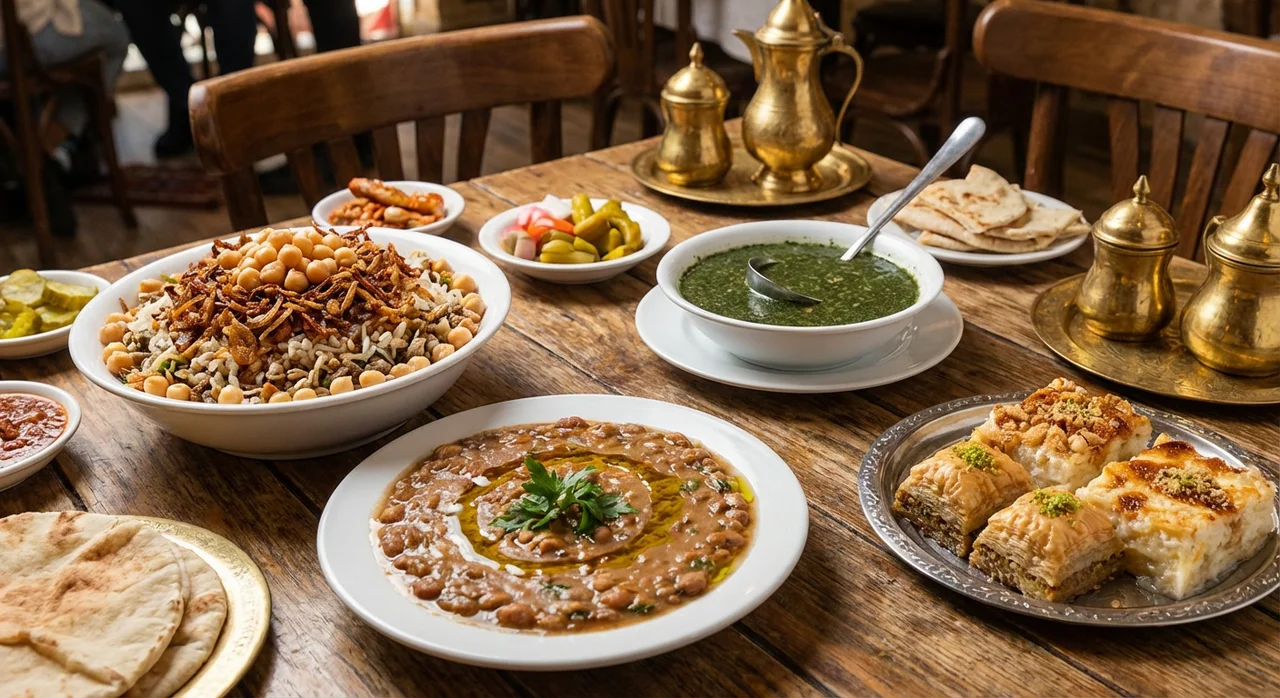
The restaurant and hospitality scene in Egypt
The Egyptian dining experience combines the splendor of the views, the charm of history and the quality of the dishes. You can enjoy a luxurious lunch while looking directly at the Pyramids of Giza, or enjoy a poetic dinner aboard a floating restaurant on the Nile, or enjoy the most delicious meals of shrimp and fresh fish from Sinjar in a restaurant overlooking the Citadel of Qaitbay and the Mediterranean.
Restaurant categories and expert recommendations.
Oriental grill and kebab restaurants
It serves grilled kebabs and kofta made with local lamb and beef, accompanied by tahini and baba ghanouj salads and warm bread (as at Farahat, El Prince and Kababji Palace restaurants).
Floating and luxurious Nile restaurants
Spread across the island's districts of Zamalek, Maadi and Manayel, it offers open buffet dinners with folklore and tanoura performances, as well as panoramic views of Cairo's enchanting lights.
Coastal restaurants on the coast
In Alexandria, Hurghada and Sharm El Sheikh you can choose your own fresh fish (bream, sea bass, sea bass), shrimp and crabs to grill or bake in the oven.
Traditional restaurants in historic districts.
Like the Naguib Mahfouz Café and Restaurant in Khan Al Khalili and the restaurants on Al Moez Street, where you can experience the atmosphere of the Arabian Nights between arabesques and authentic oriental music.
Reservation tips and restaurant etiquette.
- Weekend Advance Bookings: Nile and Pyramids View restaurants experience high demand on Thursday and Friday nights. Therefore, we recommend you reserve your table in advance through Ultra Misr.
- Tips and gratuities policy: In tourist restaurants, 12% service and 14% VAT are automatically added to the bill. It is recommended to leave an additional 5-10% cash tip to the waiter in recognition of their excellent service.
Frequently Asked Questions About Restaurants in Egypt
Is there international food in Egypt?
Yes, and in abundance; In Cairo, Alexandria and the resort cities there are hundreds of international restaurants serving Italian, Japanese (sushi), Lebanese, Indian and French cuisine, in addition to all the well-known international restaurant chains.
Do you need professional help to organize your trip to Egypt?
The experts at Ultra Egypt Travel (License 874 Class A) offer free advice on hotel reservations, organizing private tours and booking domestic flights and Nile cruises with the highest standards of quality and credibility.
Geographic, ecological and tourist infrastructure characteristics.
This destination has a unique strategic location that combines historical richness and attractive environmental diversity, making it an essential pillar on Egypt's developed tourism map. In recent years, ambitious infrastructure development projects have been carried out in the region, including the modernization of the road network, the development of airports and ports and the provision of hotel facilities compatible with international environmental sustainability standards approved by the Ministry of Tourism and Antiquities.
In this destination, cultural experiences are combined with leisure activities and eco-adventure tourism, where visitors can explore archaeological monuments and picturesque nature reserves and interact with local cultural heritage and authentic traditional industries that express the identity and ancient history of the community.
Safety, quality and recognized standards for tourism operations
Ultra Egypt Travel, under license from the Ministry of Tourism No. 874 (Class A) and IATA membership (IATA 90229930), is committed to applying the highest standards of safety and comfort to its clients, from the fleet of modern tourist vehicles equipped with positioning and navigation systems to the constant accompaniment of field teams and 24-hour concierges to ensure an exceptional and smooth travel experience.
Guidelines for planning and adjusting the visiting program
To make the most of it, it's a good idea to book tours and activities in advance, especially during peak season (October to April), and reserve enough time for each activity to avoid burnout. Additionally, by coordinating with tourism consultants, it is possible to design tailored programs that include special VIP access and integrated logistical arrangements.
Official controls and standards for field trips and navigation.
To ensure a completely smooth and safe journey to Egypt, the Ministry of Tourism and Antiquities, in collaboration with the relevant authorities, has established a series of regulatory guidelines regulating access to archaeological sites, nature reserves, currency trading and photography. Visitors can purchase tickets electronically through official portals using credit cards or benefit from full passes such as the Cairo Pass and the Luxor Pass, which allow unlimited visits to important museums and monuments for a set period at preferential prices.
Free personal photography of memorials using mobile phones and cameras is permitted at all open archaeological sites and museums without the use of flash in closed tombs and exhibition spaces to preserve delicate archaeological paintings and pigments. It is also prohibited to use drones without prior authorization from the relevant authorities in accordance with Egyptian regulatory laws.
Recognized financial security and management guidelines.
- Currency and exchange rate: The official currency is the Egyptian pound (EGP). There are authorized ATMs and currency exchange offices in major airports and hotels. Visa and Mastercard are widely accepted.
- Tipping culture: Tipping is part of the accepted service tradition in the hospitality and transportation sectors. It is recommended to keep small amounts of cash to reward drivers, baggage handlers and ship attendants.
- Appropriate clothing: When visiting places of worship, mosques and historic churches, wear modest, comfortable clothing, cover your shoulders and knees, and remove your shoes at mosque doors.
Academic and official sources and references.
This encyclopedic content has been prepared and verified based on the latest archaeological records and field reports from official organizations and accredited international references:
- Egyptian Ministry of Environment - Environmental Affairs Agency (EEAA): National Guide to the Network of Nature Reserves in Egypt, Nature Conservation Sector, Cairo.
- UNESCO World Heritage Centre: Profile of the Valley of the Whales as an Outstanding Natural World Heritage Site, criterion (viii), Paris.
- National Institute of Oceanography and Fisheries (NIOF): Atlas of coral reef environments and marine species in the Red Sea and the Gulf of Aqaba and Suez.
- International Union for Conservation of Nature (IUCN): Environmental monitoring reports of marine and desert ecosystems in Ras Mohammed, Wadi El Gemal and the Elba Reserve.
- Egyptian Society for Nature Conservation (NCE): Migratory routes of flying and water birds through the Nile Valley and the Red Sea.