At a glance
Few civilizations in history have matched ancient Egypt's depth of spiritual thought. Long before Christianity arrived, Egypt had developed elaborate concepts of the soul, the afterlife, divine judgment, and moral accountability — ideas that would resonate powerfully with early Christians. The "weighing of the heart" ceremony, the resurrection of Osiris, and the sacred role of the divine scribe Thoth all prefigured theological themes that would define the new faith.
When St. Mark the Evangelist arrived in Alexandria around 42 AD, he did not find a spiritual void. He found a civilization saturated in sacred tradition — one that had already spent millennia wrestling with questions of life, death, and moral conduct. The result was a uniquely Egyptian form of Christianity that has survived for nearly two thousand years: the Coptic Church.
Did you know? The word "Copt" is derived from the Greek "Aigyptos" (Egypt), meaning that Coptic Christians are literally the "Egyptians" — the direct descendants of the ancient pharaonic civilization who embraced Christ.
Table of contents
1) Introduction: Egypt at a Spiritual Crossroads
Egypt was uniquely prepared for Christianity. Centuries of religious depth, sophisticated concepts of resurrection, divine judgment, sacred texts, and monastic ideals already existed in Pharaonic and Greco-Roman thought. Christianity did not arrive in a vacuum — it entered one of the most spiritually sophisticated civilizations on Earth. The fertile soil of the Nile was ready for a new faith that resonated with ancient truths while offering a message of universal salvation.
The convergence of Egyptian, Greek, Jewish, and Roman intellectual traditions in the centuries before Christ created a uniquely fertile environment. Alexandria, Egypt's great cosmopolitan capital, was home to a vast Jewish community, Platonic philosophers, mystery cult practitioners, and Hermetic scholars. When the Apostle Mark arrived with his message of a risen savior, it fell on ears already trained to hear it.
A 5,000-Year Spiritual Continuum
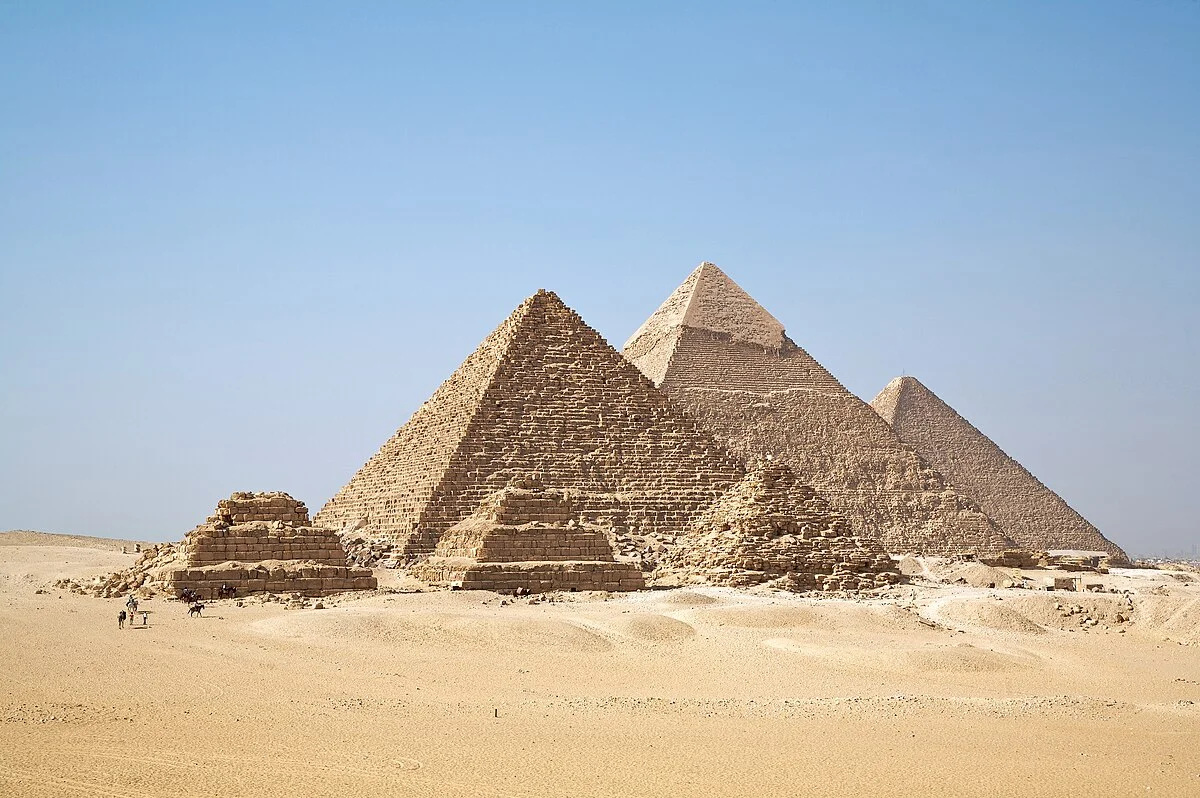
Egypt's recorded religious history spans over 5,000 years, making it one of the longest continuous spiritual traditions in human history. The same Nile Valley that built the pyramids also nurtured the first Christian monasteries, creating an unbroken thread of sacred thought from the Old Kingdom to the present day. No other civilization on Earth can claim such an uninterrupted engagement with questions of the divine.
2) The Pharaonic Legacy — Resurrection and Divine Judgment
At the heart of ancient Egyptian religion lay a profound belief in life after death. The elaborate mummification rituals, the construction of monumental tombs, and the composition of funerary texts such as the Book of the Dead were all expressions of a civilization convinced that death was not the end. The soul (the "Ba" and "Ka") was believed to journey through the underworld, face divine judgment, and ultimately achieve eternal life — a theological framework strikingly parallel to Christian eschatology.
The judgment scene in the Book of the Dead — in which the deceased's heart is weighed against the feather of Ma'at (truth and justice) before the god Osiris — introduced concepts of moral accountability and divine reckoning that would find powerful echoes in Christian teaching. Similarly, Osiris himself, who died and was resurrected to rule over the kingdom of the dead, provided a mythological template that Egyptians were culturally prepared to recognize in the story of Christ.
The Osiris Parallel
Osiris, the Egyptian god of the afterlife, was murdered by his brother Set, resurrected through the love of his wife Isis, and went on to judge the souls of the dead. Early Church Fathers and modern scholars alike have noted the striking theological parallels between the Osiris narrative and the Passion, Death, and Resurrection of Jesus Christ — making Egypt's soil particularly receptive to the Christian message.
3) Alexandria: Crossroads of Greek, Jewish, and Egyptian Faith
Founded by Alexander the Great in 331 BC, Alexandria rapidly became the intellectual capital of the ancient world. Its great Library housed the accumulated knowledge of dozens of civilizations, and its cosmopolitan population of Egyptians, Greeks, Jews, Persians, and Romans engaged in constant philosophical and theological debate. It was in Alexandria that Platonic philosophy was first fused with Jewish monotheism by thinkers such as Philo of Alexandria, laying the groundwork for Christian theology.

Key Intellectual Traditions in Pre-Christian Alexandria
| Tradition | Key Contribution |
|---|---|
| Platonic Philosophy | The immortal soul, divine Logos, and transcendent reality |
| Jewish Diaspora | Strict monotheism, Messianic expectation, and the Septuagint |
| Egyptian Hermeticism | Divine wisdom, sacred texts, and the unity of spirit and matter |
| Mystery Cults | Initiation, hidden knowledge, and the promise of personal salvation |
The Catechetical School of Alexandria
Founded in the second century AD, the Catechetical School of Alexandria was the world's first Christian university — and one of the most intellectually fertile institutions in the ancient world. Under teachers such as Clement of Alexandria and Origen, it produced systematic Christian theology, biblical scholarship, and a synthesis of Greek philosophy with Christian faith that shaped the entire history of Western theology.
The Role of the Septuagint
The Septuagint — the Greek translation of the Hebrew Bible, produced in Alexandria in the 3rd century BC — was the Bible of the early Church. By translating the Hebrew scriptures into the international language of the ancient world, Alexandria's Jewish community effectively prepared the intellectual and linguistic ground for the worldwide spread of Christianity.
4) The Holy Family's Flight into Egypt
According to the Gospel of Matthew, the Holy Family — Mary, Joseph, and the infant Jesus — fled into Egypt to escape Herod's massacre of the innocents. Egyptian Christian tradition holds that the family traveled extensively through the Nile Valley, staying at locations that later became the sites of Coptic churches and monasteries. The route of the Holy Family, now a UNESCO-recognized heritage trail, passes through more than 25 sacred sites across Egypt.
For Coptic Christians, the presence of the Christ child on Egyptian soil is a source of immense spiritual pride and theological significance. It fulfills the prophecy of Hosea — "Out of Egypt I have called my son" — and establishes a direct, personal connection between Egypt and the salvation narrative. This ancient tradition of sacred geography makes Egypt not merely the backdrop of religious history, but an active participant in it.
The Holy Family Trail Today
The Egyptian Ministry of Tourism, in collaboration with the Coptic Church, has developed the Holy Family Trail as a major pilgrimage route. Stretching from the Sinai border to Assiut in Upper Egypt, the trail connects 25 sacred sites — including the Church of the Virgin Mary in Zeitoun (Cairo), the Cave Church in Sakha, and the Monastery of Muharaq — offering modern pilgrims the chance to walk in the footsteps of the Holy Family.
5) St. Mark and the Founding of the Coptic Church
Coptic tradition holds that St. Mark the Evangelist — the author of the second Gospel and companion of St. Peter — arrived in Alexandria around 42 AD, making the Coptic Church one of the oldest Christian communities in the world. Mark reportedly healed a shoemaker named Ananias, who became his first convert, and went on to establish a vibrant Christian community in the city. Mark was martyred in Alexandria in 68 AD, and his relics were later venerated across the Mediterranean world.
The Coptic Church traces an unbroken apostolic succession from St. Mark through 118 Popes of Alexandria, making it one of the oldest continuous institutional churches in the world. Its liturgy, conducted in the ancient Coptic language — the last living descendant of the ancient Egyptian language — preserves a remarkable link to pharaonic Egypt. The Coptic Cross, with its distinctive twelve inner circles representing the apostles, has become one of the most recognizable symbols of Egyptian Christian identity.
The Coptic Language — Egypt's Sacred Tongue
Coptic is the final stage of the ancient Egyptian language, written in a modified Greek alphabet. Though it ceased to be a spoken vernacular in the 17th century, it remains the liturgical language of the Coptic Church — meaning that when Coptic Christians worship today, they use the same linguistic heritage that stretches back to the pharaohs. It is a remarkable example of cultural and spiritual continuity spanning more than five millennia.
- Apostolic founder: St. Mark the Evangelist, ~42 AD
- Liturgical language: Coptic (Bohairic dialect) — descended directly from ancient Egyptian
- Current patriarch: His Holiness Pope Tawadros II (118th Pope of Alexandria)
6) The Desert Fathers and the Birth of Christian Monasticism
Perhaps Egypt's most enduring gift to global Christianity is monasticism. In the 3rd and 4th centuries AD, thousands of Egyptian Christians retreated to the harsh deserts of Egypt — the Wadi El Natrun, the Eastern Desert, and the deserts of Upper Egypt — to pursue lives of prayer, fasting, and radical solitude. The first of these "Desert Fathers" was St. Anthony the Great (251–356 AD), an Egyptian farmer who withdrew to the desert and became the model for all subsequent Christian monastic life.
St. Pachomius, another Egyptian saint, went further by organizing desert Christians into communal monasteries — the first cenobitic (community-based) monasteries in history. The rules he wrote for monastic life influenced St. Benedict's Rule, which would go on to govern monasteries throughout medieval Europe. In this very direct sense, Egypt's Desert Fathers are the ancestors of the entire Western monastic tradition — from the Benedictines to the Cistercians to the Trappists. The deserts of Egypt are, in the truest sense, the cradle of Christian monasticism for the whole world.
7) Planning Your Spiritual Journey Through Egypt
Essential Sacred Sites
- Coptic Cairo: The historic quarter contains the Hanging Church, the Coptic Museum, and the Church of St. Sergius built over the site of the Holy Family's refuge.
- Wadi El Natrun: A 2-hour drive from Cairo, this desert valley contains four ancient functioning monasteries — including the Monastery of St. Macarius — still inhabited by monks today.
- Sinai: The Monastery of Saint Catherine at the foot of Mount Sinai is one of the world's oldest Christian monasteries, containing a priceless library of ancient manuscripts.
Practical Information
- Most Coptic sites are open to the public; modest dress (covered shoulders and knees) is required at all religious sites.
- Coptic Christmas (Feast of the Nativity) falls on 7 January — a major national holiday and an exceptional time to witness living Coptic traditions.
- The Coptic Museum in Old Cairo houses one of the world's finest collections of early Christian art and manuscripts, including complete Gnostic gospels from Nag Hammadi.
Suggested 3-Day Spiritual Itinerary
- Day 1 — Explore Coptic Cairo: the Hanging Church, Church of St. Sergius & Bacchus, and the Coptic Museum. End with evening vespers at the Cathedral of St. Mark.
- Day 2 — Day trip to Wadi El Natrun: visit the Monastery of St. Macarius and the Monastery of the Virgin Mary (Deir El-Suryan). Arrange a prior permit for certain monasteries.
- Day 3 — Fly or drive to Sinai: visit the Monastery of Saint Catherine, climb Mount Sinai at sunrise, and explore the Chapel of the Burning Bush within the monastery complex.
Last updated: 10 April 2026. Entry prices and opening hours are subject to change; verify with local authorities or your tour operator before visiting.
8) Sources & Further Reading
The following are reputable starting points used to compile the information on this page.
- Meinardus, Otto F.A. Two Thousand Years of Coptic Christianity. American University in Cairo Press, 1999. — The definitive English-language history of Coptic Christianity from its apostolic origins to the present day.
- Budge, E.A. Wallis. The Book of the Dead. Routledge, 1895 (repr. 1989). — Classic translation of the ancient Egyptian funerary text, revealing the sophisticated theological concepts that preceded Christianity.
- Harmless, William. Desert Christians: An Introduction to the Literature of Early Monasticism. Oxford University Press, 2004. — Comprehensive study of the Desert Fathers and their lasting influence on global Christian spirituality.
- Pearson, Birger A. Gnosticism and Christianity in Roman and Coptic Egypt. T&T Clark, 2004. — Scholarly analysis of the unique religious environment of Roman Egypt that shaped early Christian thought.
Hero image: Pyramids of Giza © Remih / Wikimedia Commons (CC BY-SA 3.0). Monastery of Saint Catherine image © David Shankbone / Wikimedia Commons (CC BY-SA 3.0). All other images are in the public domain or used under Creative Commons licenses.