
Among the most remarkable feats in human history is the ability of ancient Egyptians to erect colossal stone structures without modern machinery. At the heart of this achievement lies a concept that archaeologists and engineers continue to study with awe: monumental labor — the large-scale, highly organized mobilization of human effort to shape, move, and raise stone monuments of extraordinary size and precision.
This technique was not brute force alone. It was a sophisticated interplay of state organization, engineering ingenuity, and a deeply embedded cultural motivation. Rather than quarrying enormous blocks and transporting them over long distances, Egyptian builders often carved monuments directly from natural rock outcroppings or bedrock, removing tons of stone on-site and dramatically reducing the logistical challenge of transportation. The result was a civilization that left behind structures still standing after four millennia.
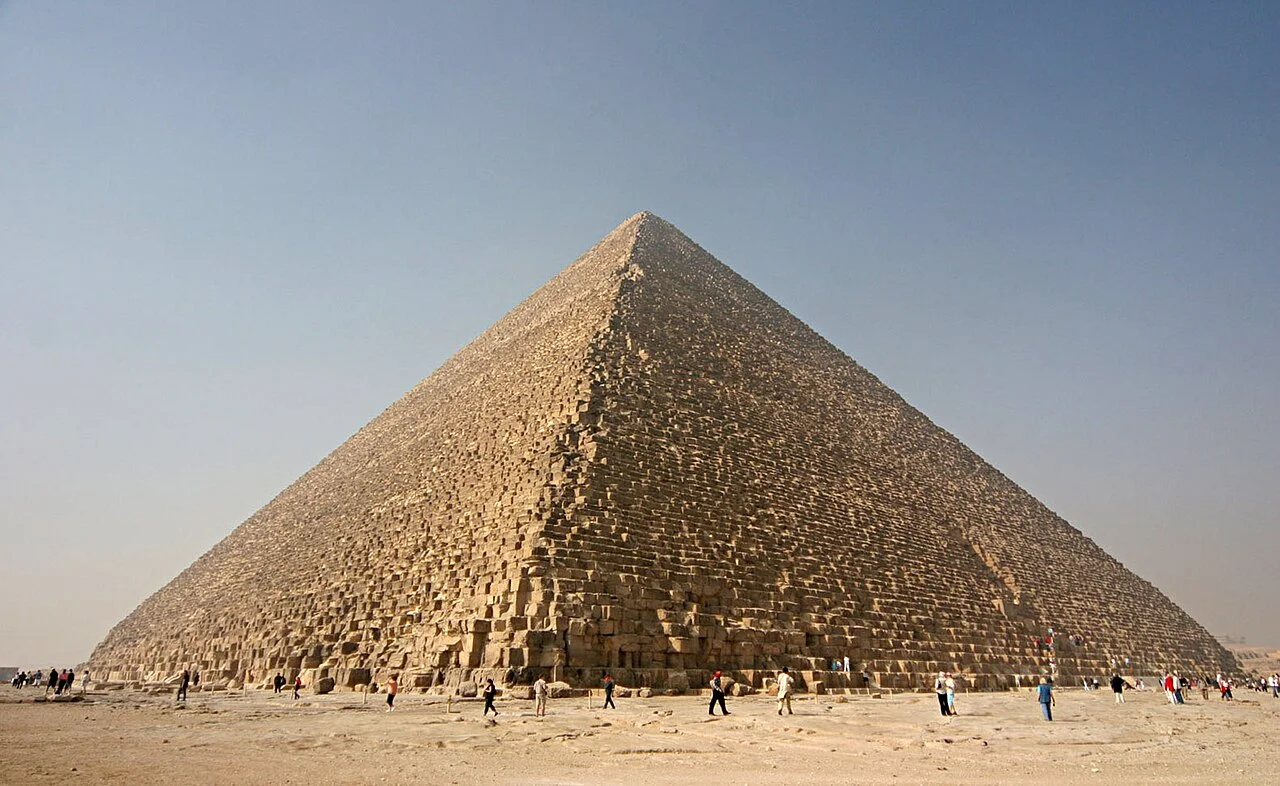
The Great Pyramid of Giza — the most enduring testament to Egypt's monumental labor tradition. © Wikimedia Commons
📋 Table of Contents
What Is Monumental Labor?
Monumental labor, in the context of ancient Egypt, refers to the state-organized deployment of large numbers of workers to accomplish construction tasks of enormous scale. The concept goes beyond simple manpower — it encompasses the planning, provisioning, management, and skilled execution required to transform raw stone into enduring architecture. Unlike slavery-based labor assumptions of the past, modern archaeology has confirmed that Egypt's great monuments were largely built by rotating teams of paid and fed laborers who were part of a sophisticated state system.
The genius of monumental labor in Egypt was partly in its efficiency through strategic site selection. When builders identified a rocky hillside, plateau, or natural limestone shelf, they could exploit the existing geology. By carving away excess stone and shaping what remained into a tomb, temple, or statue, they eliminated the most energy-intensive step of classical construction: quarrying and hauling stone blocks from distant sites. The Sphinx at Giza is the most famous example — a massive figure carved almost entirely from the natural bedrock of the plateau, with builders removing the surrounding stone rather than bringing material in.
— Mark Lehner, Giza Project, Harvard University
A Historical Timeline of Monumental Labor
The tradition of monumental labor in Egypt evolved over three thousand years, from the first royal tombs to the last great temple complexes. Each era refined the techniques, expanded the scale, and deepened the organizational sophistication.
The Step Pyramid of Djoser at Saqqara marks the beginning of large-scale stone construction in Egypt. Workers cut and stacked limestone blocks under the architect Imhotep, establishing the blueprint for state-organized labor on monumental projects.
The construction of the Great Pyramid of Khufu at Giza represents the apex of monumental labor. Archaeological evidence reveals worker villages, bakeries, breweries, and medical facilities — proof of a professional, well-supported workforce rather than enslaved labor.
The Great Sphinx is fashioned from the natural limestone of the Giza Plateau during the reign of Khafre. Workers removed the surrounding stone, leaving the iconic figure in place — the perfect demonstration of in-situ monumental labor reducing transport demands.
The Valley of the Kings becomes the royal burial ground. Pharaohs commission deep rock-cut tombs carved directly into the limestone cliffs of the Theban Hills — sophisticated shafts and corridors with painted walls, all chiseled from solid rock by specialized teams called "The Servants in the Place of Truth."
Ramesses II orders the construction of two colossal temples at Abu Simbel, carved entirely into a sandstone cliff face above the Nile. Four seated colossi of the pharaoh, each over 20 meters tall, are shaped from the living rock — one of the greatest in-situ carving projects in history.
Temple construction at Karnak, Luxor, Edfu, and Philae continues under Ptolemaic and Roman rule, blending Egyptian monumental labor traditions with new administrative and engineering influences. The tradition of carving, quarrying, and organizing massive workforces endures into the early centuries CE.
Across these millennia, the fundamental principle remained constant: harness organized human energy at scale, minimize unnecessary material transport, and produce stone structures built to outlast the civilization that created them.
Techniques and Methods
The success of monumental labor depended on a toolkit of methods refined over centuries. Ancient Egyptian builders were masters of working with available geology, using the land itself as raw material while deploying simple but highly effective tools and techniques.
The primary cutting tools were copper chisels, dolerite pounding stones, and wooden wedges. Workers would score lines in the stone, pound along them to create fractures, and insert wooden wedges soaked in water — the expanding wood splitting the rock along natural grain lines. For softer sandstone, work progressed faster; for hard granite at Aswan, teams of workers pounded relentlessly with heavy dolerite balls, slowly abrading the surface away. These Aswan quarries contain an unfinished obelisk — abandoned when cracks appeared — that reveals exactly how this process worked.
The key innovation of monumental labor as a concept was reducing the need for transport. Moving a 200-ton granite block from Aswan to Giza — a distance of 900 kilometers — required a fleet of boats, hundreds of workers, and weeks of effort. By contrast, carving a tomb or temple façade directly into a cliff at the intended site meant the stone went nowhere — workers simply removed what wasn't needed, leaving the monument behind. This philosophy shaped Egyptian architecture for millennia, from the Valley of the Kings to Abu Simbel.

Abu Simbel: carved entirely from a natural sandstone cliff — the ultimate expression of in-situ monumental labor. © Wikimedia Commons
The Workforce — Who Built Egypt's Monuments?
For centuries, the dominant narrative held that Egypt's monuments were built by slaves. Modern archaeology has overturned this view completely. Excavations at the workers' village at Giza, led by Dr. Mark Lehner and Dr. Zahi Hawass, uncovered bakeries capable of producing thousands of loaves daily, breweries, cattle pens, fish processing areas, and a medical facility with evidence of bone surgeries. This was a city built to support a professional workforce.
Permanent Skilled Teams
At the core of the labor force were permanent, highly skilled workers — stone cutters, sculptors, painters, scribes, and engineers — who worked year-round and passed their skills from generation to generation. The royal tomb builders of Deir el-Medina in the New Kingdom are the best-documented example: a village of craftsmen who lived, worked, and were buried near the Valley of the Kings, leaving behind a rich archive of work records, letters, complaints, and even labor strikes.
Rotating Conscript Teams
Supplementing the permanent workforce were rotating teams of conscript workers drawn from across Egypt as a form of tax service called corvée labor. These workers served for fixed periods — typically three to four months — before returning to their villages. They were fed, housed, clothed, and given medical care during their service. Graffiti left by these teams in quarries and on monuments identifies their groups with proud names like "Friends of Khufu" or "Drunkards of Menkaure."
🔨 Stone Cutters
Skilled artisans who shaped blocks and carved relief inscriptions using copper chisels and stone mauls.
🧱 Hauling Teams
Large crews who moved blocks on wooden sledges lubricated with water or animal fat over prepared ramp surfaces.
📐 Architects & Scribes
Overseers who planned layouts, measured alignments, and kept meticulous records of stone delivered and work completed.
🏥 Support Staff
Bakers, brewers, physicians, and administrators who kept the workforce fed, healthy, and organized.
⛵ Boat Crews
Sailors and dock workers who transported quarried stone by Nile barge from Aswan and other quarry sites.
🎨 Painters & Sculptors
Artists who decorated completed stone surfaces with polychrome paintings, hieroglyphic texts, and fine relief carvings.
The organization of this workforce was a marvel of ancient administration. Records show careful accounting of stone deliveries, work days, rations distributed, and absences — often with reasons listed, from illness to "brewing beer for a feast." These workers were not faceless masses; they were professionals whose labor was recognized, recorded, and rewarded.
Women in the Monumental Workforce
While heavy stone-cutting was predominantly male work, women played vital roles in the broader monumental labor economy. At Deir el-Medina, women ran households, managed grain accounts, and participated in local trade. Some women from elite families are documented as overseers of craft workshops attached to temple construction projects. The entire ecosystem supporting monumental construction depended on both genders working within their respective spheres.
Key Monuments of Monumental Labor
The clearest expressions of Egypt's monumental labor tradition are the great in-situ carved structures — monuments where the technique of removing stone rather than importing it is most dramatically visible.
The Great Sphinx of Giza
The Sphinx is perhaps the world's most famous example of in-situ monumental labor. Carved from the natural limestone bedrock of the Giza Plateau, the figure's body sits in a depression created by the removal of surrounding stone — that removed stone was then used to build the nearby Sphinx Temple. Measuring 73 meters long and 20 meters tall, the Sphinx required removal of enormous volumes of rock from all sides, with the leftover material repurposed rather than wasted.
The Valley of the Kings
The royal necropolis on the west bank of Luxor contains over 60 rock-cut tombs carved directly into the limestone cliffs. The tomb of Seti I descends over 120 meters into the rock with multiple chambers, corridors, and elaborately painted walls — all carved from solid stone by the workers of Deir el-Medina. Each tomb was a multi-year project requiring constant removal of chipped stone debris, which was cleared and deposited in the valley floor — sometimes accidentally concealing earlier tombs, as happened with Tutankhamun's.
Abu Simbel
Commissioned by Ramesses II around 1264 BCE, the two temples at Abu Simbel represent monumental labor at its most theatrical. The Great Temple's four seated colossi of Ramesses — each 20 meters tall — were carved from the sandstone cliff above the Nile, with the temple interior cut 63 meters back into the mountain. The smaller temple of Nefertari features six standing colossi framing the entrance. Both were relocated in the 1960s in one of the greatest feats of modern monumental labor, moved 65 meters uphill to save them from the rising waters of Lake Nasser.
The Unfinished Obelisk of Aswan
Lying in a quarry outside Aswan, this abandoned obelisk offers the clearest window into monumental labor techniques. Had it been completed, it would have stood nearly 42 meters tall and weighed around 1,200 tons — the heaviest obelisk ever attempted. Workers abandoned it when cracks appeared in the granite. The trenches cut around it show exactly how teams using dolerite pounding stones systematically removed rock from all sides to free the monolith from the bedrock.
The Mortuary Temple of Hatshepsut
At Deir el-Bahari, the three-tiered temple of Hatshepsut was constructed against a natural cliff face, with rear sections carved directly into the rock while the front terraces were built from quarried limestone. This hybrid approach — combining cut-stone construction with in-situ rock-cutting — is typical of New Kingdom monumental labor strategy.
— Dr. Zahi Hawass, Former Secretary General, Supreme Council of Antiquities
Modern Research and Understanding
The study of ancient Egyptian monumental labor has been transformed over the past four decades by a series of landmark discoveries. The 1990 discovery of the workers' village at Giza by Dr. Mark Lehner and Dr. Zahi Hawass provided the first tangible evidence of how pyramid builders lived, ate, and worked. The site revealed a planned settlement with bakeries, breweries, a large central building, and thousands of animal bones indicating regular meat consumption — a diet far richer than typical ancient Egyptians would have enjoyed.
Further breakthroughs came with the 2013 discovery of the Wadi el-Jarf papyri — the oldest papyri ever found — which include the diary of an official named Merer who oversaw a team transporting fine white limestone from Tura across the Nile to Giza for the casing of the Great Pyramid. His records provide day-by-day accounts of journeys, deliveries, and interactions with the overseer of construction, giving monumental labor a human face and a detailed logistical record for the first time.
Experimental archaeology has added further insight. Teams using replica ancient tools have successfully quarried, moved, and erected stone blocks using methods available to the Egyptians. Researchers have demonstrated that a team of around 20 workers can move a 2.5-ton block on a wooden sledge over wet sand at a practical pace. Scaling up these experiments suggests that the logistics of pyramid construction, while immense, were entirely achievable within the known time frames using the documented workforce.
Plan Your Visit — Experience Monumental Labor Firsthand
Several sites across Egypt allow visitors to see monumental labor in action — from the raw quarry scars of Aswan to the completed magnificence of Abu Simbel. Here is what you need to know to plan your itinerary.
| Top Sites | Giza Plateau, Valley of the Kings (Luxor), Abu Simbel, Unfinished Obelisk (Aswan), Deir el-Medina, Deir el-Bahari (Hatshepsut Temple) |
|---|---|
| Best Season | October to April — cooler temperatures make outdoor sites comfortable. Abu Simbel sun alignments occur on February 22 and October 22. |
| Giza Entry Fee | Approx. 160–360 EGP (standard ticket to plateau; pyramid interiors cost extra) |
| Valley of the Kings | Entry includes three standard tombs; premium tombs (Seti I, Tutankhamun) require separate tickets |
| Abu Simbel | Accessible by road from Aswan (3.5 hrs), short flight, or Lake Nasser cruise. Best visited at sunrise. |
| Unfinished Obelisk | Located in northern Aswan quarries; open daily, one of Egypt's most informative archaeological sites |
| Workers' Village (Giza) | The excavated workers' village is partially accessible; the Giza Project website offers detailed virtual tours |
| Photography | Permitted at most open-air sites; interior photography in many tombs requires a permit or is restricted |
| Guided Tours | Licensed Egyptologist guides add enormous context to monumental labor sites; recommended for first-time visitors |
| Key Museum | The Grand Egyptian Museum (GEM) in Giza houses tools, models, and artifacts directly related to construction and monumental labor |
Visitor Advice
Comfortable walking shoes are essential — most monumental labor sites involve significant distances across sandy, rocky, or uneven terrain. Sun protection, water, and early morning starts are strongly recommended for sites like Giza and Abu Simbel where heat becomes intense by mid-morning. Hiring a licensed guide is worth the investment; the difference between seeing a rock-cut tomb and understanding its creation is the story that connects them.
Best Audience for These Sites
Monumental labor sites are ideal for history enthusiasts, archaeology lovers, engineering admirers, and anyone fascinated by the depths of human capability. These are not passive observation sites — they invite active imagination about process, scale, and human determination. Schools and university groups find them particularly valuable as living laboratories of ancient technology and social organization.
Combining Sites
The classic Egypt itinerary that best highlights monumental labor pairs the Giza Plateau and the Grand Egyptian Museum in Cairo with a Nile cruise from Luxor to Aswan. Luxor covers the Valley of the Kings, Deir el-Medina, and Hatshepsut's temple. The cruise calls at Edfu and Kom Ombo before reaching Aswan's quarry sites, with a side trip or separate flight to Abu Simbel completing the picture. This route traces monumental labor from its greatest block-built achievement to its finest in-situ carved masterpiece.
Frequently Asked Questions
What exactly is "monumental labor" in ancient Egypt?
Were the pyramid builders slaves?
How did ancient Egyptians move such heavy stones?
Why did Egyptians sometimes carve monuments from natural rock instead of building with blocks?
What tools did ancient Egyptians use to carve stone?
How many people worked on the Great Pyramid?
Sources & Further Reading
The following scholarly and institutional sources provided the foundation for this article and are recommended for deeper exploration of monumental labor in ancient Egypt.
- Giza Project at Harvard University — Ancient Egypt Research Associates (AERA)
- Ancient History Encyclopedia — Building the Great Pyramid
- Journal of Archaeological Science — Wadi el-Jarf Papyri Analysis (2014)
- National Geographic — Who Built Egypt's Great Pyramid?
- The Metropolitan Museum of Art — Egyptian Pyramids and Monumental Construction