At a glance
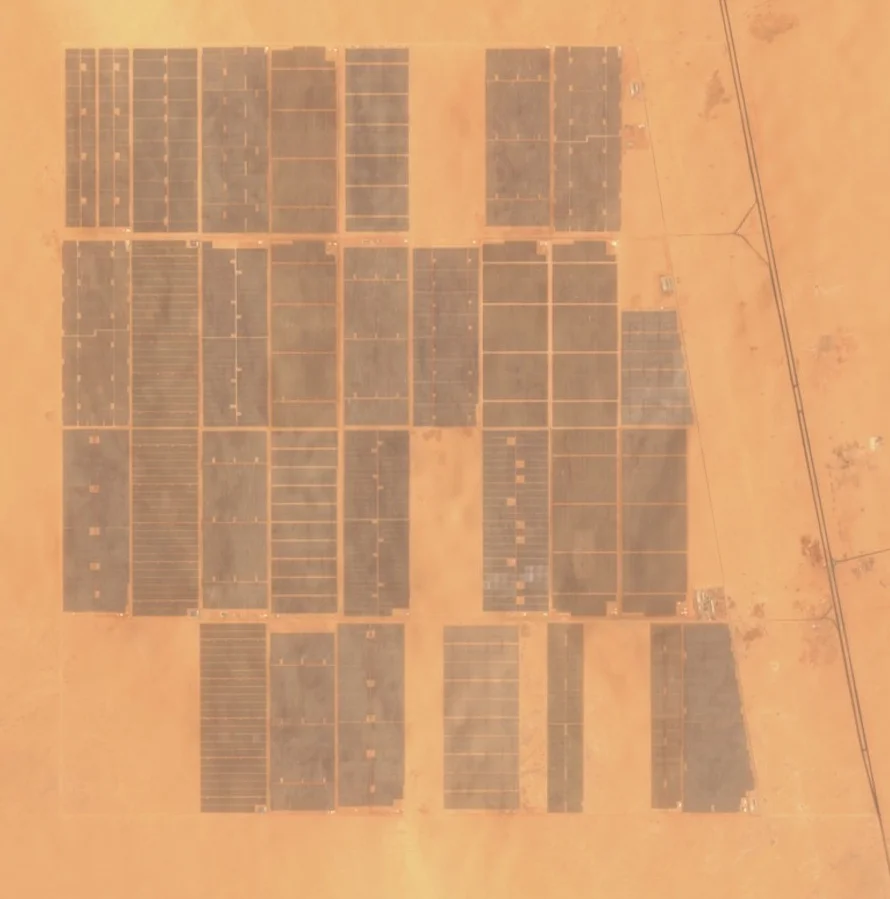
Benban Solar Park is one of the most significant renewable energy projects in the world and the largest solar installation in Africa. Spread across 37.2 square kilometres of Nubian Desert approximately 40 kilometres northwest of Aswan city and 650 kilometres south of Cairo, the park comprises 41 independent solar power plants developed by over 30 companies from 12 countries. With a total installed capacity of 1,650 megawatts (MW) and an annual energy output of approximately 3.8 terawatt-hours (TWh), Benban supplies clean electricity to hundreds of thousands of Egyptian homes and displaces millions of tonnes of CO₂ annually.
The project was initiated in September 2014 as part of Egypt's Sustainable Energy Strategy 2035, under which the government set an ambitious target of generating 20% of the country's electricity from renewable sources. NASA contributed to site selection by confirming that the Benban region receives some of the highest solar irradiance on Earth — approximately 2,300 kWh per square metre per year — placing it among the finest locations on the planet for large-scale photovoltaic power generation. The park began connecting to Egypt's national grid in 2019 and is now fully operational.
Egypt's Solar Belt Advantage: Egypt lies between latitudes 22° and 31.5° north — placing it squarely within the global solar belt. Most of the country, from Cairo to the far south, receives more than 6 kWh of solar radiation per square metre per day, with Aswan regularly exceeding 7 kWh/m²/day. Few places on Earth are better suited for large-scale solar energy generation.
Table of contents
1) Origins & National Vision
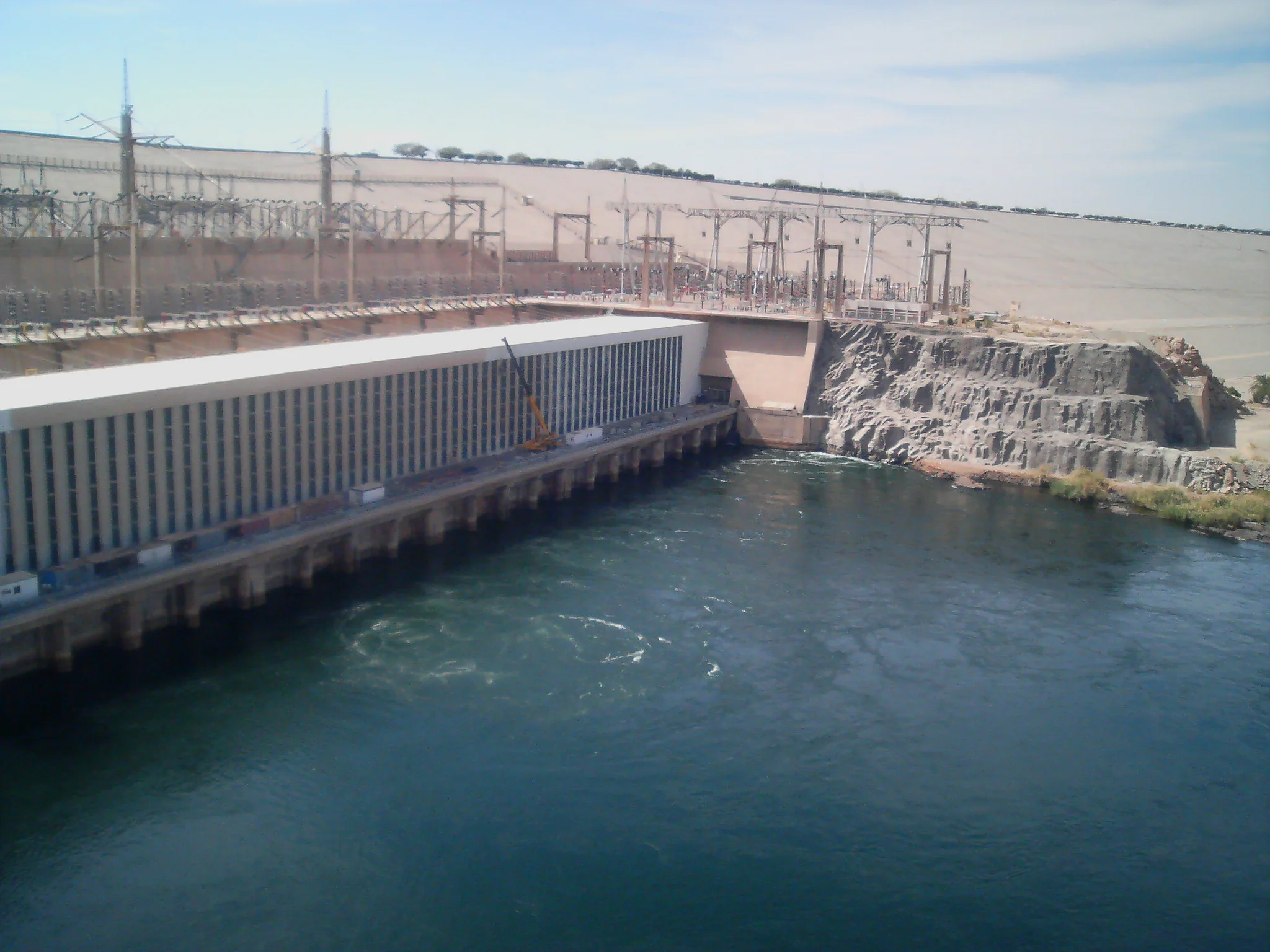
Egypt's energy story has long been defined by the Nile. The Aswan High Dam, completed in 1971, became the symbol of Egypt's ambition to harness natural resources for national development — producing up to 2,100 MW of hydroelectric power and transforming the country's agricultural and industrial capacity. But as Egypt's population surged past 100 million and electricity demand grew at over 7% annually, the High Dam alone could not meet the nation's needs. Enormous subsidies on fossil fuels were costing the state more than it spent on education, health, and social welfare combined, draining the treasury and discouraging investment in cleaner alternatives.
The answer came in 2014, when Presidential Decree No. 274/2014 launched the Nubian Suns Feed-in Tariff (FiT) programme. Under this initiative, the government offered private developers a guaranteed fixed price of approximately 14.3 US cents per kilowatt-hour for 25-year power purchase agreements — dramatically de-risking investment in solar power. The site chosen for the flagship project was the remote desert village of Benban in Daraw Markaz, Aswan Governorate, selected by the New and Renewable Energy Authority (NREA) after NASA studies confirmed its extraordinary solar resource. NREA divided the 37 km² site into 41 plots and invited companies from around the world to develop independent power plants.
The Nubian Suns Programme
Named after Egypt's Nubian heartland, the Nubian Suns Feed-in Tariff programme was designed to attract private-sector capital and international expertise into Egypt's power sector. It offered developers 25-year power purchase agreements at a fixed rate, providing the long-term revenue certainty needed to unlock billions in project finance from global development banks and international investors. Benban was its flagship achievement — and its proof of concept for Africa.
2) Scale, Structure & Design
The 41 solar power plants at Benban are arranged in four rows across the 37.2 km² site, with individual plots ranging from 0.3 km² to 1 km² in size. Each plant has a capacity of approximately 50 MW, and all are connected to Egypt's national high-voltage grid through four dedicated substations — Benban 1, 2, 3, and 4 — separated by approximately 1.5 kilometres each. These substations link to an existing 220 kV transmission line approximately 12 km from the site. To supply water for panel cleaning and operational needs, a 16-kilometre pipeline was constructed from the Nile to the park — a considerable engineering achievement in itself.
The village of Benban and the surrounding Aswan community have been transformed by the project. At peak construction, the park provided 20,000 jobs. Around 6,000 permanent operational roles sustain the facility long-term. A secondary school in the area has even been converted into a specialised institution teaching solar energy engineering — a telling sign of how deeply this project has embedded itself in the local community and the economy of Upper Egypt.
By the Numbers
37.2 km² of desert land. 41 independent solar power plants. Over 30 developers from 12 countries. 1,650 MW of installed capacity. 3.8 TWh of annual electricity production. Approximately 420,000 households supplied with clean power. Around 2 million tonnes of CO₂ avoided per year. Output equivalent to 90% of the Aswan High Dam's hydroelectric generation.
3) Technology: How Benban Works
Benban uses photovoltaic (PV) technology — solar cells that convert sunlight directly into electrical current. The PV panels are mounted on fixed, immovable frames arranged in long rows across the desert floor, angled southward at an inclination optimised for the latitude of Aswan. Panel sizes range from 1,200mm × 600mm to 2,000mm × 1,000mm. Direct current (DC) generated by the panels passes through inverters that convert it to alternating current (AC), which a transformer then steps up to the high voltage required for transmission across the national grid.
Key Technical Specifications
| Specification | Detail |
|---|---|
| Total Capacity | 1,650 MW (nominal) |
| Annual Output | ~3.8 TWh |
| Site Area | 37.2 km² |
| Number of Plants | 41 independent plants |
| Panel Type | Bifacial & conventional PV |
| Grid Connection | 220 kV (4 substations) |
| Solar Irradiance | ~2,300 kWh/m²/year |
| Water Supply | 16 km Nile pipeline |
Bifacial Panels: A World First at Scale
Benban was among the first large-scale solar projects in the world to deploy bifacial solar modules — panels that generate electricity from both the front surface (receiving direct sunlight) and the rear surface (receiving light reflected upward from the desert floor). In the high-albedo desert environment of Aswan, where pale sandy soil reflects significant amounts of sunlight, bifacial panels produce measurably more energy than conventional single-sided modules — a pioneering technical choice that has since been adopted by solar parks across the world.
Grid Integration & Substations
The four high-voltage substations at Benban were constructed by the Egyptian Electricity Transmission Company (EETC), marking the first deployment of Gas Insulated Switchgear (GIS) technology in Egypt at this scale. The park connects to the national 220 kV transmission network and is future-proofed for an additional connection to the neighbouring 500 kV line, ensuring that as Egypt's grid expands, Benban's output can scale with it.
4) Finance & International Partners
Benban was financed through one of the most complex international project finance structures ever assembled for a renewable energy project in Africa. The International Finance Corporation (IFC), a member of the World Bank Group, provided a US$653 million financing package in 2017 for 13 solar power plants, backed by a consortium including the African Development Bank, the Asian Infrastructure Investment Bank (AIIB), the Arab Bank of Bahrain, the CDC Group (UK), FinnFund, and the Green for Growth Fund. The European Bank for Reconstruction and Development (EBRD) separately financed 16 projects with a combined capacity of 750 MW under a US$500 million renewable energy framework for Egypt.
The World Bank provided Egypt with a US$3 billion loan to support the broader energy sector reform that made Benban possible. The Multilateral Investment Guarantee Agency (MIGA) provided US$210 million in political risk insurance to 12 individual projects, helping to attract developers who might otherwise have been deterred by Egypt's perceived market risks. Key private developers included Scatec Solar (Norway, 400 MW across six plants), ACWA Power (Saudi Arabia), Acciona Energía (Spain), and Egypt's own Infinity Solar and Taqa Arabia.
Who Built Benban?
Over 30 companies from 12 countries participated. Egyptian firms such as Infinity Solar and Taqa Arabia worked alongside international developers including Scatec Solar (Norway), Acciona Energía (Spain), ACWA Power (Saudi Arabia), and a consortium of ib vogt (Germany), Phoenix Energy, and BPE Partners. Chinese firms including Chint and TBEA provided engineering, procurement, and construction services for several of the plants — reflecting the global nature of the solar supply chain.
5) Environmental & Economic Impact
Benban currently produces approximately 930 GWh of electricity annually, enough to supply around 420,000 Egyptian households with clean power. By displacing fossil fuel generation, the park avoids the emission of approximately 2 million tonnes of CO₂ per year — equivalent to removing hundreds of thousands of cars from the road. For a country that had been spending more on electricity subsidies than on healthcare and education combined, this reduction in fossil fuel dependency represents a fundamental shift in Egypt's economic as well as environmental trajectory.
The construction phase created approximately 20,000 jobs, many for local residents in and around Aswan Governorate. The 41 operational plants sustain around 6,000 permanent roles in operations, maintenance, and administration — a significant source of stable employment in a region historically reliant on tourism and agriculture. Secondary economic activity has flourished around the park: supply chains, transportation, hospitality, and local services have all grown in response to the influx of workers, technicians, and visitors.
Part of a Larger National Vision
- Egypt's Sustainable Energy Strategy 2035 targets 42% renewable electricity by 2035, with solar and wind as the primary drivers alongside continued hydroelectric generation from the High Dam.
- Benban's neighbours: The park is complemented by the 500 MW Kom Ombo solar project south of Aswan, wind farms at Zafarana (Red Sea coast, 545 MW) and Gabal El-Zeit, and planned offshore wind development in the Gulf of Suez.
- Green hydrogen ambitions: Egypt's long-term plan includes becoming a green hydrogen exporter, leveraging its abundant solar and wind resources alongside the Suez Canal as a global trade corridor — a vision in which Benban's solar capacity forms a foundational pillar.
6) Aswan as Egypt's Renewable Hub
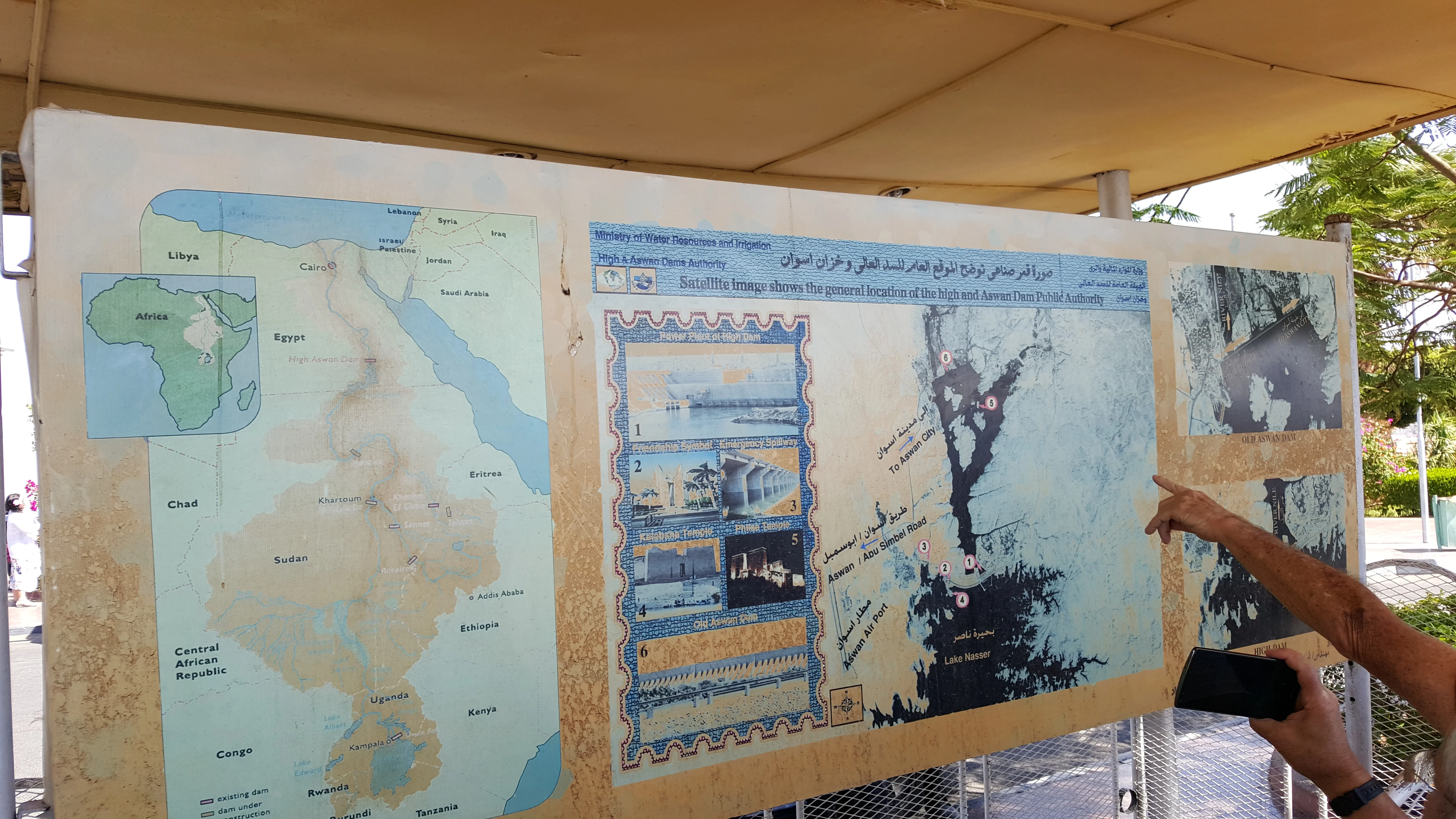
The choice of Aswan as the location for Benban was no accident. Beyond its extraordinary solar irradiance, Aswan has been Egypt's energy capital since the construction of the Aswan Low Dam in 1902 and the High Dam in 1971. The governorate already had existing transmission infrastructure, proximity to the Nile for water supply, and vast tracts of uninhabited desert land available at low cost. Aswan is now home to three types of clean power generation simultaneously: the High Dam's 2,100 MW of hydroelectric output, Benban's 1,650 MW of photovoltaic generation, and the emerging 500 MW Kom Ombo solar project to the south — making it one of the world's most concentrated hubs of renewable electricity production.
For visitors to Aswan, Benban adds a remarkable modern dimension to a city already extraordinarily rich in ancient heritage. The juxtaposition of the solar park with the nearby temples of Philae, Abu Simbel, and the Nubian villages of Lake Nasser creates one of the world's most striking contrasts between ancient civilisation and 21st-century innovation. The Egyptian government has signalled interest in developing an eco-tourism programme around Benban, and some Aswan operators already offer organised educational visits to the site.
7) Visiting Benban & Practical Guide
Getting to Benban
- By Car from Aswan: Benban village is approximately 40 km northwest of Aswan city, roughly 45 minutes by car via the Aswan–Cairo Desert Road. Private car hire or a local guide is recommended.
- Base City: Aswan is the natural base for visiting Benban. It is well-connected by express train from Cairo (9 hours), by air via Aswan International Airport, and by Nile cruise from Luxor.
- Guided Tours: Some Aswan travel operators offer organised educational visits. Check with your hotel reception or local tour operators in advance of your visit.
Best Time to Visit
- Winter (October–March): Ideal — comfortable temperatures of 18–28°C, clear desert skies, and the best light for photography of the solar arrays.
- Summer (April–September): Extremely hot in Aswan, frequently above 40°C. Early morning visits only; not recommended for extended outdoor exploration.
- Year-round: The solar park operates continuously and there is no seasonal closure. Call ahead to confirm access arrangements for your group.
A Day in Aswan & Benban
- Morning (7 AM) — Visit the Benban Solar Park site or its perimeter via the Desert Road. The scale of the installation becomes dramatically apparent as thousands of panels stretch across the flat Nubian desert in every direction.
- Midday (11 AM) — Return to Aswan and visit the Aswan High Dam — only 40 km away — to experience the full arc of Egypt's energy history, from hydroelectric power to solar photovoltaics.
- Afternoon (2 PM) — Take a felucca ride on the Nile or visit the Temple of Philae, ending the day watching the sun set over the Nile — the same sun powering Benban's 1,650 MW of clean energy.
Last updated: April 2026. Access arrangements to the Benban site may require advance coordination with NREA or a licensed tour operator. Verify current visiting conditions before planning your trip.
8) Sources & Further Reading
The following are reputable starting points used to compile the information on this page.
- Egyptian Presidency. Benban — the Largest Solar Power Plant in Aswan. Egypt Presidency Official Website, 2018. — Egyptian government project overview, facts, and strategic context.
- UNFCCC. Solar Projections: The Benban Solar Park. United Nations Framework Convention on Climate Change, 2021. — International policy context and environmental impact analysis.
- IFC (International Finance Corporation). Benban Solar Parks, Egypt. World Bank Group, 2017. — Finance structure, consortium details, and investor information.
- Wikipedia Contributors. Benban Solar Park. English Wikipedia, 2024. — Technical specifications, developer listings, and grid integration details with cited sources.
Hero image: Wikimedia Commons — Benban_Solar_Park.jpg (aerial satellite view). Aswan High Dam photographs: Wikimedia Commons — The_High_Dam_in_Aswan.jpg; By_ovedc_-_Aswan_High_Dam_-_30.jpg (CC BY-SA). Sidebar image: Wikimedia Commons — By ovedc (CC BY-SA). All images used under open licence with attribution.