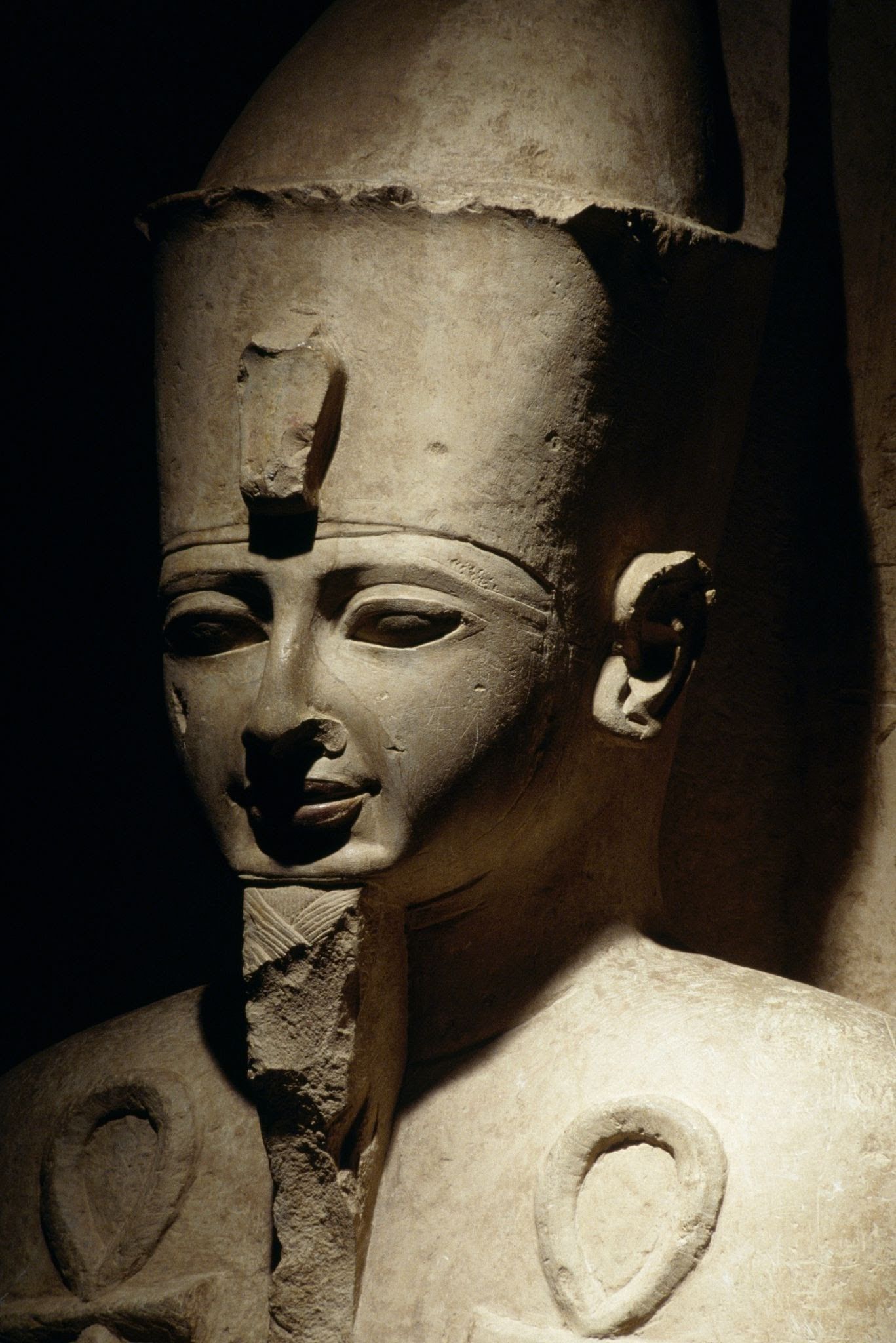
Thutmose I
The warrior king who expanded Egypt's empire and pioneered the Valley of the Kings.
(Djehutymes — Born of Thoth)
🕰️ Reign
c. 1506 – 1493 BC
⚔️ Legacy
Imperial Expansion
🏛️ Dynasty
18th Dynasty
⚰️ Tomb
KV20 (Valley of the Kings)
Chronological & Historical Context
Thutmose I was the third pharaoh of Egypt's 18th Dynasty, ruling during the early New Kingdom period. He is remembered as a great military conqueror who expanded Egypt's borders further than ever before and as an architectural innovator who built the first tomb in the Valley of the Kings.
- Reign: Approximately 1506 – 1493 BC (circa 10–12 years; dates debated).
- Dynasty: 18th Dynasty, third pharaoh.
- Significance: Established Egypt's imperial borders; pioneered royal burials in the Valley of the Kings.
- Predecessor: Amenhotep I.
- Successor: Thutmose II.
Name, Titles, and Identity
🔹 Nomen (Birth Name): Djehutymes
The king's birth name is composed of the name of the god Thoth (Djehuty) and the word mes, meaning "born."
➡️ Interpretation: "Born of Thoth" — linking the king to the god of wisdom and writing.
🔹 Alternative Names and Variants
- Thothmes, Thutmosis, Tuthmosis: Latinized and Greek variants.
- Prenomen (Throne Name): Aa-Kheper-ka-Ra — "Great is the manifestation of the Ka of Ra."
- Horus Name: Kanakht Meryma'at — "Strong bull, beloved of Maat."
- Nebty Name: Khaemneseret Aapehty — "He who appears with the uraeus, great of strength."
- Golden Horus Name: Neferrenput Sankhibu — "He whose years are perfect, he who causes hearts to live."
Egypt Before Thutmose I
Thutmose I came from a non-royal background but strengthened his claim to the throne through strategic marriages. The 18th Dynasty was still in its early stages, following the expulsion of the Hyksos.
- Predecessors: Ahmose I (founder of the dynasty) and Amenhotep I.
- State of the Realm: Egypt was reunified and beginning to reassert its power abroad. The Hyksos had been expelled, and the New Kingdom was emerging as an imperial power.
- Religious Landscape: The cult of Amun was growing in prominence at Thebes, and the king was seen as a warrior-king defending Maat against chaos.
Reign & Major Events
Thutmose I's reign was marked by extensive military campaigns and ambitious building projects. His highest attested year is Year 9 (or possibly Year 12), indicating a reign of about a decade.
⚔️ Military Campaigns
- Nubian Campaign (Year 2): Pushed beyond the Fourth Nile Cataract to Kurgus, securing rich gold deposits.
- Syrian Campaign: Reached the Euphrates River near Carchemish, defeating the Prince of Naharin.
- Imperial Expansion: Claimed the Euphrates as his border, establishing Egypt's largest empire yet.
🏛️ Building Projects
- Karnak Temple: Thoroughly renovated the Temple of Amun, adding pylons, obelisks, and an axial design.
- Dayr al-Madinah: Expanded the workers' village and organized the necropolis staff.
- Valley of the Kings: Commissioned the first royal tomb cut into the rock of the remote valley.
Military Campaigns: Expanding the Empire
Thutmose I was one of Egypt's greatest military conquerors, pushing Egypt's borders further than ever before.
🔻 Nubian Campaign (Year 2)
- Riverborne Expedition: Led a fleet deep into Nubia (present-day Sudan), pushing beyond the Fourth Nile Cataract.
- New Boundary: Established a new border at Kurgus, commemorated by the Tombos Stele.
- Motivation: Access to Nubia's rich gold deposits and to counter the hostile Kushite kingdom.
- Text: Claimed his empire now stretched from Tombos in the south to the Euphrates in the north.
🛡️ Syrian Campaign
- Euphrates River: Penetrated to the Euphrates near Carchemish in Syria.
- Defeated the Prince of Naharin: Captured numerous chariots and prisoners.
- Continued Hyksos Pursuit: Followed the Asiatic rulers who had dominated Egypt.
- Imperial Border: Claimed the Euphrates as his border, a text from Nubia suggests this claim was made even before the Syrian campaign.
Building Projects
Thutmose I was a prolific builder, particularly at the great temple of Amun at Karnak, and he also left his mark on the royal necropolis.
- Temple of Amun at Thebes (Karnak):
- Thoroughly renovated the existing Middle Kingdom temple.
- Erected an enclosure wall and two pylons at the western end.
- Added a small pillared hall between the pylons.
- Erected two obelisks in front of the outer pylon.
- Established the axial temple design that became standard for the New Kingdom.
- Necropolis and Workforce:
- Expanded the cemetery workers' village at Dayr al-Madinah.
- Completed the organization of the necropolis staff begun by his predecessor.
The First Tomb in the Valley of the Kings
This is one of Thutmose I's most enduring legacies—an architectural revolution that would define royal burials for centuries.
🏛️ The Innovation
- First Royal Tomb: Thutmose I was the first king to cut his tomb in the Valley of the Kings at Thebes.
- Motivation: Greater security for the royal burial, moving away from conspicuous pyramids to a hidden, rock-cut tomb.
- KV20 (Original): His original tomb is believed to be KV20, which he may have shared with his daughter, Hatshepsut.
🏺 KV38 (Reburial)
- Later Reburial: His body was moved to KV38 by his grandson, Thutmose III.
- Discovery: KV38 was discovered in March 1899 by Victor Loret.
- Features: Bent-axis layout, containing portions of the Amduat, a funerary text for royalty.
- Final Rest: His mummy was ultimately relocated to the Royal Cache at Deir el-Bahri.
Family and Royal Lineage
Thutmose I came from a non-royal background but secured his position through strategic marriages and produced a line of powerful rulers.
- Father: Unknown — he was the son of a non-royal mother.
- Mother: Senseneb — a non-royal woman.
- Great Royal Wife: Queen Ahmose — possibly a relative of Amenhotep I, which helped legitimize his claim.
- Secondary Wife: Mutnofret — mother of his successor.
- Children:
- Hatshepsut — daughter with Queen Ahmose; later became one of Egypt's most famous female pharaohs.
- Thutmose II — son with Mutnofret; succeeded his father.
- Amenmose — son who predeceased his father.
- Wadjmose — son who predeceased his father.
- Nefrubity — daughter who died in infancy.
- Succession: Two crown princes predeceased the king, forcing Thutmose to rely on his younger son, Thutmose II, as his eventual successor.
Other Attestations
Thutmose I is attested through a variety of archaeological sources, including monuments, inscriptions, and his tomb.
- Karnak Temple: Extensive renovations and inscriptions documenting his building projects and military campaigns.
- Tombos Stele: Commemorates his Nubian conquest and claims his empire stretched from Tombos to the Euphrates.
- KV20 and KV38: His original and reburial tombs in the Valley of the Kings.
- Obelisks: Two obelisks erected at Karnak, one of which still stands.
- Mummy: His mummy was found in the Royal Cache at Deir el-Bahri in the 19th century.
Governance & Administration
Thutmose I organized his administration to support his military campaigns and building projects, setting precedents for his successors.
- Military Organization: Assigned crown princes to Memphis to be schooled in military arts — a practice followed by later kings.
- Necropolis Staff: Completed the organization of the workforce at Dayr al-Madinah.
- Royal Estates: Managed agricultural estates to fund his building projects and campaigns.
- Taxation: Maintained a system of taxation and tribute to support the imperial administration.
Religion & Ideology
Thutmose I's reign saw the growing importance of the cult of Amun, and his royal ideology emphasized his role as a warrior king defending Maat.
- Cult of Amun: His extensive renovations at Karnak promoted the god Amun as the preeminent deity of the New Kingdom.
- Warrior King: His Horus name "Strong bull, beloved of Maat" emphasized his role as a defender of cosmic order against chaos.
- Solar Theology: His throne name "Great is the manifestation of the Ka of Ra" incorporated Ra, linking him to the sun god.
- Funerary Cult: His tomb in the Valley of the Kings and the associated funerary texts (Amduat) reflect the evolving royal funerary ideology.
Art in the Age of Thutmose I
The art of Thutmose I's reign reflects the power and imperial ambitions of the early New Kingdom.
- Relief Carving: High-quality reliefs at Karnak and on his obelisks depict the king in military and ritual scenes.
- Iconography: The king is often shown smiting enemies or making offerings to Amun, reinforcing his roles as warrior and priest.
- Architecture: The axial temple design and the rock-cut tomb in the Valley of the Kings set new architectural standards.
- Royal Portraits: Sculptures and reliefs depict Thutmose I with a strong, idealized physiognomy, projecting power and divinity.
Legacy
Thutmose I left an indelible mark on Egyptian history, laying the foundations for the imperial age of the New Kingdom.
- Military Pioneer: He established the imperial borders of the New Kingdom, setting a precedent for future warrior-pharaohs like his grandson, Thutmose III.
- Architectural Innovator: His decision to build the first tomb in the Valley of the Kings began a tradition that would be followed by almost all subsequent New Kingdom pharaohs.
- Temple Builder: His renovations at Karnak established the axial temple design that became the standard for the New Kingdom.
- Dynastic Founder: Through his children Hatshepsut and Thutmose II, he established a royal line that would dominate the 18th Dynasty for generations.
- Military Organization: He set the example of assigning crown princes to Memphis to be schooled in military arts, a practice followed by later kings.
📌 Comprehensive Summary
👑 Name: Thutmose I (Djehutymes — Born of Thoth)
🕰️ Era: New Kingdom (c. 1506 – 1493 BC)
🏛️ Dynasty: 18th Dynasty, 3rd Pharaoh
⚔️ Greatest Legacy: Expanded Egypt's empire to the Euphrates; first tomb in the Valley of the Kings
👪 Family: Father unknown → Mother Senseneb → Wives Ahmose & Mutnofret → Children Hatshepsut, Thutmose II, Amenmose, Wadjmose, Nefrubity
⚰️ Burial: KV20 (original), KV38 (reburial), mummy found in the Royal Cache at Deir el-Bahri