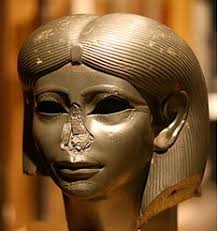
Basic Identity
Sobekneferu (or Neferusobek) is the first historically confirmed female Pharaoh of Egypt to rule in her own right. Her name means "The Beauty of Sobek," reflecting her devotion to the crocodile god. She ascended the throne at a time of crisis, marking the final chapter of the Middle Kingdom.
| Throne Name | Sobekkare (“The Ka of Sobek is Re”) |
|---|---|
| Dynasty | 12th Dynasty (Last Ruler) |
| Reign | c. 1806–1802 BCE (Approx. 4 Years) |
| Status | Female King (Not Regent) |
Breaking the Mold
Sobekneferu is significant because she shattered the tradition of male-only kingship. Unlike later queens who ruled as regents, she assumed the full pharaonic titulary. Her reign represents a desperate attempt to maintain dynastic continuity as the male line of Amenemhat III died out.
Daughter of Kings
She was the daughter of the great Amenemhat III and likely the sister (or half-sister) of Amenemhat IV. When her brother died without a male heir, the throne passed to her. Her legitimacy was unquestioned because she carried the royal blood of the powerful 12th Dynasty.
The Female Horus
Sobekneferu faced the challenge of ruling a patriarchy. She adopted a unique strategy: she used the male titles of a king but did not hide her gender. In inscriptions, she uses feminine grammatical endings, yet she is depicted wearing the royal kilt over female dress. She was the "Female Horus."
Devotion to Sobek
Her name honors Sobek, the crocodile god of the Faiyum (where her father built his great works). By associating herself with this primal, fertile deity, she emphasized the continued prosperity of the land. She is the first monarch to incorporate a deity other than Ra or Amun so prominently into her birth name.
Completing the Legacy
Despite her short rule, she was an active builder. She completed her father's mortuary complex at Hawara (The Labyrinth) and added structures at Herakleopolis Magna. A beautiful bust of her (now in the Louvre) shows her wearing a unique headdress that combines the nemes (king) and the khat (goddess).
Maintaining Stability
There is no evidence of civil war or rebellion during her time. The bureaucracy functioned smoothly, and the economy remained stable. She acted as a caretaker ruler, preserving the systems established by her powerful ancestors, Amenemhat III and Senusret III.
Quiet Borders
Foreign relations were peaceful. Trade continued with the Levant and Nubia, but there were no military campaigns. Egypt turned inward, focusing on the succession crisis rather than expansion.
The Line Ends
Sobekneferu died after a reign of just under four years. With no children to succeed her, the glorious 12th Dynasty came to an end. The throne passed to a new family (the 13th Dynasty), marking the beginning of a slow decline into the Second Intermediate Period.
Two Female Kings
| Feature | Sobekneferu | Hatshepsut |
|---|---|---|
| Reign Length | 4 Years | 21 Years |
| Dynastic Role | Last Ruler (End) | Co-Ruler (Peak) |
| Legacy | Preserved Lineage | Expanded Empire |
📌 Comprehensive Summary
👑 Name: Sobekneferu (Beauty of Sobek)
🕰️ Era: 12th Dynasty (Final Ruler)
⚔️ Significance: First Female Pharaoh
🪨 Monument: Unfinished Pyramid at Mazghuna