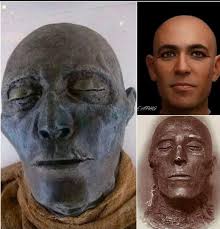
Basic Identity
Seti I was the second pharaoh of the 19th Dynasty, inheriting the throne from his father, Ramesses I. While his father established the dynasty, Seti I solidified it. His reign was a crucial bridge between the post-Amarna restoration and the grandeur of his son, Ramesses II. He combined the roles of a fierce warrior king and a refined master builder.
| Throne Name | Menmaatre ("Enduring is the Justice of Ra") |
|---|---|
| Dynasty | 19th Dynasty (Early Ramesside Period) |
| Reign | c. 1290–1279 BCE (Approx. 11 Years) |
| Capital | Memphis (Administrative) & Thebes (Religious) |
The Great Restorer
Seti I's importance lies in his successful dual policy: reasserting Egyptian military control abroad and commissioning some of the finest art at home. He rebuilt the empire that had frayed during the Amarna Period, reclaiming lost territories in the Levant and Nubia, and setting the stage for the military dominance of the Ramesside era.
A Dynasty in Motion
Born to Ramesses I and Queen Sitre, Seti I ascended smoothly to the throne. He married Queen Tuya, and together they had the future Ramesses II. From the start, Seti I focused on action over ceremony, immediately setting out to secure Egypt's borders and prove that the new dynasty was one of strength.
Campaigns of Conquest
- The Shasu Campaign: His first campaign was against Shasu nomads in Sinai to secure the "Ways of Horus" trade route.
- Levant & Kadesh: He marched north, reclaiming Canaanite cities and even briefly capturing the strategic city of Kadesh from the Hittites—a feat his son would famously struggle to repeat.
- Nubian Gold: He reasserted control in the south, ensuring the flow of gold from Nubia to fund his massive building projects.
Devotion to Tradition
Seti I was a devout supporter of the traditional gods. His name "Seti" (Man of Seth) honored the god of chaos and war, yet he balanced this by promoting the worship of Osiris, Amun, and Ptah. This alignment of war and religion reinforced the concept of the king as the divine protector of Ma'at (Order).
Belzoni's Tomb (KV17)
Seti I's tomb in the Valley of the Kings is the longest and deepest in the valley. Discovered by Giovanni Belzoni, it is a subterranean palace decorated from top to bottom with vibrant religious texts and an astronomical ceiling representing the night sky. It remains one of the most spectacular monuments of the afterlife.
Passing the Torch
Seti I died relatively young, possibly from heart disease, but he ensured a stable succession. He appointed his son, Ramesses II, as coregent early on. When Seti passed, he left behind a secure, wealthy, and militarily powerful Egypt, allowing his son to rule for 66 years and become the legendary "Ramesses the Great."
The Rise of the Ramessides
| King | Style | Legacy |
|---|---|---|
| Ramesses I | Transitional | Founded the Dynasty |
| Seti I | Warrior-Builder | Restored the Empire & Art |
| Ramesses II | Imperial Glory | Grandeur & Longevity |
📌 Visitor-Friendly Summary
Seti I was the king who rebuilt Egypt’s power and carved it in stone. His reign was the perfect blend of the sword and the chisel.
👑 Key Title: The Warrior Restorer
🏛️ Masterpiece: Temple of Abydos
⚰️ Legacy: The Longest Tomb (KV17)