Basic Identity
Seqenenre Tao (also called Taa II) was a ruler of the Theban 17th Dynasty during the Second Intermediate Period. While his reign was short, his decision to openly challenge the Hyksos occupation of northern Egypt marked the beginning of the War of Liberation that would eventually lead to the New Kingdom.
| Throne Name | Seqenenre (“He Who Strikes Like Ra”) |
|---|---|
| Horus Name | Ka-nakht (“Mighty Bull”) |
| Dynasty | 17th Dynasty |
| Reign | c. 1558–1553 BCE (Approx. 5 Years) |
The Catalyst
Seqenenre Tao is historically crucial as the first king to break the uneasy peace with the Hyksos. He transformed the ideological rivalry between Thebes and Avaris into an active military conflict. Though he died in the attempt, his sacrifice galvanized his family—Kamose and Ahmose—to finish the job.
A Divided Egypt
He ruled a truncated kingdom. The powerful Hyksos king Apepi controlled the North (Delta and Middle Egypt), while the Kingdom of Kush (Nubia) threatened from the south. Thebes was squeezed in the middle, paying tribute to the Hyksos until Seqenenre decided to fight.
The Hippopotamus Affair
A famous literary text describes a diplomatic insult that sparked the war. Apepi sent a message complaining that the hippopotamuses in Thebes were "keeping him awake" in Avaris (hundreds of miles away). This was a symbolic demand for Thebes to stop its noisy military preparations. Seqenenre's refusal to submit led to open war.
David vs. Goliath
The Theban army was initially smaller and less technologically advanced than the Hyksos, who possessed chariots and composite bows. Under Seqenenre, the Egyptians began to adopt these foreign weapons. His reign marks the beginning of the modernization of the Egyptian military machine.
The Warrior Queen
After his violent death, his wife, Queen Ahhotep I, played a critical role. She rallied the troops, suppressed rebellion, and acted as regent for her sons. A stele praises her for "uniting Egypt" and "caring for its soldiers," confirming she was a commander in her own right who kept the resistance alive.
Holy War
Seqenenre framed the conflict not just as political liberation but as a religious duty. The Hyksos worship of Seth (in a foreign form) was contrasted with the Theban loyalty to Amun-Ra. Fighting the "Asiatics" became a way to restore Ma'at (Order) against Isfet (Chaos).
A Hasty Burial
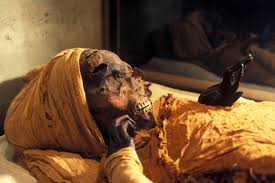
His mummification was poor and rushed. His body was not properly posed, and his brain was left inside his skull. This suggests his body was recovered from the battlefield in a state of decomposition and hastily prepared for burial amidst the chaos of war, preserving the horrific visage of his death agony.
Dynasty of Heroes
He was the patriarch of Egypt's greatest military family. His son Kamose continued the war, pushing the Hyksos back to Avaris. His second son, Ahmose I, finally expelled them and founded the 18th Dynasty. His daughter, Ahmose-Nefertari, became the first great God's Wife of Amun.
Physical Proof
Aside from his mummy, evidence of his reign is sparse but significant. A new palace found at Deir el-Ballas served as a forward operating base for his campaigns. His name appears on monuments that show he was actively ruling and building before the final conflict.
Father and Son
| King | Seqenenre Tao | Kamose |
|---|---|---|
| Role | The Initiator | The Expander |
| Fate | Died in Battle | Died Young (Unknown Cause) |
| Legacy | Martyrdom | Strategic Victory |
📌 Comprehensive Summary
👑 Name: Seqenenre Tao (The Brave)
🕰️ Era: 17th Dynasty (Late)
⚔️ Significance: First King to Fight the Hyksos
🪨 Legacy: His Mummy (The Face of War)