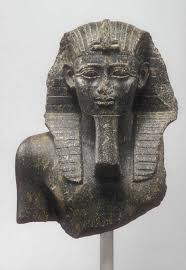
Basic Identity
Psamtik I (Greek: Psammetichus) was the founder of the 26th Dynasty, also known as the Saite Dynasty. Ruling from the city of Sais in the Delta, he achieved the seemingly impossible: expelling the Assyrian occupiers and reunifying Egypt after centuries of division. His 54-year reign marked the beginning of the Late Period and a final golden age for ancient Egyptian culture.
| Throne Name | Wahibre ("Constant is the Heart of Ra") |
|---|---|
| Dynasty | 26th Dynasty (Saite Dynasty) |
| Reign | c. 664–610 BCE (Approx. 54 Years) |
| Capital | Sais (Western Delta) |
The Return of Independence
Psamtik I is historically crucial because he ended Assyrian domination. He transformed himself from a vassal king into a sovereign ruler, reunifying Upper and Lower Egypt for the first time since the New Kingdom. He initiated the "Saite Renaissance," a period of cultural revival that looked back to the glories of the Old Kingdom for inspiration.
Brains Before Battles
Son of Necho I, a ruler appointed by the Assyrians, Psamtik I began his career as a vassal controlling only part of the Delta. He faced numerous rival princes (the Dodekarchy). Rather than immediate war, he used cunning diplomacy and foreign alliances. He recruited Greek and Carian mercenaries—legendarily described as "Bronze Men from the Sea"—to defeat his local rivals and eventually expel the Assyrian garrisons.
Winning the South
After securing the North, Psamtik I turned his eyes to Thebes. Instead of invading, he used negotiation. He compelled the God's Wife of Amun, Shepenupet II, to adopt his daughter Nitocris as her successor. This diplomatic masterstroke (the "Adoption Stela") secured his control over the vast wealth and religious authority of the South without shedding a drop of Egyptian blood.
Looking Back to Move Forward
The "Saite Renaissance" was a deliberate policy of cultural nationalism. Artists copied the styles of the Old and Middle Kingdoms, producing statues and reliefs with classical proportions and precise hieroglyphs. This archaizing style was a statement of identity: by reviving the past, Psamtik I was asserting that Egypt had returned to its true self after centuries of foreign rule.
A Modern State
Psamtik I reorganized the administration, centralizing authority at Sais and reducing the independence of local governors and temples. The economy boomed due to agricultural recovery and Mediterranean trade. He introduced a reformed bureaucracy that was efficient and loyal, laying the groundwork for more than a century of prosperity.
A Peaceful Transition
Psamtik I died peacefully after a long and successful reign of 54 years. He left behind a strong, unified, and wealthy kingdom. He was likely buried at Sais, though his tomb has not yet been fully identified. He was succeeded by his son, Necho II, who would continue his father's policies and even attempt to build a canal connecting the Nile to the Red Sea.
Strategies of the Late Period
| King | Primary Strategy | Result |
|---|---|---|
| Taharqa | Military Resistance | Heroic Defeat |
| Psamtik I | Diplomacy & Alliances | Independence & Unity |
| Necho II | Imperial Expansion | Regional Conflict |
📌 Visitor-Friendly Summary
Psamtik I was the pharaoh who rebuilt Egypt with alliances, not empires. His legacy shaped the final golden age of the pharaohs.
👑 Key Title: The Great Reunifier
🌍 Innovation: Use of Greek Mercenaries
🎨 Legacy: The Saite Renaissance