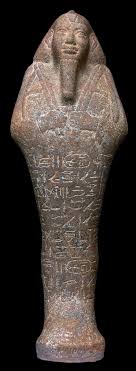
Basic Identity
Piye (formerly known as Piankhi) was the first major ruler of the 25th Dynasty, the "Kushite Dynasty." Originating from Napata in the Kingdom of Kush (modern Sudan), he swept northward to reunify a fragmented Egypt. He viewed himself not as a foreign invader, but as the true guardian of Egyptian traditions and the champion of the god Amun.
| Throne Name | Menkheperre ("Enduring is the Manifestation of Ra") |
|---|---|
| Dynasty | 25th Dynasty (Kushite/Nubian) |
| Reign | c. 747–716 BCE (Approx. 31 Years) |
| Capital | Napata (Nubia) & Memphis |
The Holy Conqueror
Piye is historically vital because he ended the chaos of the Third Intermediate Period. By defeating the rival Libyan and Saite kings of the Delta, he established the 25th Dynasty, uniting the entire Nile Valley from Khartoum to the Mediterranean under one crown. His conquest was driven by a deep religious conviction to restore the "sacred order" that had been violated by the fragmented northern rulers.
Faith Guided Policy
Son of Kashta and possibly Queen Pebatma, Piye was a devout worshiper of Amun of Napata. He believed his kingship was a divine mandate. Unlike secular conquerors, Piye fought his wars as a sacred duty (Jihad-like concept of holy war). He saw the disarray in Egypt not just as political weakness, but as an offense against divine law that required purification.
The March North
When the northern ruler Tefnakht of Sais began expanding his power, Piye launched a "Great Campaign" around 728 BCE. His armies moved methodically down the Nile, celebrating religious festivals at Thebes before engaging the enemy. The campaign culminated in the Siege of Memphis, where Piye launched a daring naval assault, capturing the city and forcing the submission of the Delta warlords.
War with Ethics
Piye is renowned for his unusual moral conduct in warfare. He enforced ritual purity among his soldiers and condemned the northern kings not just for resisting him, but for being "ritually impure" (e.g., eating fish). Remarkably, he showed mercy to defeated enemies. Kings like Osorkon IV and Tefnakht were allowed to keep their thrones as vassals as long as they pledged loyalty and piety.
A Distant Emperor
After his victory, Piye did not remain in Egypt. He returned to his capital at Napata in Nubia, ruling Egypt as a distant emperor through local governors and priests. His religious policy focused on strengthening the cult of Amun and reviving Old Kingdom traditions. He encouraged an "archaizing" style in art, looking back to the pyramid age to legitimize his rule.
Burial at El-Kurru
Piye died in Nubia and was buried in the royal necropolis of El-Kurru. He revived the ancient Egyptian tradition of pyramid building, which had been abandoned in Egypt for centuries. His pyramid was the first of the steep-sided Nubian pyramids. He was also buried with his beloved horses, highlighting the importance of cavalry in the Kushite military.
A Dynasty Begins
| King | Approach | Legacy |
|---|---|---|
| Bocchoris | Law & Intellect | Tragic Defeat |
| Piye | Faith & Conquest | Reunification & 25th Dynasty |
| Shabaka | Consolidation | Established Permanent Rule |
📌 Visitor-Friendly Summary
Piye was the king who conquered Egypt for the gods. His stela still preaches devotion and power across the ages.
👑 Key Title: The Nubian Conqueror
🏹 Achievement: Siege of Memphis
⛰️ Monument: Pyramid at El-Kurru