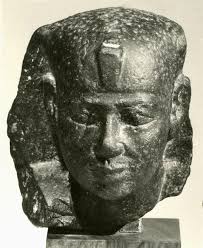
Basic Identity
Pepi II (Neferkare) is traditionally cited as the longest-reigning monarch in human history, ascending the throne at age six and ruling for up to 94 years. His reign marks the zenith and the subsequent collapse of the Old Kingdom.
| Throne Name | Neferkare (“Beautiful is the Ka of Ra”) |
|---|---|
| Titles | King of Upper & Lower Egypt, Son of Ra |
| Dynasty | Sixth Dynasty (End) |
| Reign | c. 2278–2184 BCE (Disputed: 64-94 Years) |
The End of an Era
Pepi II is historically significant for presiding over the slow disintegration of the centralized state. His extreme longevity created a succession crisis and allowed provincial governors (Nomarchs) to become de facto kings in their own regions, leading directly to the First Intermediate Period.
The Boy King
He came to power as a child of six after the early death of his brother Merenre I. His mother, Queen Ankhesenpepi II, acted as regent in his early years, depicted in statues holding the young king on her lap—a precursor to the iconography of Isis and Horus.
A Stagnant Throne
Ruling for nearly a century meant that Pepi II outlived his children and even his grandchildren. This created a gerontocracy where the administration aged along with the king. The lack of fresh leadership at the center paralyzed the government's ability to respond to crises.
Rise of the Nomarchs
As the king aged and became feeble, real power shifted to the provincial governors. They stopped sending taxes to the capital, built royal-style tombs for themselves, and passed their titles to their sons without royal decree. The king became a figurehead.
Famine and Failure
The political decline coincided with a severe climatic shift. Low Nile floods caused repeated famine. Because the Pharaoh claimed to control the Nile, these failures delegitimized his divine authority. "The land spins like a potter's wheel," wrote the sage Ipuwer, describing the chaos.
Lost Influence
Early in his reign, trade with Nubia and Byblos flourished. However, as central power waned, Egypt lost control of its borders. Expeditions were attacked, and a commanding officer was killed in the Levant, signaling that Egypt could no longer project power abroad.
Magic as Defense
Unable to defeat enemies militarily, the state turned to magic. Execration Texts—curses written on clay figurines of bound enemies and then smashed—became common. This suggests a state living in fear, using ritual to fight threats it could no longer conquer with armies.
Neferkare-Pepi
His pyramid at South Saqqara was the last major monument of the Old Kingdom. Though standard in size (52m), the workmanship was poor, and the core was unstable. Today, it is a heap of rubble, a fitting metaphor for the collapse of his dynasty.
Spiritual Complexity
Despite political decline, theology advanced. Pepi II's pyramid contains the most extensive corpus of Pyramid Texts ever carved. The spells are sophisticated, emphasizing the king's transformation into an Akh and his integration into the cosmic cycle of Ra and Osiris.
A Fragmented Court
Pepi II had many wives (Neith, Iput II, Udjebten) who were buried in small pyramids around his own. The multitude of potential heirs likely contributed to the chaotic infighting that erupted upon his death, shattering the single line of succession.
The Collapse
When Pepi II finally died, the center could not hold. A series of ephemeral kings (and possibly a queen, Nitocris) ruled for months or days. The Old Kingdom effectively ceased to exist, replaced by the anarchy of the First Intermediate Period.
A Warning from History
Pepi II is often cited as a case study in the dangers of absolute monarchy. His longevity, intended to be a blessing, became a curse that fossilized the state. He is remembered as the last god-king before the "dark age" where the common man began to claim his own immortality.
📌 Comprehensive Summary
👑 Name: Pepi II (Beautiful is the Ka of Ra)
🕰️ Era: 6th Dynasty (Final Great King)
⚔️ Key Event: Collapse of Central Authority
🪨 Monument: Ruined Pyramid at Saqqara