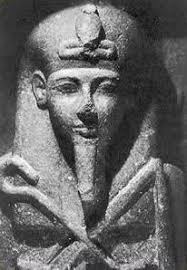
Basic Identity
Netjerkare Siptah is traditionally regarded as the final ruler of the Sixth Dynasty. His reign represents the flickering end of the glorious Old Kingdom before Egypt descended into the chaos of the First Intermediate Period.
| Throne Name | Netjerkare (“Divine is the Ka of Ra”) |
|---|---|
| Personal Name | Siptah (“Son of Ptah”) |
| Dynasty | Sixth Dynasty (End) |
| Reign | c. 2184 BCE (Months) |
The End of Unity
Netjerkare Siptah is significant not for what he built, but for what he represents: the formal end of centralized Old Kingdom rule. He ruled over a fracturing state where provincial governors (nomarchs) had become independent kings in all but name.
Fragmentary Records
Information about him is extremely scarce. He is attested in the Abydos King List (entry 40) and the Turin Canon. There are no known monuments, statues, or contemporary inscriptions from his reign, a silence that speaks volumes about the economic collapse of the royal court.
The Gender Debate
The Greek historian Manetho claimed the 6th Dynasty ended with a queen named Nitocris, "the noblest and loveliest woman of her time." Modern Egyptology has solved this mystery: "Nitocris" is a corruption of the name "Nitiqreti" found in the Turin Canon, which is actually a misreading of the male king's name "Netjerkare." Thus, the legendary queen was likely this historical king.
Royal Blood
He was likely a son or close relative of the centenarian king Pepi II. Ascending the throne after such a long reign meant inheriting a bankrupt treasury, a senile administration, and a country already breaking apart. He likely lacked the political support base to enforce his will.
State Collapse
By his reign, the central government in Memphis had effectively collapsed. The Nomarchs of Upper Egypt no longer answered to the capital. Law enforcement vanished, and the royal decrees were ignored. As the sage Ipuwer later wrote: "The laws of the judgment-hall are cast forth... The King is removed by the rabble."
A Fleeting Rule
The Turin Canon assigns him a reign of roughly one year, or perhaps only a few months. This short duration explains the total lack of building activity. He likely spent his brief rule attempting to hold onto Memphis while the rest of the country slipped away.
The Silent Stone
There is no known pyramid for Netjerkare Siptah. He is the first king of the Old Kingdom in centuries to leave no mortuary complex. This absence confirms the complete exhaustion of royal resources and the inability of the state to mobilize labor for monumental construction.
Religion Survives
Despite the political collapse, the religious machinery continued. Traditional royal titles were still used, and local temples remained active. The ideology of divine kingship did not die; it just became fragmented, with local rulers soon claiming the titles for themselves.
The Egyptian Cinderella
The confusion surrounding "Nitocris" (Netjerkare) later merged with the Greek legend of Rhodopis, a courtesan who became queen when an eagle dropped her sandal into the King's lap. This romantic folklore filled the vacuum left by the lack of historical facts about the end of the dynasty.
Evidence of Absence
The lack of material evidence is, in itself, historical evidence. It testifies to a "Dark Age" where the centralized record-keeping and artistic production of the royal court ceased. The silence of the archaeological record screams of the chaos that engulfed the land.
The Contrast
| Feature | Pepi II | Netjerkare Siptah |
|---|---|---|
| Reign Length | 94 Years (Longest) | < 1 Year (Shortest) |
| State Power | Gradual Decline | Total Collapse |
| Monuments | Pyramid & Temples | None |
Into the Darkness
Following his death, the 7th and 8th Dynasties ("70 kings in 70 days," according to Manetho) tried to claim legitimacy in Memphis, but real power had shifted to Herakleopolis and Thebes. Netjerkare Siptah was the last flicker of the Old Kingdom before the lights went out.
Studying Collapse
He is a key figure for historians studying Societal Collapse. His reign illustrates how a powerful, centralized civilization can disintegrate rapidly when institutions fail, leadership weakens, and environmental stress (low Nile floods) strikes simultaneously.
📌 Comprehensive Summary
👑 Name: Netjerkare Siptah
🕰️ Era: 6th Dynasty (Final King)
⚔️ Significance: Formal End of Old Kingdom
📜 Myth: The Basis for Queen Nitocris