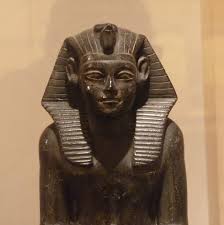
Basic Identity
Neferhotep I (Khasekhemre) is one of the most prominent rulers of the often-overlooked 13th Dynasty. In a period characterized by short reigns and political fragmentation, he ruled for over a decade, providing a rare moment of stability and continuity through his devotion to tradition and effective administration.
| Throne Name | Khasekhemre (“The Power of Ra Appears”) |
|---|---|
| Personal Name | Neferhotep (“Perfect is Peace”) |
| Dynasty | 13th Dynasty |
| Reign | c. 1705–1694 BCE (Approx. 11 Years) |
Legitimacy Restored
His historical significance lies in his ability to project royal power without a royal bloodline. Neferhotep I re-established the prestige of the pharaoh through a sophisticated program of religious propaganda, proving that the institution of kingship could survive even when the dynastic line was broken.
A Throne in Jeopardy
He ascended the throne at a time when royal succession had become unpredictable. The powerful administrative families of Itjtawy held the true reins of government. Neferhotep navigated this landscape by aligning himself with the bureaucracy while elevating his own divine status to rise above the factionalism.
The Soldier's Son
Like his brother Sobekhotep IV, Neferhotep I was born a commoner. His father, Haankhef, and mother, Kemi, are listed on monuments without royal titles. This open acknowledgment of his non-royal origins was a bold move, asserting that merit and divine selection trumped heredity.
Chosen by Ra
To compensate for his lack of royal blood, he heavily emphasized his divine election. His throne name, Khasekhemre, recalls the powerful kings of the Old Kingdom. He portrayed his rise not as a usurpation, but as the will of Ra, positioning himself as a predestined ruler restoring Ma'at.
State Continuity
Despite the turnover of kings, the machinery of the state remained surprisingly intact. Under Neferhotep, the treasury, granaries, and courts functioned efficiently. He relied on a corps of professional administrators who maintained the flow of taxes and justice, ensuring the kingdom's survival.
The Pious King
The Living Osiris
His connection to Osiris was profound. He commanded that the mysteries of Osiris be performed strictly according to ancient tradition. By aligning himself with the god of resurrection, he symbolically promised the resurrection of the Egyptian state itself.
Monuments of Faith
Neferhotep was an active builder. He left inscriptions at Karnak, testifying to his support for the priesthood of Amun. He also commissioned works at Abydos and possibly Memphis. His building program was not about ego, but about reinforcing the sacred infrastructure of the land.
Theban Loyalty
The presence of his name at Karnak indicates that Thebes—the future powerhouse of the New Kingdom—remained loyal to the Itjtawy administration. This alliance between the northern capital and the southern religious center was key to his stability.
Return to Idealism
Royal sculpture under Neferhotep I abandoned the weary realism of the late 12th Dynasty in favor of a timeless, idealized youthfulness. His statues project calm assurance and divine distance, a visual argument for the stability and permanence of his rule.
Peace through Strength
There are no records of major wars during his reign, suggesting a strategy of defense and deterrence. The army, loyal to the central government, kept the borders secure. This period of peace allowed the economy to recover and trade to flow.
Trade Contacts
Egypt remained connected to the wider world. Artifacts bearing his name have been found in Byblos (Lebanon) and Lower Nubia. These finds indicate that diplomatic and trade relations were still active, maintaining Egypt's status as a regional power.
Functioning State
The state granaries were full, and the Fayum irrigation system continued to operate. Administrative seals from his reign show a complex system of goods redistribution. Despite the political fragility, the economic engine of Egypt was still running smoothly.
A Family Dynasty
He was succeeded by his brother, Sobekhotep IV. This smooth transition from brother to brother was rare in the 13th Dynasty and created a mini-dynasty of stability that lasted for nearly two decades, the high water mark of the period.
Brothers in Power
| King | Neferhotep I | Sobekhotep IV |
|---|---|---|
| Focus | Religious Legitimacy | Administrative Power |
| Style | Pious Scholar | Effective Ruler |
| Legacy | Abydos Stela | Colossal Statues |
📌 Comprehensive Summary
👑 Name: Neferhotep I (Perfect is Peace)
🕰️ Era: 13th Dynasty (Middle Kingdom)
⚔️ Significance: Restored Royal Ideology
🪨 Monument: Great Stela of Abydos