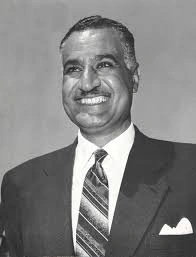
Basic Identity
Gamal Abdel Nasser Hussein was born on January 15, 1918, in the Bacos district of Alexandria, Egypt, into a modest family of Upper Egyptian origin. His father, Abd al-Nasser Hussein, was a postal clerk from Bani Murr in Asyut Governorate, and Nasser's childhood was marked by frequent relocations as his family followed his father's postings across the country. These early years shaped in him an acute awareness of Egypt's social inequalities and the humiliation of foreign colonial rule. From his school days, Nasser was politically active, participating in student demonstrations against British occupation as early as 1935, when he was only seventeen years old. He was admitted to the Royal Military Academy in Cairo in 1937 and graduated as a commissioned officer in 1938, beginning the military career that would ultimately propel him to the heights of Egyptian and Arab history. His personal story is inseparable from the story of modern Egypt's long struggle for sovereignty, social justice, and national dignity.
| Name Meaning | "Gamal" means beauty in Arabic; "Abd al-Nasser" means Servant of the Victorious, referring to God as al-Nāṣir; full name: Jamāl ʿAbd al-Nāṣir Ḥusayn. |
|---|---|
| Titles | President of Egypt (1956–1970); Chairman of the Revolutionary Command Council (1954–1956); Prime Minister of Egypt (1954–1956); President of the United Arab Republic (1958–1961); Chairman of the Non-Aligned Movement (1964–1970) |
| Dynasty | Egyptian Republic — Modern Era (First Republic, 1953–1971) |
| Reign | Effectively ruled Egypt from February 1954; officially President from June 23, 1956 until his death on September 28, 1970 — a rule spanning approximately 16 years. |
The Architect of Modern Arab Identity
Gamal Abdel Nasser stands as one of the most consequential political figures of the twentieth century, not only for Egypt but for the entire Arab world and the global anti-colonial movement. His rise to power in 1952 through the Free Officers Movement ended more than a century of foreign-influenced monarchy and inaugurated a new era of genuine Egyptian self-determination. Nasser's decision in July 1956 to nationalize the Suez Canal Company—which had been controlled by British and French shareholders since 1869—became one of the most dramatic and resonant acts of decolonization in modern history. When Britain, France, and Israel launched a coordinated military attack on Egypt in October 1956, Nasser refused to capitulate; under overwhelming international pressure from both the United States and the Soviet Union, the invaders were forced into a humiliating withdrawal. This episode cemented Nasser's status as a global icon of Arab dignity and anti-imperialism, sending shockwaves through the crumbling European colonial order and inspiring liberation movements from Algeria to Indonesia. His vision of Pan-Arab unity, embodied in the short-lived United Arab Republic with Syria (1958–1961), inspired nationalists from Morocco to Iraq, fundamentally reshaping the political map of the Middle East. Even the catastrophic Six-Day War defeat of 1967—the darkest hour of his presidency—could not extinguish his hold on the Egyptian and Arab imagination; when he offered his resignation, millions flooded the streets demanding he stay. His philosophy of Arab socialism, national sovereignty, and defiance of imperialism continues to animate political discourse in the Arab world to this day.
Royal Lineage
Gamal Abdel Nasser was born into a working-class Egyptian family of authentic Upper Egyptian (Saʿīdī) origin—a background that distinguished him sharply from Egypt's Ottoman-influenced ruling elite and European-educated aristocracy and gave him a powerful connection to ordinary Egyptians. His father, Abd al-Nasser Hussein, was a government postal worker, and his mother, Fahima Hammad, died when Nasser was only eight years old, a loss that profoundly shaped his character and self-reliance. He was raised largely by extended family, spending formative years with relatives in Cairo and Alexandria, developing early a fierce sense of Egyptian and Arab identity rooted in the common people rather than the privileged classes. Nasser married Tahia Mohammed Kazem in 1944, and the couple had five children: Hoda, Mona, Khalid, Abd al-Hakim, and Abd al-Hamid. He never cultivated a political dynasty or elevated relatives to positions of power—a marked contrast to the monarchy he overthrew. Among his closest early associates was Anwar al-Sadat, a fellow Free Officer who would later succeed him as President. Nasser's entirely Egyptian lineage, his modest origins, and his refusal to enrich his own family were central pillars of his popular legitimacy and the authenticity of his nationalist appeal to millions of Egyptians who saw themselves reflected in him.
Secularism, Islam, and the State
Nasser's relationship with religion was complex, politically charged, and profoundly consequential for Egypt's long-term trajectory. He was personally a believing Muslim, but he championed a secular nationalist state in which Egyptian and Arab national identity was primary and religious identity was subordinate to the goals of modernization and anti-imperialism. His government maintained close oversight of Al-Azhar University, the world's oldest Islamic institution; in 1961, he nationalized Al-Azhar and brought it under direct state control, transforming an independent religious authority into an instrument of government policy. Nasser saw political Islam, particularly as represented by the Muslim Brotherhood, as an existential threat to his nationalist project. Following an assassination attempt attributed to the Brotherhood in October 1954, he moved against the organization decisively: thousands of members were imprisoned, and prominent leaders—including the influential theorist Sayyid Qutb—were executed in 1966. This crackdown had profound long-term consequences, as Brotherhood intellectuals developed in prison the radical theories that would later inspire global jihadist movements. At the same time, Nasser adeptly used Islamic rhetoric when it served his purposes, positioning Egypt as a defender of Arab-Muslim civilization against Western imperialism—most powerfully during the Suez Crisis. His model of a secular Arab nationalist state that co-opts religious institutions while suppressing Islamist opposition became the template for many subsequent Arab governments, with all its inherent tensions and ultimate fragilities.
The Aswan High Dam — Egypt's Monument of Independence
Of all Nasser's domestic achievements, none was more symbolically and practically significant than the construction of the Aswan High Dam (السد العالي — al-Sadd al-ʿĀlī). The dam was conceived as a transformative infrastructure project to harness the annual Nile floods, generate massive quantities of hydroelectric power, and expand Egypt's irrigated agricultural land by millions of acres, delivering the material foundation for industrialization. When the United States and World Bank withdrew funding in 1956 as political punishment for Nasser's neutral foreign policy and arms deals with the Soviet bloc, his response was to nationalize the Suez Canal to raise the necessary revenue—a decision that triggered the entire Suez Crisis. The Soviet Union stepped in as principal financier and technical partner, and construction began in 1960. The dam was completed in 1970, with the formal inauguration held in January 1971 by Nasser's successor, Anwar Sadat. The dam created Lake Nasser, one of the world's largest artificial reservoirs, stretching over 500 kilometres deep into Sudanese territory. It dramatically increased Egypt's electricity generation capacity and permanently protected the country from the devastating floods that had periodically destroyed harvests for centuries. However, the dam also required the relocation of ancient Nubian communities and triggered the loss of irreplaceable monuments—most famously the temples of Abu Simbel, which were physically lifted and moved in a remarkable UNESCO-coordinated international rescue operation. The Aswan High Dam remains the most visible physical monument of Nasser's era: a colossal testament to his determination to modernize Egypt entirely on Egyptian terms.
The Nasser Mausoleum — A Nation's Shrine
Gamal Abdel Nasser died suddenly on September 28, 1970, at the age of 52, from a heart attack that struck him just hours after bidding farewell to Arab leaders who had gathered in Cairo for an emergency summit to address the Black September crisis in Jordan. He was buried at what became the Gamal Abdel Nasser Mausoleum, a purpose-built memorial complex in the Manshiyya al-Bakri district of Cairo. The mausoleum, designed in an Arab-Islamic architectural style with elegant domes and carved stonework, is set within a modest but dignified complex that reflects the simplicity Nasser cultivated throughout his life. The tomb is inscribed with Quranic verses and bears dedicatory inscriptions honouring his service to Egypt and the Arab nation. The site functions as a national shrine, drawing tens of thousands of visitors annually—especially on the anniversary of his death, September 28, observed by many Egyptians as a day of national remembrance. On this date each year, citizens leave flowers, hold vigils, and gather to recall the promise of his era. The outpouring of grief at his funeral on October 1, 1970—when an estimated five million mourners surged into the streets of Cairo, overwhelming all security arrangements in one of the largest spontaneous public gatherings in recorded history—gives enduring testimony to the depth of his hold on the Egyptian people and the Arab world.
Urban Modernization — Building a New Egypt
Nasser's sixteen years in power were marked by an ambitious and far-reaching program of urban development, industrial construction, and infrastructure modernization that fundamentally transformed Egypt's physical landscape. The government undertook mass construction of public housing in Cairo, Alexandria, and other major cities to accommodate a rapidly urbanizing population, building entire new working-class residential neighborhoods for ordinary Egyptians who had previously lived in extreme poverty. Helwan, south of Cairo, was developed into one of the Arab world's largest integrated industrial cities, anchored by the massive Helwan Iron and Steel Works—a joint project with the Soviet Union—alongside cement factories, engineering plants, and chemical industries. The Cairo Tower (Borg al-Qahira), completed in 1961 as a deliberate symbol of Egyptian national pride and modernity, became one of the most iconic features of the Cairo skyline, its latticed concrete shaft a daily visual reminder of Nasser's ambitions. Major road networks, the modernized Nile Corniche, and expanded port facilities were hallmarks of infrastructure investment during this period. New universities were established or dramatically expanded—Ain Shams University and the University of Alexandria grew substantially—as part of his commitment to mass higher education. The government built hundreds of public schools across Egypt, and the national literacy rate improved significantly during his presidency. Nasser's urban and industrial legacy is physically present throughout Egypt to this day, in the factories, bridges, universities, housing blocks, and public institutions that continue to serve tens of millions of Egyptians.
Voice of Egypt — Media, Cinema, and the Cultural Revolution
Nasser understood that political power in the modern age required mastery of mass media and cultural production, and he invested enormously in making Egypt the undisputed cultural capital of the Arab world. Sawt al-Arab ("Voice of the Arabs"), the powerful state radio station launched in 1953, became the most listened-to broadcast across the Arab world, carrying Nasser's nationalist message, political speeches, and Arabic cultural programming into millions of homes from the Atlantic coast to the Persian Gulf. Egyptian cinema flourished dramatically under state patronage during his era; with substantial government investment and a thriving private film industry, Egyptian productions became the Arabic-language equivalent of Hollywood, and stars such as Omar Sharif, Faten Hamama, and Rushdy Abaza achieved pan-Arab fame. The legendary singer Umm Kulthum, whose monthly concerts were broadcast as cultural events across the Arab world, became an unofficial cultural ambassador for Nasserist Egypt, her music so intertwined with the era that the two are inseparable in Arab memory. The government invested in Arab classical music, theatre, and the visual arts, while Egyptian literature experienced a golden age: Naguib Mahfouz—who would later become the first Arab writer to win the Nobel Prize in Literature (1988)—produced some of his most significant work during this period. Egyptian Television, launched in 1960, became a powerful instrument of national culture and political communication. Nasser's Egypt was not merely a political project but a profound cultural one: a sustained effort to define and project a modern Arab identity that was simultaneously rooted in heritage and confidently oriented toward a progressive, sovereign future.
Pan-Arabism and Foreign Policy — The Dream of Unity
Nasser's foreign policy was driven by a grand and deeply personal vision: the political unification of the Arab world under a single banner of sovereignty, social justice, and freedom from imperialism and Zionism. In February 1958, he achieved what had seemed an impossible dream when Egypt and Syria merged to form the United Arab Republic (UAR), with Nasser as its president—the first tangible step, he hoped, toward a broader pan-Arab political union. Although the UAR dissolved in September 1961 following a Syrian military coup resentful of Egyptian dominance, the experiment demonstrated simultaneously the power and the fragility of Pan-Arab idealism. Nasser became the patron of liberation movements across the Arab world: he actively supported the Algerian FLN in its war for independence from France, backed Palestinian resistance organizations, and championed the Republican side in the Yemeni Civil War (1962–1970)—a costly intervention Egyptian historians sometimes call "Egypt's Vietnam," which tied down as many as 70,000 troops. He was a founding figure of the Non-Aligned Movement, standing alongside Tito, Nehru, Sukarno, and Nkrumah as architects of a third path between the American and Soviet blocs during the Cold War. The catastrophic Six-Day War of June 1967—in which Egypt lost the entire Sinai Peninsula and the Gaza Strip in less than a week of fighting with Israel—was the shattering blow to his foreign policy legacy. Yet even in humiliation, Nasser's offer of resignation was rejected by millions of Egyptians who flooded the streets demanding he remain, a demonstration of loyalty without parallel in modern Arab political history.
Arab Socialism — Reimagining the Egyptian Economy
Nasser's most distinctive ideological contribution to governance was his formulation of Arab Socialism—a uniquely Egyptian and Arab synthesis of socialist economic principles with Arab nationalist and Islamic cultural values, explicitly distinct from both Soviet communism and Western capitalism. The National Charter of 1962 formally codified this ideology, announcing a comprehensive program of economic and social transformation that would define Egypt for decades. Between 1961 and 1963, the Nasser government nationalized virtually all major industrial enterprises, banks, insurance companies, large commercial trading houses, and substantial agricultural estates, restructuring the economy from private ownership to state management. The Agrarian Reform Laws of 1952 and 1961 redistributed land from the old landowning aristocracy to the landless and near-landless peasant fellahin, breaking up the vast estates that had dominated Egyptian agriculture since the nineteenth century. Free education from primary school through university, free public healthcare, guaranteed government employment for university graduates, and heavily subsidized basic food commodities became the cornerstones of the Nasserist social contract with ordinary Egyptians—benefits that genuinely transformed the lives of millions who had previously been entirely excluded from the economic and political life of their country. These policies dramatically expanded the Egyptian middle class and raised living standards measurably. However, the nationalizations also created vast, chronically inefficient state bureaucracies, drove away private investment and entrepreneurship, and sowed long-term structural economic problems—chronic fiscal deficits, balance-of-payments crises, and dependence on Soviet assistance—that Egypt continued to grapple with long after Nasser's death.
Military Activity
Nasser's military career and strategic thinking were absolutely central to his political identity and his path to power. He served in the 1948 Arab–Israeli War, experiencing the humiliation of the Arab defeat firsthand—most memorably in the siege of Faluja, where his unit was surrounded by Israeli forces but refused to surrender, an episode he later described as the formative crucible of his nationalist consciousness. As Egypt's ruler, he secured a landmark arms agreement with Czechoslovakia (backed by the Soviet Union) in September 1955, shattering the Western powers' monopoly on arms supplies to the Arab world and announcing Egypt's independent foreign policy to a stunned West. The Suez War of 1956 (Tripartite Aggression) pitted Egyptian forces against the combined military might of Britain, France, and Israel; while Egypt suffered tactical military setbacks in Sinai, the overwhelming political and diplomatic outcome was a historic Nasser victory. Egypt was deeply embroiled in the Yemeni Civil War from 1962 to 1970, deploying tens of thousands of troops in support of the Republican government against Saudi-backed Royalist forces—a draining and ultimately inconclusive intervention. The catastrophic Six-Day War of June 1967 saw Egypt lose the entire Sinai Peninsula, the Gaza Strip, and the bulk of its air force in less than a week of fighting, a defeat of staggering proportions. Nasser responded with the grinding War of Attrition (1969–1970) along the Suez Canal, a sustained artillery and commando campaign aimed at bleeding Israeli forces while Egypt rebuilt its military capacity with intensive Soviet technical and personnel assistance, including Soviet pilots who flew combat missions over Egypt.
Industrialization and Economic Transformation
Nasser's economic vision was nothing less than the complete industrial transformation of what had been primarily an agrarian and colonial extraction economy. Under his direction, the Egyptian state became the principal and almost exclusive engine of economic development, investing massively in heavy industry, manufacturing, and infrastructure through a series of ambitious Five-Year Plans. The Helwan Iron and Steel Complex, the Kima Fertilizer Company at Aswan, the Abu Zaabal Chemicals complex, the Nasr Automotive Company, and dozens of other state enterprises were built from scratch, creating an industrial base of a scale and diversity that Egypt had never previously possessed. The two waves of Agrarian Reform (1952 and 1961) redistributed land from wealthy landowners to small tenant farmers, breaking the old feudal landowning structure and reducing maximum individual holdings first to 200 feddans and then to 100 feddans. Cotton remained the backbone of Egypt's export earnings, but Nasser aggressively sought to diversify through textile manufacturing, food processing, building materials, and engineering industries. The nationalized Suez Canal became a critical and entirely Egyptian-managed revenue source. Economic growth rates were genuinely impressive during the late 1950s and early 1960s, with GDP expanding and industrial output rising substantially. However, the enormous costs of the Yemen War, the military rebuild after 1967, the inefficiencies inherent in central planning, and chronic dependence on Soviet economic assistance created structural imbalances and balance-of-payments pressures that undermined long-term sustainable development and were passed on as a heavy burden to Nasser's successors.
Governance and the Single-Party State
Nasser's system of government was a form of authoritarian populism in which conventional democratic institutions were replaced by a mobilizing single-party structure under direct, absolute presidential control. After dissolving all political parties in 1953, the Free Officers established the Liberation Rally, succeeded by the National Union in 1957, and ultimately the Arab Socialist Union (ASU) in 1962—the sole legal political organization throughout the Nasserist period. The ASU was conceived not as a governing party in the conventional Western sense but as a mass mobilization vehicle designed to transmit government directives downward and incorporate workers and peasants into a corporatist political structure that was participatory in form but controlled in substance. Real power was concentrated entirely in the presidency; the Revolutionary Command Council (RCC) served as the dominant governing body until Nasser consolidated sole authority by the mid-1950s. The intelligence services—particularly the General Intelligence Directorate and military intelligence—played a pervasive and feared role in political life, monitoring potential opponents and suppressing dissent across the political spectrum. Field Marshal Abd al-Hakim Amer, Nasser's closest personal friend and commander of the armed forces, effectively controlled the military as a semi-independent institutional fiefdom until the 1967 defeat led to his forced removal and subsequent mysterious death. Despite its authoritarian nature, Nasser's government maintained genuine and deep popular legitimacy because it delivered tangible and historically unprecedented benefits—land reform, free education, free healthcare, and the dignity of authentic national sovereignty—to millions of ordinary Egyptians who had previously been entirely excluded from both political and economic life.
The Nasser Image — Charisma, Symbol, and Public Culture
Few leaders of the twentieth century were as naturally charismatic or as strategically presented to the public as Gamal Abdel Nasser. His physical presence—tall and broad-shouldered with a resonant voice capable of moving thousands to tears—made him a natural leader for the age of mass media, and his public speeches became communal events that halted entire nations to listen. Photographs and portraits of Nasser became ubiquitous across Egypt and the Arab world: in coffeehouses, government offices, private homes, and military barracks, his image projected authority, confidence, and the promise of a better tomorrow for ordinary people. He was deliberately depicted as both a commanding military figure and a man of the people—often photographed in simple civilian dress rather than military uniform to emphasize his connection with ordinary Egyptians and distance himself from the pomposity of the old regime. Egyptian Television, launched in 1960, played a central role in broadcasting his speeches and constructing his public persona through carefully managed state media. Monuments, public squares, stadiums, schools, bridges, and entire cities across Egypt and the Arab world were named after him—a tradition that continues decades after his death. The Nasser poster became a political artifact of the Arab world, carried at demonstrations from Beirut to Khartoum as a living symbol of resistance and pan-Arab dignity. Even today, nearly six decades after his passing, Nasser's face appears on murals, T-shirts, and social media posts across the Arab world as a shorthand for the aspiration toward fearless, sovereign Arab leadership—a political icon whose image has transcended its historical moment to become permanent cultural mythology.
Sixteen Years That Changed the Arab World
Gamal Abdel Nasser held effective power over Egypt for approximately sixteen years—from his emergence as the dominant force in the Revolutionary Command Council in February 1954 to his death on September 28, 1970. These sixteen years were among the most turbulent and transformative in modern Middle Eastern history, encompassing revolutionary change, triumphant defiance of colonial powers, audacious social reform, and devastating military humiliation. He began his rule as a young military officer of 36 who had never held elected political office and ended it as the most iconic Arab leader of the twentieth century, mourned by millions across more than a dozen countries. The first decade of his rule (1954–1964) was characterized by dramatic victories: the British military withdrawal from Egypt, the Suez Canal nationalization, the creation of the United Arab Republic, the Aswan Dam construction, and the launch of the Arab socialist economic program. The latter years (1965–1970) were darker, shadowed by the deepening Yemen quagmire and the shattering, psychologically devastating defeat of June 1967. Yet even the catastrophe of 1967 did not end his rule; the Egyptian people chose in overwhelming numbers to keep him in power, and he spent his final years in an exhausting, ultimately terminal effort to rebuild Egypt's military strength and restore national dignity through the War of Attrition. The length and intensity of his rule meant that an entire generation of Egyptians had known no other political reality—for them, Egypt and Nasser were genuinely synonymous terms.
Death and Burial
Gamal Abdel Nasser died suddenly on the evening of September 28, 1970, at his home in Manshiyya al-Bakri, Cairo, from an acute myocardial infarction (heart attack). He was 52 years old. He had been in declining health for several years, suffering from diabetes and severe arteriosclerosis, conditions dramatically worsened by years of relentless stress, heavy smoking, and the profound emotional devastation of the 1967 military defeat, from which he never psychologically or physically recovered. On the day of his death, he had spent exhausting hours at Cairo Airport bidding farewell to Arab heads of state departing after an emergency Arab League summit convened to end the bloody civil conflict in Jordan known as Black September. Witnesses recalled he looked visibly drained and unwell at the airport; he returned home and collapsed within hours. The announcement of his death, delivered on Egyptian radio and television late that evening, spread across the Arab world with the force of a physical blow, provoking scenes of mass spontaneous grief on an unprecedented scale. His state funeral on October 1, 1970, drew an estimated five million mourners into the streets of Cairo—one of the largest mass gatherings of human beings in recorded history—with the coffin barely reaching its destination as the grief-stricken crowd overwhelmed all security arrangements. Leaders from more than 80 countries attended. He was interred at what became the Gamal Abdel Nasser Mausoleum in Cairo, which remains a site of national pilgrimage to this day.
Historical Legacy
Gamal Abdel Nasser's historical legacy is vast, deeply contested, and stubbornly enduring. In Egypt and across the Arab world, he is remembered with extraordinary reverence as the leader who expelled foreign control, redistributed land to the peasants, built schools and hospitals for the poor, nationalized the Canal, and spoke to the Arab masses with a directness and passion that no leader before or since has matched. His face remains one of the most recognized in the Arab world; in opinion polls conducted decades after his death, Arabs across the region consistently name him among the greatest leaders in their history. The Nasserist political movement produced parties, intellectuals, and ideological traditions across Egypt, Lebanon, Syria, Iraq, and the Palestinian territories that remain active and influential. At the same time, his legacy carries profound and unresolved contradictions: the systematic suppression of political freedoms, the persecution of the Muslim Brotherhood and Egyptian communists, the failed military adventurism in Yemen and the catastrophe of 1967, and the structural economic distortions of his socialist policies created long-term problems that Egypt continues to grapple with. His suppression of the Brotherhood in particular pushed its intellectuals toward radical theories that shaped subsequent generations of militant Islamism worldwide. His successor Anwar Sadat dismantled much of the Nasserist economic structure and made peace with Israel—developments Nasser would never have countenanced. Yet the ideals he articulated—genuine sovereignty, social justice, Arab dignity, and the rejection of foreign interference—remain powerful, live aspirations in a region still wrestling with the same fundamental questions that animated Nasser's life and work.
Evidence in Stone
The historical record of Gamal Abdel Nasser is documented with extraordinary richness, drawing on a vast archive of documentary, audiovisual, and material evidence that makes him one of the most thoroughly documented figures in modern Arab history. The Nasser Library and Archives in Cairo, established specifically to preserve his papers and documents, holds thousands of state documents, diplomatic correspondence, presidential memoranda, and personal papers from his sixteen-year presidency. Hundreds of hours of newsreel footage, television recordings, and radio broadcasts survive, capturing his speeches, public appearances, diplomatic meetings, and private moments in remarkable detail—a comprehensive audiovisual record unique among leaders of the developing world at that time. The Suez Crisis and Six-Day War are among the most extensively documented events in modern military and diplomatic history, with parallel archives held in British, French, American, Israeli, and Egyptian records. Nasser's own early political autobiography, فلسفة الثورة (The Philosophy of the Revolution, published 1954), provides an invaluable primary source for understanding his intellectual formation and ambitions. The physical monuments of his era constitute equally compelling material evidence: the Aswan High Dam, the Helwan industrial complex, the Cairo Tower, the nationalized Suez Canal administration infrastructure, and the land reform registry records all bear direct material witness to the scale and scope of his ambitions. The Nasser Mausoleum itself, with its preserved documents and artefacts, serves as a living archive of the Nasserist era, open to the public and visited by thousands annually.
Importance in History
Gamal Abdel Nasser's importance in history transcends the boundaries of Egypt and the Arab world, reaching into the global story of decolonization, Cold War geopolitics, and the struggle for economic sovereignty. He was one of the towering figures of the post-colonial era—a leader who demonstrated concretely that newly independent nations could assert their sovereignty against the great powers, resist military aggression from multiple directions, and chart their own course in international affairs. The nationalization of the Suez Canal in 1956 was not merely an Egyptian act; it was a watershed moment in the global decolonization movement that reverberated across Africa and Asia, inspiring liberation struggles and demonstrating that the age of European imperial privilege was decisively over. His role as a co-founder of the Non-Aligned Movement placed Egypt and the developing world at the center of a third path between Washington and Moscow—a position of remarkable diplomatic influence for a nation that had emerged from colonial dependency just years before. Domestically, his policies transformed Egyptian society in lasting ways: the land reforms permanently ended the feudal agrarian structure, mass public education expanded opportunities for millions, and the industrial base he built, however inefficiently managed, gave Egypt an economic foundation it had never previously possessed. The Aswan High Dam continues to regulate the Nile, generate electricity, and support Egyptian agriculture more than half a century after its construction. Yet perhaps Nasser's most profound and indelible legacy is psychological: he gave Egyptians and Arabs a sense of pride, dignity, and self-belief that decades of colonial domination had systematically eroded and destroyed. Whatever judgments history passes on his methods, his failures, and his authoritarian rule, Nasser remains the indispensable reference point for any serious discussion of modern Egyptian and Arab identity—a figure whose shadow continues to fall across every political debate in a region still searching for the dignity and sovereignty he promised and partially delivered.
📌 Comprehensive Summary
👑 Name: Gamal Abdel Nasser Hussein (جمال عبد الناصر حسين — "Beauty, Servant of the Victorious")
🕰️ Era: Modern Egypt — First Egyptian Republic (1952–1970)
⚔️ Key Achievement: Nationalized the Suez Canal; expelled colonial powers from Egypt
🪨 Monument: Aswan High Dam & Gamal Abdel Nasser Mausoleum, Cairo