Definition & Concept
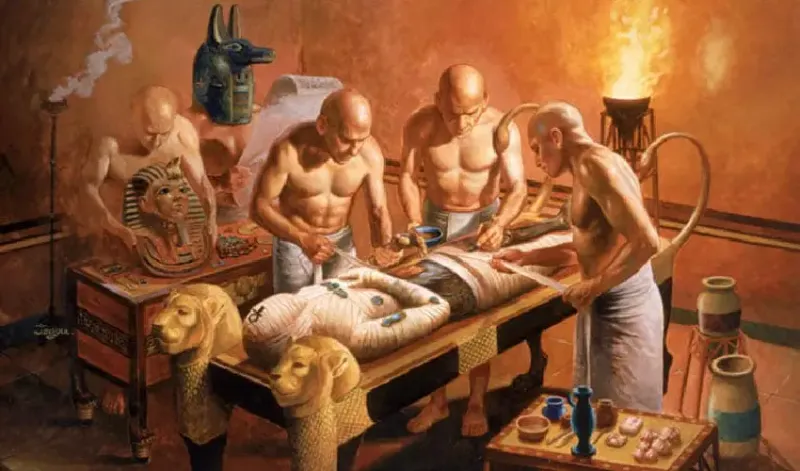
Mummification Wrapping (Swathing) is the final, elaborate stage of the embalming process. After drying, the body is wrapped in hundreds of yards of linen bandages. This was not merely coverage; it was a magical ritual of "binding" the body together to make it whole and indestructible, transforming the deceased into a divine being (Sah).
| Material | Linen (Flax) |
|---|---|
| Duration | 15 Days (approx.) |
| Key Additions | Amulets, Resins, Oils |
| Goal | Physical Protection & Spiritual Transformation |
The Osirian Form
In Egyptian mythology, Isis wrapped the dismembered body of Osiris to knit him back together. By wrapping the deceased, the embalmers were reenacting this myth, effectively turning the mortal human into an "Osiris." The bandages symbolized the divine order that binds the universe against the forces of chaos and decay.
The Seven Sacred Oils
Before wrapping began, the body was anointed with the Seven Sacred Oils. These substances (including Cedar oil, Libyan oil, and Myrrh) were believed to soften the skin, making it lifelike again, and to imbue the body with the "scent of the gods." This ritual anointing was essential for the soul's acceptance in the Hall of Judgment.
The Fabric of Light
Linen was considered a symbol of purity and light. Often, old household linens or temple cloths were recycled for mummification, carrying the spiritual charge of their previous use. The finest linen, known as Byssus, was placed closest to the skin.
The Ritual of the Embalmer
The wrapping followed a strict protocol outlined in the "Ritual of the Embalmer" papyrus:
- Digits: Each finger and toe was wrapped individually to preserve their form.
- Limbs: Arms and legs were wrapped separately before being bound to the torso.
- Head: Great care was taken with the head, often creating an intricate geometric pattern with the bandages.
- Layers: Layers of resin-soaked linen were alternated with dry linen to create a hard, protective shell.
The Seal of Eternity
Molten resin (tree sap) was poured generously over the linen layers. This acted as a glue and a sealant, creating a waterproof barrier against bacteria and moisture. Over centuries, this resin turned black, leading early Arabs to mistake it for bitumen (mumiya), giving us the word "mummy."
Magical Arsenal
Common amulets included:
| Amulet | Shape | Function |
|---|---|---|
| Heart Scarab | Beetle | Prevents heart from confessing sins. |
| Wedjat Eye | Eye | Healing and wholeness. |
| Djed Pillar | Column | Stability (Osiris's backbone). |
| Tyet (Isis Knot) | Knot | Protection of Isis. |
Spoken Magic
A Lector Priest recited specific spells for every bandage applied. For example, when wrapping the head, a spell was spoken to ensure the deceased would not lose their head in the afterlife. The physical act of wrapping was inseparable from the verbal act of spell-casting.
The Mummy Mask
Once wrapping was complete, a large linen shroud covered the entire body. Finally, a Mummy Mask was placed over the head. Made of cartonnage (linen and plaster) and often gilded, this mask provided an idealized, eternal face for the Ba (soul) to recognize its body, ensuring it wouldn't return to the wrong corpse.
Elite vs. Common
The quality of wrapping varied immensely. Royal mummies were wrapped in the finest linen with gold amulets. Poorer burials might use coarser cloth and faience or wood amulets. In later periods, intricate geometric patterns of bandaging became fashionable, turning the mummy itself into a work of art.
Beyond Preservation
Wrapping transformed the corpse into a divine image. It hid the decay of death and replaced it with a perfect, imperishable form. The mummy was no longer a dead human but a "Sah"—a noble being ready to take its place among the stars.
Unwrapping History
Modern technology like CT scans allows us to see beneath the wrappings without damaging them. This reveals the placement of amulets, the condition of the body, and even mistakes made by embalmers (such as replacing missing limbs with sticks), providing a non-invasive look into ancient lives.
Encyclopedia Summary
| Stage | Wrapping (Bandaging) |
|---|---|
| Material | Linen & Resin |
| Key Additions | Amulets & Sacred Oils |
| Final Addition | Mummy Mask |
| Symbolism | Reconstitution of Osiris |