Definition & Importance
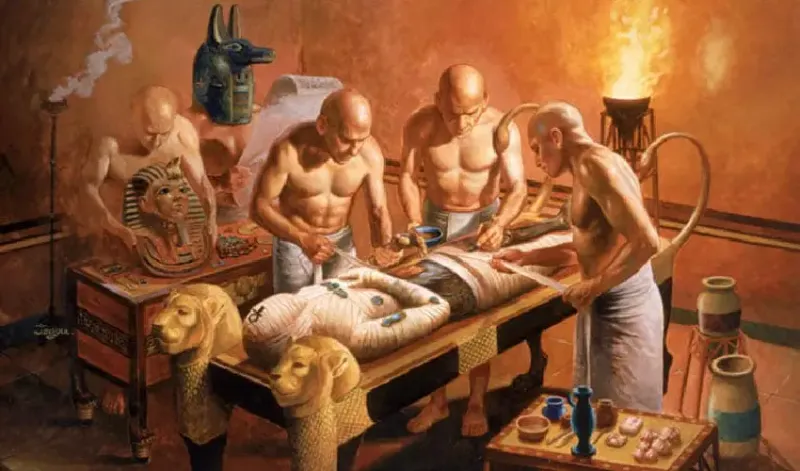
Drying (Desiccation) is the central and most crucial phase of ancient Egyptian mummification. After the internal organs were removed, the body was packed and covered with Natron to draw out all moisture. This process stopped bacterial growth and turned the soft tissue into a durable, leather-like substance that could last for thousands of years.
| Process | Chemical Dehydration |
|---|---|
| Agent | Natron (Divine Salt) |
| Duration | Exactly 40 Days |
| Result | Preserved, Stable Form |
The Divine Salt
Natron (Netjery) is a naturally occurring salt mixture harvested from dry lake beds like Wadi Natrun. It is composed of sodium carbonate, sodium bicarbonate, sodium chloride, and sodium sulfate. It is extremely hygroscopic (absorbs water) and alkaline, creating an environment where bacteria cannot survive. To the Egyptians, it was a "divine soap" that purified the body from the corruption of mortality.
The Sacred Timeline
The drying process lasted for a strict period of 40 days (out of the total 70 days of mummification). This number had religious significance, possibly relating to the time Osiris spent in the wilderness. If the body was dried for too short a time, it would rot; too long, and it would become too brittle to wrap. The embalmers followed a precise calendar.
The Process
The body was not just dumped in salt. It was a careful procedure:
- Slanted Table: The body was placed on a special stone embalming table that was slightly slanted. This allowed body fluids drawn out by the natron to drain away into a basin at the foot of the table.
- Linen Packets: Often, natron was not poured loose but placed in small linen bags. These packets were stuffed inside the empty chest and abdominal cavities to dry the body from the inside out, making removal easier later.
- Complete Coverage: The exterior was heaped with mounds of loose natron until the body was completely buried.
Cleansing & Anointing
After 40 days, the natron was removed. The body, now shriveled and dark, was washed with Nile water and "anointed" with expensive oils (cedar, juniper, myrrh) and resins. This step was crucial not just for smell, but to restore some flexibility to the skin and seal the pores against moisture, effectively "waterproofing" the mummy.
Symbolism of Dryness
Drying symbolized the ultimate victory over Wetness/Decay (associated with Set and chaos). By becoming dry and stone-like, the body mimicked the imperishable nature of the gods' bodies (which were made of gold and stone). The mummy was no longer a corpse; it was a statue-like image (Sah) ready for animation.
Encyclopedia Summary
| Stage | Dehydration (Drying) |
|---|---|
| Primary Agent | Natron (Salt) |
| Duration | 40 Days |
| Equipment | Slanted Stone Table |
| Outcome | Preserved "Sah" (Mummy) |