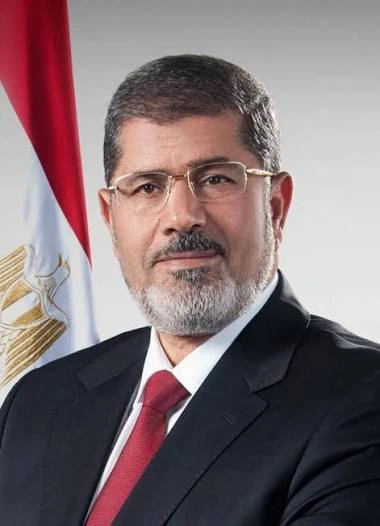
Basic Identity
Mohamed Mohamed Morsi Issa El-Ayyat (20 August 1951 – 17 June 2019) was an Egyptian politician and engineer who served as the fifth President of Egypt from 30 June 2012 to 3 July 2013. Born in the village of El-Adwa in the Sharqia Governorate of the Nile Delta, Morsi rose from a modest rural background to become one of the most consequential and controversial figures in modern Egyptian history. He was a leading member of the Muslim Brotherhood and chaired its political wing, the Freedom and Justice Party, which he leveraged to win the presidency in the aftermath of the 2011 Egyptian Revolution that ousted longtime ruler Hosni Mubarak. His election in June 2012 represented a transformative milestone — the first time in Egypt's thousands of years of recorded history that a civilian leader had been chosen through a genuinely competitive democratic election. His presidency, however, lasted just one year before he was removed from power following a wave of mass protests and a military intervention on 3 July 2013.
| Name Meaning | "Mohamed" means "Praiseworthy" in Arabic, derived from the root ḥ-m-d; "Morsi" is a common Egyptian family name of Arabic origin meaning "one who is established" or "the anchored one." |
|---|---|
| Titles | President of the Arab Republic of Egypt; Chairman of the Freedom and Justice Party; Member of the Guidance Bureau of the Muslim Brotherhood |
| Dynasty | Post-Revolution Era — Arab Spring Transition Period (2011–2013); Freedom and Justice Party / Muslim Brotherhood political movement |
| Reign | 30 June 2012 – 3 July 2013 (approximately 1 year and 3 days) |
A Watershed Moment in Egyptian Democracy
Mohamed Morsi's election to the presidency in June 2012 was one of the most significant political events in Egypt's modern history. For a country that had been governed by military-backed authoritarian rulers for over six decades — from Naguib and Nasser through Sadat and Mubarak — the peaceful transfer of power to an elected civilian was a genuinely revolutionary development. His victory in the runoff election against the military-backed candidate Ahmed Shafik, with approximately 51.7% of the vote, was certified by the Presidential Elections Commission and recognized internationally. Morsi's win demonstrated that the Muslim Brotherhood, long banned and persecuted under previous regimes, had emerged as the dominant organized political force in post-Mubarak Egypt. Internationally, his election was seen as a test case for whether an Islamist party could govern a large Arab country through democratic institutions. His presidency placed Egypt at the very centre of the global debate about political Islam, democratic transitions, and civil-military relations in the Arab world. The turbulence of his single year in office, culminating in his removal, ultimately defined the trajectory of Egyptian politics for the following decade.
Origins and Family Background
Mohamed Morsi was born on 20 August 1951 in the village of El-Adwa, in the Sharqia Governorate of Lower Egypt, into a conservative, deeply religious farming family. His background was resolutely humble — his father was a farmer and Morsi himself spoke of his rural origins with pride throughout his political career. He displayed exceptional academic ability from an early age, eventually earning a Bachelor's degree in Engineering from Cairo University in 1975, followed by a Master's degree and a PhD in Materials Science and Engineering from the University of Southern California in Los Angeles in 1982. After his doctorate, he spent several years as an assistant professor at California State University, Northridge, before returning to Egypt, where he joined the faculty of Zagazig University. He married Naglaa Ali Mahmoud, and the couple had five children. His family life was consistently presented as modest and traditional, in keeping with his Brotherhood background. Unlike Egypt's previous presidents — military officers who moved in elite circles — Morsi was a technocrat-turned-politician whose identity was shaped by engineering, academia, and Islamist activism rather than the barracks.
Islam, Governance, and the Role of Religion
As a senior member of the Muslim Brotherhood, Mohamed Morsi's political worldview was inseparable from his Islamic faith. The Brotherhood, founded in Egypt in 1928 by Hassan al-Banna, holds that Islam is not merely a private faith but a comprehensive system encompassing law, politics, economy, and society. Morsi publicly committed himself to governing within a democratic framework while remaining guided by Islamic principles. His Freedom and Justice Party positioned itself as a moderate Islamist party, drawing comparisons to Christian Democratic parties in Europe. The most controversial expression of his religious orientation came through the 2012 Egyptian Constitution, which was drafted by an Islamist-dominated assembly. Critics argued that this constitution — which referenced Islamic law as the basis of legislation — inadequately protected the rights of women, non-Muslims, and secular citizens. Supporters countered that it was a legitimate democratic product. Morsi's government did not attempt to impose strict sharia law in the manner of Gulf states, but the perception that he was steering Egypt toward a more religiously defined political order deepened the anxieties of secular Egyptians, Coptic Christians, and liberal activists. His brief tenure revealed the profound tensions within Egyptian society over the proper relationship between Islam and the modern state.
The New Constitution and Democratic Ambitions
One of the defining acts of Morsi's presidency was the adoption of a new Egyptian Constitution in December 2012. The drafting process was overseen by a constituent assembly dominated by Islamists, after liberal and Christian members walked out in protest, and the final document was ratified by a referendum in which approximately 63.8% of voters approved the text, though turnout was relatively low at around 33%. The constitution declared Islamic sharia as the principal source of Egyptian legislation and granted the religious establishment of Al-Azhar a consultative role on legislation. On the institutional side, the constitution attempted to limit the traditionally dominant role of the military in civilian affairs — a goal shared by many pro-democracy activists — though critics argued it replaced one form of concentrated power with another. The constitutional process was preceded by Morsi's highly contentious constitutional declaration of November 2012, in which he temporarily granted himself sweeping executive powers immune from judicial review in order to protect the constituent assembly. This declaration provoked massive street protests and was widely condemned as an authoritarian overreach, badly damaging his political standing. He subsequently withdrew the declaration after the constitution was passed, but the damage to his credibility with Egypt's liberal opposition proved irreparable.
Imprisonment, Trials, and Final Resting Place
Following his removal from power on 3 July 2013, Mohamed Morsi was placed under military detention and faced a series of criminal trials on charges that included espionage, incitement to kill protesters, prison breaks, and terrorism-related offences. He denied all charges, and his legal team as well as international human rights organisations argued that the proceedings did not meet basic standards of fairness. Morsi was held in solitary confinement at Torah Prison on the southern outskirts of Cairo for most of his post-presidency period, with severely limited access to his family and lawyers. Amnesty International and other groups repeatedly raised alarm about the conditions of his detention and the deterioration of his health, citing a lack of adequate medical care for his diabetes and other ailments. On 17 June 2019, Morsi collapsed in a Cairo courtroom during a trial hearing and died, reportedly of a heart attack, at the age of 67. His death prompted condemnation from human rights bodies and governments around the world, with many calling for an independent investigation into the conditions of his confinement. He was buried in the Nasr City district of Cairo in a private ceremony attended only by family members, without the state funeral that his status as a former president would normally entail.
The Ittihadeya Palace and Presidential Institutions
The Ittihadeya Presidential Palace in Heliopolis, Cairo, served as Morsi's seat of government throughout his presidency. This grand complex, whose name means "unity" in Arabic, had been the official residence and working palace of Egyptian presidents since the republic's founding. Under Morsi, the palace became a focal point of political confrontation: in December 2012, thousands of protesters — both pro- and anti-Morsi — gathered at its gates following his controversial constitutional declaration, and violent clashes between the two camps resulted in deaths and injuries. Morsi's administration also made use of the Al-Quba Palace for official state functions and the reception of foreign dignitaries. During his tenure, Morsi met with numerous world leaders at these palaces, including Iranian President Ahmadinejad — the first visit by an Iranian head of state to Egypt since the Islamic Revolution — which carried significant symbolic weight in the context of regional geopolitics. The operational functioning of the Egyptian state's presidential apparatus continued through established bureaucratic channels, even as the broader political environment remained in a state of sustained turbulence. Morsi's relatively brief occupation of these storied institutions underscores the unresolved tensions between the democratic aspirations of the revolution and the deep-rooted structures of the Egyptian state.
Political Discourse and the Power of the Spoken Word
Mohamed Morsi was not an artistic patron in the traditional sense, but his presidency left a notable imprint on Egyptian political rhetoric and public discourse. His speeches, delivered in a direct and often populist style rooted in Islamic vocabulary, were crafted to resonate with Egypt's largely conservative and religiously observant population. His inaugural address, delivered on 30 June 2012 at Tahrir Square — the symbolic heart of the revolution — was a carefully orchestrated moment of democratic pageantry, in which he symbolically removed his jacket and loosened his tie to appear as a man of the people. The Muslim Brotherhood's media apparatus, including the satellite channel Misr 25, played a significant role in shaping his public image and broadcasting his political message. His presidency also took place during a period of extraordinary media pluralism and fierce political debate in Egypt, with dozens of television channels and newspapers offering competing narratives. Morsi's team, however, was often criticised for being slow to develop a compelling communications strategy that could speak to Egyptians beyond the Brotherhood's core base. The images and speeches of his brief tenure — including his Tahrir Square inaugural — have been preserved in Egypt's political memory and continue to be invoked in debates about democracy, legitimacy, and the legacy of the revolution.
Foreign Policy and Regional Ambitions
Morsi's foreign policy sought to redefine Egypt's regional role after years of Mubarak-era alignment with the United States and Israel. He made his first foreign visit as president to Saudi Arabia and then to China, signalling both traditional ties and new economic ambitions. A landmark moment came with his visit to Tehran in August 2012 for the Non-Aligned Movement summit — the first visit by an Egyptian head of state to Iran since the 1979 Islamic Revolution severed bilateral relations. He simultaneously pursued warmer ties with Hamas in Gaza (a Brotherhood affiliate), while maintaining Egypt's peace treaty with Israel, which he consistently stated he would honour. In November 2012, he played a key diplomatic role in brokering a ceasefire between Israel and Hamas following an eight-day military conflict, winning international praise and briefly elevating his standing both at home and abroad. His relationship with the United States was complex: the Obama administration maintained working relations with his government and continued military aid to Egypt, though concerns over the Brotherhood's governance style were privately expressed. Morsi also advocated for a more active Egyptian role in the Syrian Civil War, calling for the Assad regime to step down — a position that complicated relations with Russia and Iran. His ambitious foreign policy agenda was cut short by his removal before it could fully mature.
The Brotherhood's Experiment with Democratic Governance
Morsi's presidency represented a globally significant and historically unique experiment: the first time in history that the Muslim Brotherhood, a transnational Islamist movement with branches across the Arab and Muslim world, held executive power in a major Arab state through a democratic election. For its supporters, this proved that political Islam and democratic participation were compatible. For its critics, the events of 2012–2013 demonstrated the inherent tensions between the Brotherhood's ideological commitments and the requirements of pluralistic democratic governance. Morsi's greatest institutional innovation was arguably his attempt to place the Egyptian military under civilian oversight, as mandated by democratic norms. He surprised observers by retiring Field Marshal Hussein Tantawi and other senior military commanders in August 2012, appointing the relatively young and unknown General Abdel Fattah el-Sisi as Defence Minister — a decision that would prove fateful. He also signed into law Egypt's first anti-sexual harassment legislation, a reform welcomed by women's rights advocates. His administration launched several infrastructure and economic initiatives, though the practical impact was limited by the ongoing political crisis. The Morsi presidency ultimately demonstrated both the democratic possibilities unleashed by the Arab Spring and the severe structural and political constraints that prevented those possibilities from being fully realised.
Military Activity
Unlike Egypt's previous leaders, Mohamed Morsi had no military background, and his relationship with the armed forces was one of the central fault lines of his presidency. Upon taking office, he inherited a situation in which the Supreme Council of the Armed Forces (SCAF) had issued a constitutional declaration severely curtailing the powers of the incoming civilian president. One of his first and most decisive acts was to reverse this — in August 2012, he annulled the SCAF declaration and retired the two most senior generals, Field Marshal Hussein Tantawi and Chief of Staff Sami Anan, replacing them with younger officers including General Abdel Fattah el-Sisi as Defence Minister. This bold move was widely interpreted as a decisive assertion of civilian control over the military. However, tensions between the presidency and the military establishment never fully dissipated beneath the surface. Following the Sinai attack of 5 August 2012, in which sixteen Egyptian soldiers were killed by militants near the Israeli border, Morsi ordered a large-scale military operation in the Sinai Peninsula, launching Operation Eagle to combat militant groups in the area. This was one of the most significant security operations in Sinai in years. The military's ultimate decision to move against Morsi on 3 July 2013 — following the massive protests of 30 June — demonstrated that civilian control of the armed forces had never been truly consolidated during his brief tenure.
Economic Management and the Crisis of Governance
Egypt's economy was in serious difficulty when Morsi assumed office, battered by two years of post-revolutionary uncertainty that had devastated tourism — historically one of the country's largest sources of foreign currency — and scared away foreign investment. Morsi's government entered into negotiations with the International Monetary Fund (IMF) for a $4.8 billion loan aimed at stabilising the country's finances and supporting economic reform. A preliminary agreement was reached, but implementation was repeatedly deferred as the political situation remained unstable. The Egyptian pound came under sustained pressure, foreign currency reserves fell to dangerously low levels, and subsidies on fuel and basic commodities strained the state budget. Electricity cuts, fuel shortages, and rising prices became daily grievances for ordinary Egyptians during the Morsi period, fuelling popular discontent. The government also struggled to restore law and order in a society where crime rates had risen sharply following the collapse of Mubarak-era policing structures. Morsi's economic team, led by Prime Minister Hisham Qandil, was widely regarded as lacking the experience and authority needed to manage a crisis of this magnitude. The failure to translate the Brotherhood's organisational strength into effective economic governance was a critical factor in eroding Morsi's popular support during his brief time in power.
Administration and Political Polarisation
Morsi's administration was characterised from its earliest days by profound political polarisation. His government included figures from the Freedom and Justice Party and allies within the broader Islamist movement, but struggled to build a genuine coalition of national unity that included liberals, leftists, and representatives of Egypt's established elite institutions. The appointment of a virtually unknown technocrat, Hisham Qandil, as Prime Minister — rather than a prominent national figure capable of bridging political divides — was seen as an early signal that Morsi intended to govern primarily through the Brotherhood's networks. The administration was frequently accused of engaging in "Brotherhoodisation" of the state — filling key positions in the bureaucracy, media, and judiciary with Brotherhood affiliates. Critics pointed to attempts to appoint Brotherhood members as regional governors and to influence the leadership of state media institutions. Morsi's supporters countered that the state's deeply entrenched secular institutions were themselves engaged in systematic obstruction of the elected government's agenda. The tension culminated in a series of confrontations with the Egyptian judiciary, which repeatedly struck down decisions by the executive and legislative branches, and the dissolution of the Islamist-dominated parliament by the Supreme Constitutional Court. By mid-2013, the political deadlock had become total, and Morsi's administration appeared unable to govern effectively across a fragmented and hostile institutional landscape.
Islamic Identity and Political Symbolism
Morsi's public persona was built around a carefully curated set of Islamic symbols and visual codes that spoke directly to the Brotherhood's base and to Egypt's devout majority. He was consistently photographed in conservative but modern attire — suits without ties in many informal settings, a subtle nod to Islamic modesty norms — and his wife Naglaa Ali Mahmoud became the first wife of an Egyptian head of state to wear a niqab (full face veil) in public, a powerful signal to conservative Islamists and a point of controversy for liberals and feminists. Morsi frequently punctuated his speeches with Quranic verses and Islamic invocations, and his rhetoric drew heavily on the moral and spiritual vocabulary of the Brotherhood. His first major public speech as president was notably delivered not from a formal government building but from Tahrir Square, surrounded by tens of thousands of supporters, echoing the revolutionary moment that had brought him to power. The Rabia al-Adawiyya hand gesture — a four-fingered salute symbolising the Brotherhood's solidarity — became the defining political symbol of his supporters after his removal, and it remains internationally recognised as a symbol of pro-Morsi and pro-Brotherhood sentiment. The visual and symbolic language of the Morsi era became deeply embedded in the iconography of post-Arab Spring political identity across the Islamic world.
A Presidency Measured in Days
Mohamed Morsi's presidency lasted precisely one year and three days — from his inauguration on 30 June 2012 to his removal by the military on 3 July 2013. This makes him one of the shortest-serving presidents in Egyptian history and among the briefest-serving heads of government of any major nation in the twenty-first century. Despite its brevity, his tenure was extraordinarily eventful: it encompassed the drafting and ratification of a new constitution, a major military operation in the Sinai, the brokering of a Gaza-Israel ceasefire, visits from numerous world leaders, and the most politically polarising domestic crisis Egypt had experienced since the 1950s. The shortness of his presidency has made it difficult for historians to assess what a full term might have achieved or produced, and debates continue about whether the obstacles he faced were the result of his own governance failures, deliberate institutional sabotage by the deep state, or an inherent incompatibility between the Brotherhood's political culture and the demands of pluralistic democratic governance. His one year in power, however compressed, was dense with historical consequence and continues to shape Egyptian politics, law, and society more than a decade after his removal.
Death and Burial
Mohamed Morsi died on 17 June 2019 at the age of 67, collapsing in a Cairo courtroom during a hearing in one of the numerous legal cases against him. He had reportedly been allowed to speak for about five minutes before falling unconscious; efforts to revive him were unsuccessful. The Egyptian authorities stated that he died of a heart attack and had received appropriate medical care during his detention. Human rights organisations, including Amnesty International and Human Rights Watch, rejected this characterisation, arguing that the conditions of his prolonged solitary confinement — which included severe restrictions on family visits, inadequate medical treatment for his diabetes and liver disease, and denial of access to legal counsel — amounted to treatment that had contributed to his death. A United Nations spokesperson called his death a possible case of "state-sponsored killing" and called for an independent investigation. The Egyptian government denied these allegations. Morsi was buried in Nasr City, Cairo, in a quietly arranged ceremony without the national honours typically accorded a former president. His family was reportedly given only limited notification and was not permitted to choose the burial location. His death in custody drew widespread international condemnation and renewed global attention to the human rights situation in Egypt under President Abdel Fattah el-Sisi.
Historical Legacy
The legacy of Mohamed Morsi is fiercely contested and remains the subject of passionate disagreement in Egypt and across the Arab world. To his supporters — particularly within the Muslim Brotherhood and its international affiliates — he is a martyr for democracy, a legitimately elected president who was overthrown by a counter-revolutionary military coup, and whose death in custody represented the ultimate injustice visited upon him by the Egyptian deep state. To his detractors — including many Egyptian liberals, secularists, Coptic Christians, and the political establishment that rallied behind his successor — his presidency was a cautionary tale about the incompatibility of Brotherhood political culture with genuine democratic pluralism, and his removal was a necessary correction to a dangerous drift toward Islamist authoritarianism. Internationally, his brief presidency accelerated a major global debate about political Islam and democracy, and the aftermath of his removal — the mass crackdown on the Brotherhood, the designation of the organisation as a terrorist entity by Egypt and other states, and the imprisonment or exile of thousands of its members — has profoundly shaped Middle Eastern politics. His election remains an inspiration to Islamist democratic movements worldwide, while his removal has been used as evidence by those who argue that the Arab Spring's democratic promise was ultimately crushed by the region's entrenched military and security establishments. The full historical assessment of his presidency will likely not be possible until Egypt's political climate changes significantly.
Evidence in Documents and Archives
Unlike the pharaohs of antiquity whose legacies must be painstakingly reconstructed from temple walls and papyrus scrolls, the presidency of Mohamed Morsi is extensively documented in the modern historical record. Official state archives, presidential decrees, constitutional documents, parliamentary records, and court proceedings provide a detailed institutional record of his tenure. The Egyptian constitution of 2012 — the primary legislative monument of his presidency — survives as a historical document even though it was suspended immediately after his removal and replaced by a new constitution in 2014. Thousands of hours of video footage from his speeches, press conferences, and official engagements are preserved on digital platforms and in broadcast archives. Contemporary journalism — from Egyptian newspapers like Al-Ahram and Al-Masry Al-Youm to international outlets including the BBC, Al Jazeera, and The New York Times — provides extraordinarily rich contemporaneous documentation of his presidency. Diplomatic cables, international monitoring reports, and the statements of foreign governments and international organisations add further layers to the historical record. Court documents from the numerous trials he faced after his removal have also been preserved, although scholars dispute their evidentiary value given questions about judicial independence. The Mohamed Morsi Documentation Project and various academic research initiatives have been gathering primary sources to ensure that future historians will have access to comprehensive and varied accounts of this pivotal period in Egypt's history.
Importance in History
Mohamed Morsi occupies a unique and irreplaceable position in the history of Egypt, the Arab world, and the broader global story of democracy and political Islam. He was the product of a genuine popular revolution — the 25 January 2011 uprising — and his election represented the most significant democratic transition in Egypt's history, stretching back across millennia of governance by pharaohs, Greek and Roman rulers, Arab caliphs, Ottoman governors, British colonial administrators, and military presidents. His presidency demonstrated, for the first time, that an organised Islamist movement could win a democratic election in a major Arab state — a fact of enormous consequence for political science, Islamic studies, and international relations. The manner of his removal — by a military intervention backed by millions of street protesters — raised profound questions about the fragility of democratic transitions, the role of the military in politics, and the compatibility of majoritarian democracy with minority rights and institutional pluralism. His death in custody in 2019 added a tragic and contested coda to his story. More than any single policy achievement, Morsi's importance lies in what he represented: a democratic experiment that briefly transformed the political landscape of Egypt and the Arab world, and whose ultimate failure continues to haunt discussions of what went wrong with the Arab Spring and what democratic politics in the Middle East might yet become.
📌 Comprehensive Summary
👑 Name: Mohamed Mohamed Morsi Issa El-Ayyat ("Praiseworthy, the Anchored One")
🕰️ Era: Post-Arab Spring Transition Period — Freedom and Justice Party Presidency (2012–2013)
⚔️ Key Achievement: First freely elected civilian president in Egyptian history
🪨 Monument: Ittihadeya Presidential Palace, Heliopolis, Cairo; Constitution of 2012