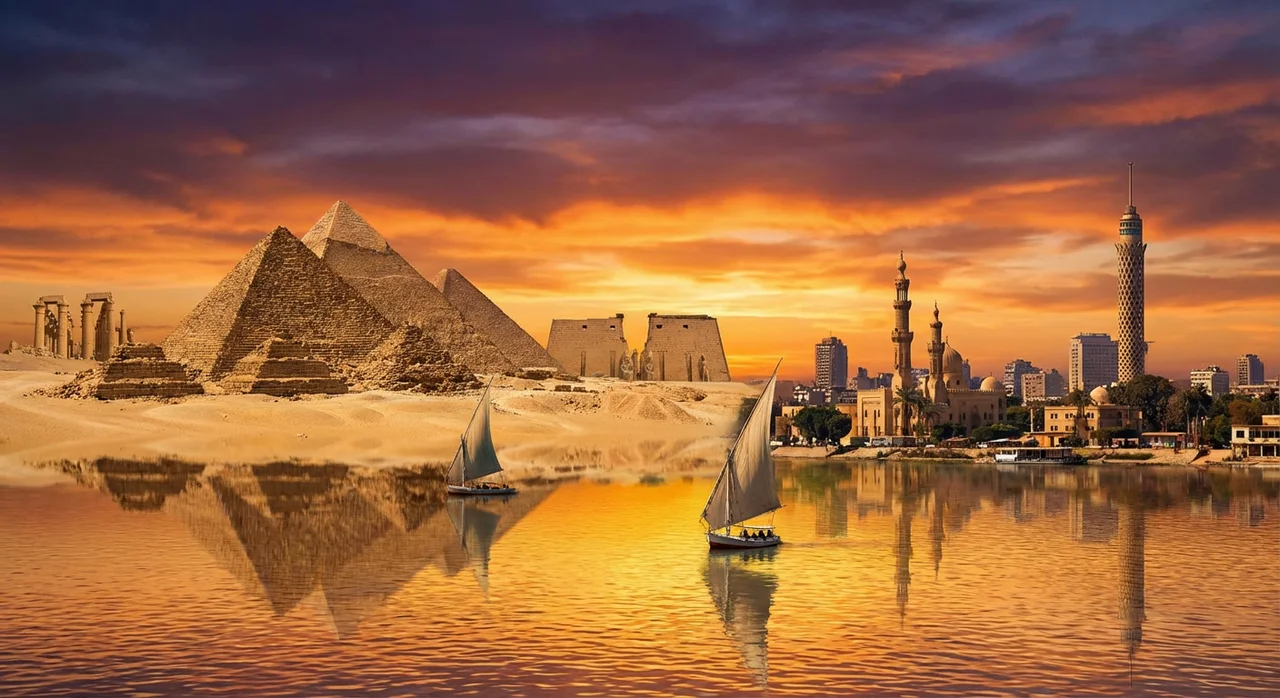
Overview
Why Egypt's Military History Matters for Visitors
Egypt's story is often told through temples, pyramids, and tombs — but the same geography that created a civilization around the Nile also shaped its defense and state-building. From the first organized armies of the pharaohs to the fortified cities of the medieval period, and from the age of Muhammad Ali's reforms to the modern Egyptian republic, the military institution has remained closely connected to Egypt's political history, infrastructure, and national identity.
This page focuses on the Egyptian Armed Forces as a historical and cultural subject: how the institution evolved over time, how it is structured today (in broad, non-sensitive terms), what national service means, and where travelers can explore military heritage through museums and historic sites — especially in Cairo, Port Said, and El Alamein.
Visitor note (important):
In Egypt, rules about photography and access can be strict around military facilities. When visiting museums or historic sites with military connections, always follow local signs and staff instructions, and avoid photographing restricted areas.
Timeline
A Military History in Ten Milestones
Egypt's military story spans thousands of years. Below is an accessible timeline designed for museum visitors and history readers. It highlights institutional changes and historical turning points rather than tactical details.
From river-state to imperial power
Early Egyptian kingdoms developed organized forces to protect agricultural life along the Nile and secure trade routes. Over time, the state fielded specialized units (archers, infantry, chariot forces) and built frontier fortresses, especially toward Nubia and the eastern desert corridors.
Many temples and reliefs across Egypt preserve military iconography — victories, campaigns, and royal ideology — which is why military history appears even in "purely religious" monuments.
A strategic province
Under the Ptolemies and later Rome, Egypt became one of the Mediterranean's most important regions, supplying grain and supporting imperial logistics. Alexandria served as a key cultural and military hub in the eastern Mediterranean.
The military footprint included garrisons, coastal defense, and protection of routes linking the Nile Valley to the Red Sea.
New administration, new urban centers
The Islamic conquest introduced a new political order and Arabic administration. Egypt's cities gained new military and civic infrastructures, and Cairo's later rise as a capital transformed defense architecture across the region.
Over the centuries, Egypt's military systems reflected changing dynasties, technologies, and regional rivalries.
Fortresses and cavalry traditions
The medieval period is a paradise for travelers interested in fortifications: walls, gates, citadels, and defensive urban layouts. Cairo's Citadel (associated with Saladin's era) later became a major military and administrative complex.
Many of the most dramatic military-related architecture in Cairo and elsewhere dates to this era.
From empire to local power networks
Egypt was part of the Ottoman world, with shifting balances between imperial authority and local elites. Coastal connections and Red Sea routes remained strategically important.
This era provides context for later reforms that aimed to build a modern army and state institutions.
The birth of modern institutions
The 19th century saw major reforms in administration, industry, and the military. The period is often linked to new forms of training, centralized command, and state-backed manufacturing for modernization.
For travelers, this is also the era of many visible upgrades to Cairo's urban form and monumental projects.
Politics, war, and state-building
The 20th century reshaped Egypt dramatically: decolonization, major regional wars, the Suez Canal's strategic role, and the transformation from monarchy to republic. The armed forces became intertwined with national projects and security priorities.
Many museums covered below focus on 1956, 1967, 1969–1970, and 1973, because these events are central to modern Egyptian memory.
A defining chapter
The 1956 crisis — linked to the Suez Canal and international intervention — became a foundational part of Egypt's modern national narrative. Port Said, in particular, is remembered for resistance and is a key destination for museum visitors interested in this chapter.
The canal as a frontline
After 1967, the Suez Canal zone became central to Egypt's strategic environment. Museums and memorials along the canal often reflect this period through artifacts, photographs, and narratives about resilience and reconstruction.
A major national remembrance
The 1973 October War is commemorated widely in Egypt and is the focus of dedicated museum experiences such as the 6th of October Panorama. For many visitors, this is the most accessible way to understand the era through curated displays rather than technical literature.
A balanced reading approach:
Museum narratives are often national and commemorative. For a broader perspective, combine museum visits with general history references and multi-source reading (see the sources section at the end of this page).
Structure
Main Branches and Their Roles
The Egyptian Armed Forces are commonly described in terms of four main branches. The descriptions below are intentionally high-level and focused on public, historical understanding rather than operational detail.
Army (Land Forces)
Land forces are historically central to Egypt's defense because geography concentrates population along the Nile Valley and Delta. Their public-facing roles typically include territorial defense, protection of key infrastructure, and support in national emergencies.
- • Historically linked to Egypt's long border corridors (Sinai, Western Desert, Red Sea mountains).
- • Includes specialized support functions such as engineering, logistics, and medical services.
- • Connected to many museum exhibits: uniforms, vehicles, battlefield models, and wartime documents.
Navy
Egypt's maritime identity is tied to the Mediterranean, the Red Sea, and the Suez Canal — a global trade artery. The navy's broad, publicly-known mission includes protecting coastlines and securing maritime routes.
- • Egypt's geography makes maritime security strategically important for trade and tourism.
- • The Red Sea coast also connects to tourism hubs (Hurghada, Sharm El Sheikh), making maritime safety a public concern.
- • Naval heritage appears in coastal forts, port cities, and canal-zone museums.
Air Force
Air power became increasingly important in the 20th century, especially as regional conflicts changed the nature of defense planning. Public exhibits often focus on aircraft types, air bases as strategic infrastructure, and the evolving role of air support.
- • Air-themed displays frequently appear in museum outdoor yards (static aircraft and vehicles).
- • Aviation history also ties into civil development (airports, aviation industries, rescue operations).
- • Many exhibitions emphasize national commemoration and technical progress.
Air Defence
Air defence is often described as a distinct branch focusing on early warning, protection of strategic sites, and defending airspace. In public history, it is frequently discussed in relation to lessons learned from mid-20th-century conflicts.
- • Linked to the broader theme of "modernization" in Egypt's defense institutions.
- • Museums may show radar models, defensive systems as concepts, and documentation of key periods.
- • The goal here is understanding the role — not the technical specifications.
Command & Public Institutions (high-level)
Like many states, Egypt's military institution includes a range of educational, logistical, medical, and administrative bodies. For visitors, the most visible "public interface" is usually through museums, official commemorations, and selected heritage sites.
If you want official public information, consult the Egyptian Armed Forces official website and museum pages (linked in the Sources section).
National service
Conscription in Egypt (What It Means)
National service is a major part of modern Egyptian civic life and is often discussed in family stories, cinema, and everyday culture. The details can vary over time and depend on personal circumstances, education level, and health status, so always rely on official channels for legal specifics.
A civic institution
Conscription is not only a military system; it also shapes social networks and life planning. Many Egyptians associate service with discipline, shared experience, and national duty.
Health & suitability
As in most countries, medical evaluation plays a role in assignment and eligibility. This page does not provide personal legal advice; it is a cultural overview for readers and visitors.
Service & education
Educational background can influence service pathways. In public discussion, this is often framed around specialization and skills (administration, engineering, medicine, logistics).
For up-to-date procedures, requirements, or contact details, always refer to official government and armed forces sources. (See links at the end of the page.)
Institutions
Military Education and Professional Development
Egypt's modern military institution includes academies and colleges that train officers and specialists, as well as higher-level schools associated with strategic studies and command training. For tourists, these institutions are generally not "visit sites," but they help explain how Egypt maintains professional standards and continuity across generations.
Core academies (examples)
- • Military Academy (officer formation and leadership foundations).
- • Naval Academy (maritime leadership and technical fields).
- • Air Force Academy (aviation-focused officer pathways).
- • Air Defence education streams (air defence doctrine and related specializations).
The exact names and programs can evolve, but the broad idea is consistent: officer training mixes discipline, leadership, and professional specialization.
Higher studies & staff training
Many countries operate advanced "staff" schools for mid-career and senior officers. In Egypt, higher military studies are an important part of professional development and doctrine, shaping how large institutions coordinate operations, logistics, civil-military support, and strategic planning.
From a cultural perspective, these institutions also influence how national narratives are taught and how historical lessons are interpreted in professional settings.
Why this matters for a history traveler
Understanding education and doctrine helps readers read museum exhibits more clearly. A display about engineering, logistics, or communications is not "just equipment" — it reflects training systems and long-term institutional investment.
Glossary
Ranks and Organization (A Reader-Friendly Overview)
Rank titles can vary slightly by branch, translation, and historical period. The table below offers a simple, visitor-friendly overview to help you understand museum labels, captions, and historical photographs.
| Category | What it usually means | Common examples (English) |
|---|---|---|
| Enlisted | The foundation of the force. Performs core operational, technical, and support tasks. | Private / Soldier, Corporal (varies by branch) |
| Non-Commissioned Officers (NCOs) | Experienced leaders close to day-to-day units; crucial for training, discipline, and practical expertise. | Sergeant, Staff Sergeant (terminology may vary) |
| Company-grade officers | Junior commissioned officers who lead small units and take early command responsibilities. | Second Lieutenant, Lieutenant, Captain |
| Field-grade officers | Mid-level command and staff roles; responsible for larger formations and complex planning. | Major, Lieutenant Colonel, Colonel |
| General/Flag officers | Senior leadership, high command, and strategic-level oversight. | Brigadier, Major General, Lieutenant General, General |
| Branch differences | Naval ranks and some air force conventions can differ, but the hierarchy concept is comparable. | Navy uses naval titles; Air Force often mirrors army-style officer ranks in English translations |
Museum panels may display Arabic rank insignia and titles; if you want a deeper dive, it's best to consult official museum guides or specialized military history references.
Where to go
Military Museums and Heritage Sites in Egypt
If you want a safe, curated way to learn military history while traveling, museums are ideal. They present artifacts within legal visitor frameworks and often connect the story to broader cultural history.
National Military Museum (Cairo Citadel)
Located within the Cairo Citadel complex, this museum is devoted to the history of the Egyptian military "through the ages," and is often associated with the Haram Palace area in the Citadel. Visitors typically encounter chronological halls spanning ancient to modern eras, including major 20th-century conflicts.
6th of October Panorama (Cairo)
A dedicated memorial-museum experience focused on the October 1973 War. The site is known for a panoramic presentation and outdoor displays (vehicles and equipment) that help visitors visualize the period through storytelling and staged dioramas.
El Alamein Military Museum (North Coast)
El Alamein is internationally known for World War II history. The museum aims to document the battles and provides displays of weapons, vehicles, and models associated with the North Africa campaign. It can be a strong addition to an Alexandria / North Coast itinerary for travelers interested in 20th-century global history.
Port Said Museum (Military Heritage)
Port Said has a special place in modern Egyptian memory, particularly in relation to the 1956 Tripartite Aggression and the canal-zone story. The museum presents exhibits that document the city's experience and the broader national narrative of defense and resistance.
Bonus: The Cairo Citadel as a military-heritage complex
Even if you are not focused on military history, the Cairo Citadel is one of the most iconic defensive sites in Egypt's capital. It combines fortress architecture, panoramic views, and museums — making it a "high value" destination for cultural travelers.
Context
The Military in Egyptian Society
In Egypt, military history is deeply linked to national identity and public commemoration. It also intersects with infrastructure, emergency response, and state institutions — topics visitors often encounter when reading modern Egyptian history.
Commemoration & memory
National days, museum exhibitions, and public narratives often focus on 20th-century turning points. These commemorations shape how history is taught and remembered.
State-building & logistics
Like many countries, Egypt's military institution has long interacted with national logistics and large-scale organization. Understanding this helps readers connect military history with broader development stories.
Support in emergencies
Public communication often highlights roles in disaster response, medical support, and coordination during large events. Travelers may see this reflected in signage, public announcements, and national media.
For a broader understanding of Egypt's national story, combine this page with Modern Egypt and Contemporary Egypt.
Practical
Travel Tips for Military Museums and Heritage Sites
These tips are designed for cultural tourists. Always prioritize official instructions and local regulations.
Before you go
- • Check opening hours and ticket rules (some museums are managed by official military museum departments).
- • Carry an ID and keep your belongings minimal for smoother entry procedures.
- • Dress respectfully; museums are formal cultural spaces in Egypt.
- • If you plan a North Coast trip, combine El Alamein with Alexandria or the Mediterranean coastline itinerary.
While visiting
- • Follow photography rules strictly; if uncertain, ask staff before taking any photo.
- • Read captions slowly: museums often place local events inside broader historical context.
- • Look for "outdoor display yards" (aircraft, vehicles) — they help you understand scale and technology evolution.
- • If traveling with children, focus on dioramas and timeline halls first; they are usually the most engaging.
Suggested half-day route (Cairo)
Cairo Citadel → National Military Museum (and other Citadel museums) → panoramic view points → historic Islamic Cairo nearby. This route combines fortifications, museum interpretation, and city viewpoints in one cultural package.
FAQ
Frequently Asked Questions
Quick answers for travelers and readers exploring Egypt's military heritage for the first time.
Yes — museums are public cultural spaces. The key is to follow the rules inside the site (especially photography), respect security procedures, and avoid restricted areas outside museum grounds.
In Cairo, the 6th of October Panorama is a dedicated experience for 1973, while the National Military Museum inside the Citadel provides broader coverage across many periods. Port Said is especially meaningful for the 1956 story.
Absolutely. The best example is the Cairo Citadel: it is both a major historic fortress and a museum complex. You can combine it with Islamic Cairo, Khan El Khalili, and other classic attractions on the same day.
Start with the timeline on this page, then visit one museum (Citadel or Panorama) and read a general history chapter about modern Egypt. After that, everything you see in exhibits will feel far more connected and understandable.
The Egyptian Armed Forces are commonly described as comprising four main branches: the Army (Land Forces), Navy, Air Force, and Air Defence Forces.
Yes, national service (conscription) is a civic duty for eligible males in Egypt. The duration and terms can vary based on education, health, and other factors. For current regulations, always consult official government and armed forces sources.
Sources
Sources & References
A curated set of official and reputable references to support further reading and verification.
Official Egyptian sources
- Egyptian Armed Forces – Official website (mod.gov.eg)
- Military attractions & museums – Official listing (mod.gov.eg)
- National Military Museum – Official page (Cairo Citadel)
- 6th of October Panorama – Official page
- El Alamein Military Museum – Official page
- Port Said Museum – Official page
- State Information Service – Armed Forces overview
Cultural heritage & travel references
- Egyptian Monuments (Ministry of Tourism & Antiquities) – National Military Museum
- Egyptian Monuments – Cairo Citadel (historic background)
International & neutral reference points
- United Nations Peacekeeping – Troop and Police Contributors (monthly updates)
- Encyclopaedia Britannica – Egypt (overview and modern history context)
If you need this page tailored for a specific itinerary (e.g., "Cairo in 2 days" with Citadel + Panorama + Islamic Cairo), you can link this topic with our travel planning content and curated tours.
Plan a Heritage Itinerary in Egypt
Want a trip focused on museums, forts, and modern history — in addition to ancient monuments? Contact our team to customize your itinerary.
Book with confidence — licensed guides & secure payments