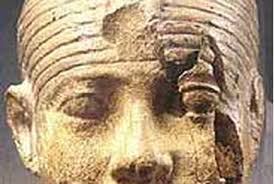
Basic Identity
Khety I (also known as Achthoes in Greek texts) is traditionally considered the founder of the Ninth Dynasty, which ruled from Herakleopolis Magna during the turbulent First Intermediate Period. He emerged from the chaos of the Old Kingdom's collapse to establish a new regional power base.
| Throne Name | Wahkare (“Enduring is the Ka of Ra”) |
|---|---|
| Personal Name | Khety |
| Dynasty | Ninth Dynasty (Founder) |
| Capital | Herakleopolis Magna (Henen-nesut) |
Rise of Regionalism
Khety I is historically significant because he represents the definitive shift from Memphis-centered absolutism to regional kingship. By establishing Herakleopolis as a rival capital, he acknowledged the new reality: Egypt was no longer a unified state under a god-king, but a fractured land of competing warlords.
Scattered Traces
Information about Khety I is sparse. He appears in the Turin Canon and Manetho's history. No major monuments survive from his reign, a testament to the limited resources of the time. His name appears on rock inscriptions and small objects, confirming his historical existence but revealing little about his deeds.
The Tyrant Legend
The historian Manetho describes "Achthoes" (Khety) as the most cruel and violent king who ever ruled, eventually driven mad and killed by a crocodile. Modern scholars view this as a later literary exaggeration reflecting the chaotic nature of the era, rather than a factual biography.
Fragmented Rule
At his accession, the authority of Memphis had evaporated. Nomarchs ruled their provinces like petty kings. Khety I's achievement was not in conquering all of Egypt, but in unifying the Delta and Middle Egypt into a coherent bloc capable of resisting total anarchy.
Alliance over Force
Unable to command absolute obedience like the Old Kingdom pharaohs, Khety I relied on diplomacy and alliances with powerful local families. He recognized their autonomy in exchange for their recognition of his suzerainty, creating a feudal-style system of governance.
Pragmatic Rule
The elaborate central bureaucracy of the pyramid age was gone. Khety's administration was leaner and more pragmatic, focused on tax collection and local defense. Royal decrees were less about divine will and more about practical resource management.
Defensive Wars
His military actions were likely defensive skirmishes against Bedouins in the Delta and rival nomarchs in the south. There were no grand imperial conquests. The army consisted of local militias and mercenaries rather than a standing national force.
Struggle for Survival
The economy was fragile, plagued by low Nile floods and disruption of trade. Khety I prioritized agricultural stability in his own domains to prevent famine, understanding that a fed populace was the key to retaining power.
Traditional Titles
Despite the changes, Khety I clung to traditional religious forms. He used the full five-fold titulary of a pharaoh and honored the local god Heryshaf ("He Who is Upon His Lake") of Herakleopolis, elevating him to national prominence alongside Ra and Osiris.
The Lost Tomb
The location of Khety I's tomb is unknown. It was almost certainly not a pyramid, but likely a rock-cut tomb or a mudbrick mastaba near Herakleopolis. This shift in burial practice reflects the economic reality: stone pyramids were no longer affordable.
Literature of Pessimism
The chaos of this period birthed a new genre of literature known as "Pessimistic Literature" (e.g., The Prophecies of Neferti). These texts look back on the time of kings like Khety as an era of "national distress," shaping the Egyptian view of history for centuries.
New vs. Old
| Feature | Old Kingdom (Pepi II) | Khety I |
|---|---|---|
| Authority | Divine Absolutism | Regional Hegemony |
| Burial | Pyramid Complex | Unknown / Rock Tomb |
| Capital | Memphis | Herakleopolis |
The Stabilizer
Khety I played a crucial role in preventing the complete disintegration of Egyptian culture. By establishing a new dynasty in the north, he preserved the traditions of the Old Kingdom and provided a counterweight to the rising power of Thebes, setting the stage for the eventual reunification.
A Hidden Chapter
While few tourists visit the ruins of Herakleopolis today, Khety I represents a vital chapter in Egyptian history. He symbolizes resilience and adaptation. Understanding his reign explains how Egypt survived its "Dark Age" to emerge even stronger in the Middle Kingdom.
📌 Comprehensive Summary
👑 Name: Khety I (Wahkare)
🕰️ Era: 9th Dynasty (Founder)
⚔️ Significance: Rise of Herakleopolis
📜 Legacy: Established Regional Kingship