Basic Identity
Kamose (Ancient Egyptian: Ka-mes, meaning "The Bull is Born") was the last king of the 17th Dynasty. Though his reign was brief—only 3 to 4 years—he is one of the most consequential figures in Egyptian history. He transformed his father's defensive struggle into a full-scale war of liberation against the Hyksos.
| Throne Name | Wadjkheperre (“Flourishing is the Manifestation of Ra”) |
|---|---|
| Dynasty | 17th Dynasty (Last King) |
| Reign | c. 1553–1549 BCE |
| Capital | Thebes (Waset) |
The Aggressor
Kamose is the king who decided that containment was not enough. He initiated the first major offensive against the Hyksos heartland in the Delta. He broke through the Hyksos defensive lines in Middle Egypt, sacked their towns, and raided the outskirts of their capital, Avaris, proving they were not invincible.
Surrounded by Enemies
When Kamose ascended the throne, Thebes was sandwiched between two hostile powers: the Hyksos in the North and the Kingdom of Kush (Nubia) in the South. The Theban kingdom was essentially a vassal state, paying tribute to Avaris. Kamose found this intolerable.
The War Council
In a famous inscription, Kamose records his speech to his council of nobles. They advised caution and peace, content to rule only Upper Egypt. Kamose furiously rejected their cowardice, declaring: "To what end am I cognizant of my strength? One chief is in Avaris, another in Kush... I will grapple with him, that I may rip open his belly! My wish is to save Egypt!"
The Lightning Strike
Kamose moved north with a fleet and an army including Medjay mercenaries. He captured the strategic town of Nefrusy (near modern el-Minya), a Hyksos stronghold commanded by an Egyptian collaborator named Teti. By taking Middle Egypt, he effectively cut the Hyksos kingdom in half.
Economic Warfare
Kamose didn't just fight soldiers; he fought the Hyksos economy. He intercepted hundreds of ships laden with cedar, oil, and weapons sent from the Levant to Avaris. He famously boasts of seizing "the timber, the turquoise, the lapis lazuli, the silver, the gold... all the fine products of Retenu." This enriched Thebes while starving Avaris.
The Hyksos Plot
His spies captured a messenger carrying a letter from Apepi to the King of Kush. The letter urged the Nubians to attack Thebes from the south while the Hyksos attacked from the north. Kamose exposed this plot, secured his southern border with a swift strike, and then turned his full fury north, preventing the pincer movement.
At the Gates of Avaris
Kamose pushed all the way to the outskirts of Avaris. Although he did not have the resources for a long siege to take the massive city, he ravaged the vineyards and fields surrounding it, humiliating Apepi. "I made the women of Avaris peel looking out from their windows... seeing their husbands dead," he proclaimed.
Nationalist Hero
Kamose framed the war as a national liberation. He wasn't just fighting a rival dynasty; he was fighting "Asiatics" to restore the purity of Egypt. This rhetoric marks the birth of Egyptian nationalism, defining the "Two Lands" not just geographically, but ethnically and culturally against foreign rule.
Amun's Sword
He attributed his victories entirely to Amun-Ra. By dedicating his spoils to the temple of Karnak, he strengthened the priesthood of Amun, forging the alliance between the monarchy and the temple that would define the New Kingdom.
Learning from the Enemy
Under Kamose, the Theban army began to integrate Hyksos military technology. While still relying heavily on infantry and navy, the Egyptians learned the value of the composite bow and the chariot, weapons that his brother Ahmose would later use to decisive effect.
A Sudden End
Kamose died unexpectedly after only three years of rule. The cause is unknown—perhaps wounds from battle or disease. He was succeeded by his younger brother, Ahmose I, who was still a child. The regency of their mother, Ahhotep, ensured the war effort continued without pause.
The Modest Coffin
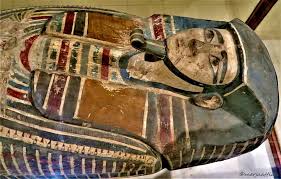
His burial was discovered in 1857 at Dra Abu el-Naga by Auguste Mariette. Unlike the gilded coffins of the great pharaohs, Kamose was buried in a simple, un-gilded wooden coffin (now in Cairo), reflecting the austere, wartime economy of his reign. His mummy crumbled upon discovery, leaving only dust and a few jewels.
The Bridge to Empire
Kamose is the bridge between the defensive war of his father and the total victory of his brother. Without his aggressive campaigns that weakened the Hyksos and enriched Thebes, Ahmose I would never have had the resources to siege Avaris and found the New Kingdom.
📌 Comprehensive Summary
👑 Name: Kamose (The Bull is Born)
🕰️ Era: 17th Dynasty (Last King)
⚔️ Achievement: Liberation of Middle Egypt
🪨 Legacy: The Kamose Stelae