Definition & Concept
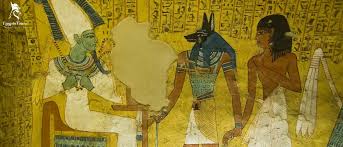
The Judgment of the Dead is the climax of the Egyptian afterlife journey. It is the moment where the soul stands trial before the gods to determine if their earthly life was lived in accordance with Ma'at (Truth and Order). It represents the belief that immortality is not a right, but a reward for moral conduct.
| Ritual Name | The Weighing of the Heart |
|---|---|
| Location | Hall of Two Truths (Ma'aty) |
| Central Judge | Osiris |
| Outcome | Eternal Life or Non-Existence |
The Moral Filter
The purpose of the judgment was to filter out chaos (Isfet). The Egyptians believed that allowing an impure soul into the afterlife would disrupt the cosmic order. Therefore, the trial served to separate the righteous ("True of Voice") from the wicked, ensuring that paradise remained a place of perfect harmony.
The Great Balance
At the center of the hall stands a great scale. On one pan sits the Heart (Ib) of the deceased, which contains the record of all their deeds, thoughts, and emotions. On the other pan sits the Feather of Ma'at (Truth). The heart must not be heavier than the feather; it must be perfectly balanced.
The Divine Court
The trial is overseen by a terrifying assembly of gods:
| Deity | Role |
|---|---|
| Osiris | Supreme Judge, presiding from his throne. |
| Anubis | Guardian of the Scales, checks the balance. |
| Thoth | Divine Scribe, records the result. |
| Ammit | The Executioner, waits to eat the sinful heart. |
| Ma'at | The personification of the law itself. |
Declaration of Innocence
Before the weighing, the deceased must recite the "Negative Confession." This is a list of 42 sins they did not commit. The soul declares: "I have not stolen," "I have not killed," "I have not polluted the water." It is a powerful affirmation of moral purity, asserting that the individual has not contributed to chaos.
The 42 Judges
Surrounding the hall are 42 Assessors (Divine Judges), each representing one of the 42 Nomes (provinces) of Egypt and a specific sin. The deceased must address each judge by name (e.g., "O Bone-Breaker from Herakleopolis") and deny the specific sin associated with them. This required deep magical knowledge of the divine world.
Maa Kheru
If the heart balances with the feather, Thoth declares the deceased Maa Kheru ("True of Voice"). They are vindicated. Horus leads them by the hand to the throne of Osiris, and they are granted entry into the Field of Reeds (Aaru) to live eternally among the gods and ancestors.
The Second Death
If the heart is heavier than the feather (burdened by sin), it is thrown to Ammit the Devourer. Once eaten, the soul does not go to "hell" in the Christian sense; it simply ceases to exist. This annihilation, or "Second Death," was the ultimate fear of every Egyptian.
Visualizing Judgment
The Judgment scene (Vignette 125 of the Book of the Dead) is the most famous image in Egyptian art. It typically shows Anubis adjusting the scales, the deceased bowing in respect, Thoth writing on his palette, and the monstrous Ammit waiting hungrily. It was painted on papyri and placed in the tomb to magically ensure a favorable verdict.
Legacy of Ethics
The concept of a moral judgment after death profoundly influenced later religions. It introduced the idea that one's fate is determined by one's actions, establishing an ethical framework for society. It taught that justice is universal and inescapable, binding kings and commoners alike.
Psychology of Guilt
Scholars view the Judgment scene as an early exploration of human conscience. The "heart" acting as an independent witness reflects the psychological reality of guilt. The rituals provided a way to manage the fear of death and the anxiety of moral failure through the promise of divine mercy and magical aid.
Encyclopedia Summary
| Event | The Final Judgment |
|---|---|
| Key Mechanism | Scales of Justice |
| Standard | Feather of Ma'at (Truth) |
| Executioner | Ammit (The Devourer) |
| Goal | To become True of Voice (Justified) |