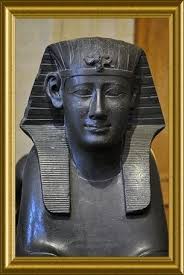
Basic Identity
Hakor (Greek: Achoris) was the most successful ruler of the 29th Dynasty. Coming to power during a turbulent period of the Late Period, he managed to preserve Egypt's fragile independence for over a decade. Ruling from the city of Mendes in the Delta, his reign stands as a rare success story of effective resistance against the overwhelming might of the Persian Empire.
| Throne Name | Khnemmaatre ("United with the Justice of Ra") |
|---|---|
| Dynasty | 29th Dynasty (Late Period) |
| Reign | c. 393–380 BCE (Approx. 13 Years) |
| Capital | Mendes (Djedet) |
The Resistance King
Hakor is historically vital because he proved that Egypt could hold its ground. Unlike his predecessor Nepherites I, who had established the dynasty, Hakor actively engaged in international politics to secure his borders. He formed strategic alliances with the enemies of Persia, rebuilt the Egyptian navy, and strengthened the country's military defenses, ensuring that the Persian "reconquest" was delayed for another generation.
Power Through Strength
Hakor's path to the throne was not smooth. He likely seized power after a period of internal conflict, possibly deposing a short-lived successor of Nepherites I named Psammuthis. To legitimize his rule, he embarked on an extensive building program and propagated the claim that he was the true spiritual heir of the dynasty's founder, emphasizing continuity and stability to quell domestic rivals.
International Alliances
Understanding that Egypt could not stand alone against Persia, Hakor adopted a forward defense strategy. He supported revolts in Persian-controlled territories and formed a tripartite alliance with Athens and Evagoras, the rebel king of Cyprus. By supplying grain and timber to the Athenian fleet and aiding Cyprus, he kept the Persian military occupied in the Mediterranean, far from the banks of the Nile.
A Pharaoh at Home
Internally, Hakor was a strong administrator. He maintained an efficient tax system to fund his expensive foreign wars and supported agriculture. Despite the constant threat of invasion, he found time for monumental architecture. He added a chapel for the sacred boat of Amun at Karnak, restored temples at Memphis and Medinet Habu, and left inscriptions asserting his piety and royal status.
Stability Fades
Hakor died of natural causes around 380 BCE, having successfully defended his country for his entire reign. However, the stability he forged did not outlive him. His son and successor, Nepherites II, ruled for only a few months before being overthrown by Nectanebo I, marking the end of the 29th Dynasty and the rise of the 30th—the final native dynasty of ancient Egypt.
Stages of Resistance
| King | Strategy | Legacy |
|---|---|---|
| Amyrtaeus | Revolt | Broke Persian Rule |
| Hakor | Defense & Alliances | Sustained Independence |
| Nectanebo I | Consolidation | Cultural Renaissance |
📌 Visitor-Friendly Summary
Hakor was the pharaoh who stood firm while empires pressed in. His reign marks the strongest resistance to Persia before the final dynasties.
👑 Key Title: The Defender of Independence
⚔️ Strategy: Naval Alliance with Greeks
🏛️ Legacy: 13 Years of Freedom