Definition & Meaning
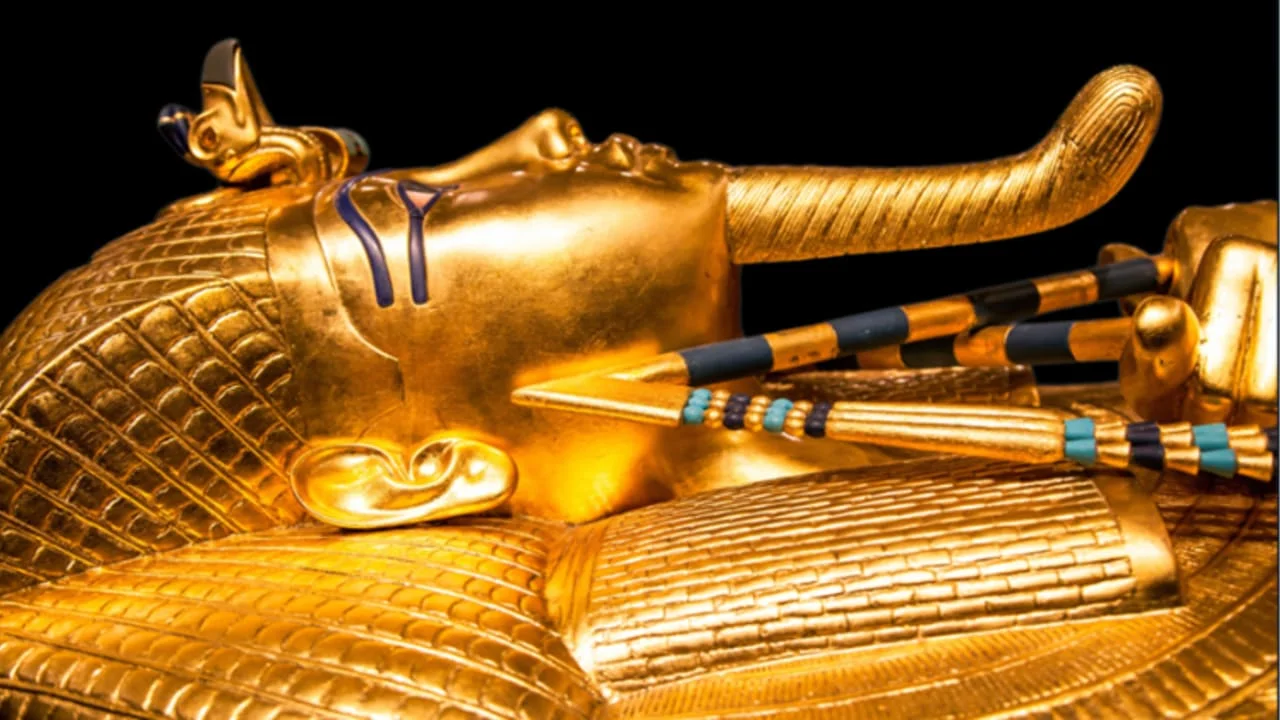
A Funerary Mask is a ritualized covering placed directly over the face and shoulders of a mummy. It is more than a portrait; it is a magical substitute head. It served to preserve the identity of the deceased, protect the vulnerable head from harm, and provide an idealized, eternal face for the soul (Ba) to recognize and reinhabit.
| Primary Purpose | Identity Preservation & Protection |
|---|---|
| Placement | Over the wrapped head/shoulders |
| Key Feature | Idealized, Divine Youth |
| Evolution | Old Kingdom Plaster → Roman Portraits |
The Face of God
In Egyptian belief, the dead were not merely "gone"; they were transforming into gods. The mask gave them the face of a god. The wide eyes, serene expression, and divine beard (on male masks) signaled that the deceased had overcome death and achieved a state of perfection and divinity.
Identity & Recognition
The Ba (soul) freely roamed the world during the day but had to return to the mummy at night. If the mummy's face was decayed or wrapped in featureless linen, the Ba might be confused and lost. The mask provided a permanent, imperishable face for the Ba to recognize, ensuring the reunion of body and soul.
Materials of Eternity
Materials were chosen for their durability and symbolic value:
| Material | Symbolism | Status |
|---|---|---|
| Gold | Flesh of the Gods (Indestructible) | Royal / Elite |
| Cartonnage | Canvas for Spell/Color | Common / Middle Class |
| Lapis Lazuli | Hair of Gods (Celestial) | Inlays (Eyes/Brows) |
The Idealized Visage
Funerary masks were rarely realistic portraits (until the Roman period). Instead, they depicted the deceased in an idealized state of eternal youth. Wrinkles, age, and illness were removed. The face was symmetrical, serene, and ageless, representing the person not as they were at death, but as they would be for eternity.
Magical Defenses
The mask was a helmet of magical protection. It often featured:
- The Nemes Headdress: The striped royal headcloth symbolizing authority.
- The Broad Collar (Usekh): A floral or beaded collar for protection.
- Protective Deities: Images of gods painted on the back or shoulders to guard the head.
Restoring the Senses
The mask was not just a cover; it was a tool. Rituals performed on the mask (like the Opening of the Mouth) were believed to transmit power to the face beneath. The wide-open eyes of the mask allowed the deceased to "see" out of the coffin and into the spirit world.
Becoming Osiris
Every mummy mask was essentially a mask of Osiris. By wearing it, the deceased identified with the god who conquered death. The divine beard (often curved at the end) indicated that the wearer had joined the ranks of the divine ancestors.
The Fayum Portraits
In the Roman Period (c. 1st-3rd Century CE), the traditional stylized mask was replaced by the Fayum Mummy Portraits. These were stunningly realistic paintings on wood panels placed over the face. They showed the deceased in Roman dress with lifelike eyes, hairstyles, and jewelry, bridging Egyptian ritual with Greco-Roman art.
Spell 151: The Mask Spell
The back of the funerary mask was often inscribed with Spell 151 from the Book of the Dead. This spell invokes the gods to protect each part of the head: "Your right eye is the Night Bark, your left eye is the Day Bark, your eyebrows are the Ennead of the Gods." It magically transforms the physical head into a divine landscape.
Encyclopedia Summary
| Object | Funerary Mask |
|---|---|
| Primary Material | Cartonnage or Gold |
| Key Function | Substitute Face for the Ba |
| Associated Spell | Book of the Dead Spell 151 |
| Late Variant | Fayum Portraits |