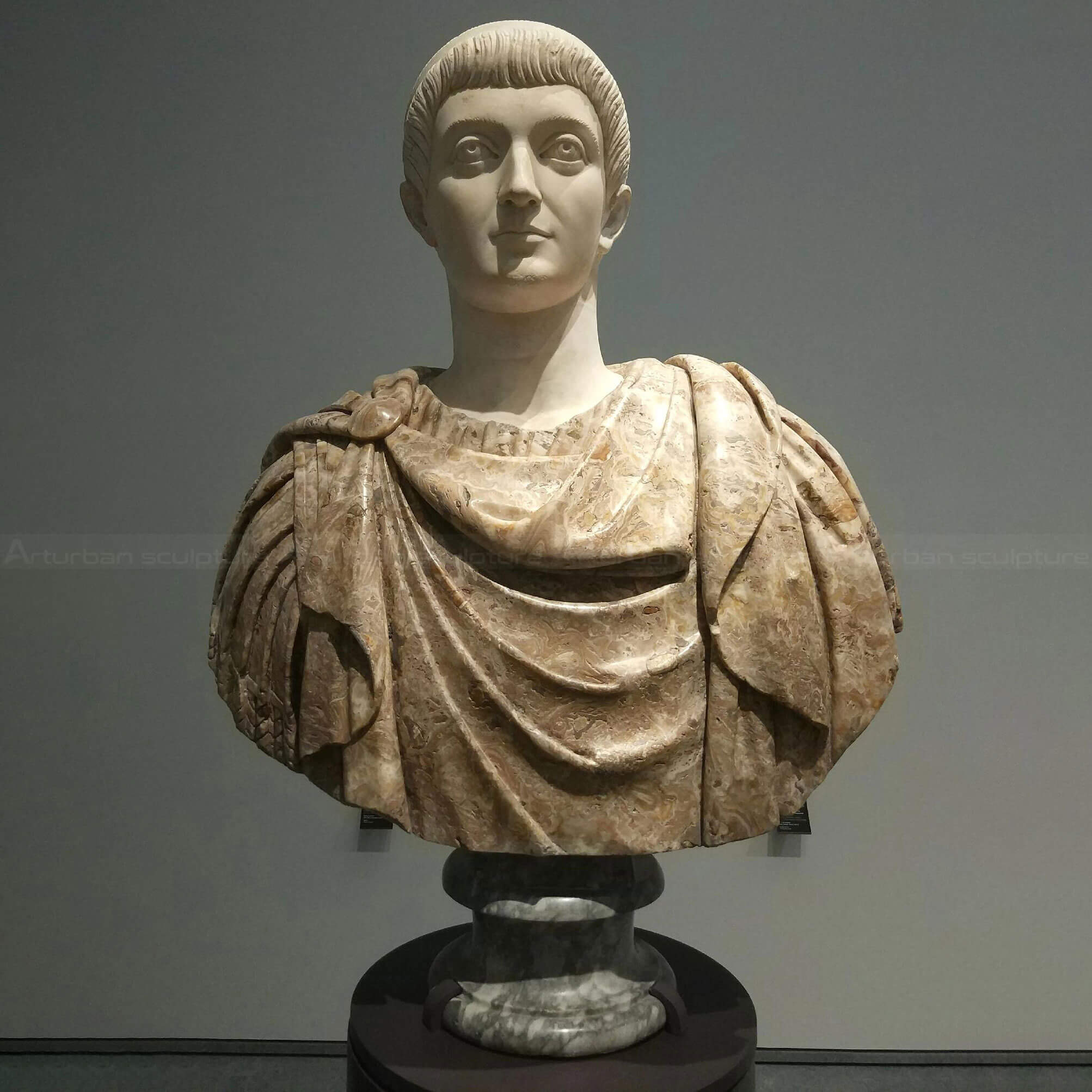
Constantine the Great
The emperor who legalized Christianity and transformed Egypt's religious landscape.
(Konstantinos — The Constant One)
🕰️ Reign
306 – 337 AD
⚖️ Legacy
🏛️ Dynasty
Constantinian
☧ Impact
Legalized Christianity
Chronological & Historical Context
Constantine the Great was a Roman emperor who ruled from 306 to 337 AD. He is best known for being the first Roman emperor to convert to Christianity and for issuing the Edict of Milan in 313 AD, which legalized Christianity throughout the empire. His policies had a profound and lasting impact on Egypt, which had a significant Christian population that had suffered under persecution.
- Reign: 306 – 337 AD (as emperor); sole emperor from 324 AD.
- Dynasty: Constantinian.
- Significance: Legalized Christianity, ended state-sponsored persecution, and laid the foundation for the Christianization of the Roman Empire.
- Predecessor: Constantius I (his father).
- Successor: His sons (Constantine II, Constantius II, Constans) divided the empire.
Name, Titles, and Identity
🔹 Birth Name: Flavius Valerius Constantinus
Constantine was born in Naissus (modern-day Niš, Serbia) around 272 AD. He was the son of Constantius I and Helena.
➡️ Interpretation: "Flavius" was the family name; "Valerius" was a name from his maternal side; "Constantinus" means "the constant one."
🔹 Titles and Epithets
- Regnal Name: Imperator Caesar Flavius Valerius Constantinus Augustus.
- Common Names: Constantine I, Constantine the Great, Saint Constantine.
- Dynasty: Constantinian.
- Religious Titles: "Equal to the Apostles" in Eastern Orthodox tradition.
Early Life & Rise to Power
Constantine's early life and military career positioned him to become the sole ruler of the Roman Empire.
⚔️ Early Life
- Birth: 27 February c. 272 AD at Naissus (modern-day Niš, Serbia).
- Parents: Son of Constantius I (a Roman army officer who later became Caesar) and Helena (later St. Helena).
- Early Career: As a youth, Constantine was at the court of Emperor Diocletian and was present when Diocletian passed through Palestine on a campaign in Egypt.
🏛️ Rise to Power
- Proclaimed Emperor: 25 July 306 AD by his father's troops in Britain.
- Reign as Emperor: 306 – 337 AD.
- Sole Emperor: 324 AD, after defeating his last rival, Licinius, uniting the entire Roman Empire under his sole rule.
The Edict of Milan (313 AD)
Constantine's single most impactful act was the legalization of Christianity, which ended centuries of persecution and transformed the religious landscape of the empire.
📜 The Edict
- Date: 313 AD, issued with his co-emperor Licinius.
- Content: Granted "both to Christians and to all others full authority to follow whatever worship each person has desired."
- Key Outcomes: Decriminalized Christian practice, ended state-sponsored persecution, restored confiscated property to Christians, and recognized them as full citizens.
- Full Religious Freedom: It was a decree for freedom of conscience and worship, making Christianity a legal religion within the empire for the first time.
⚖️ Impact
- End of Persecution: The Edict brought an end to the Diocletianic persecution, which had been particularly brutal in Egypt.
- Legal Protection: Christians could now practice their faith openly without fear of arrest or execution.
- Property Restitution: Churches and properties that had been confiscated were returned.
- Precedent: The Edict set a precedent for religious tolerance that would be enshrined in law.
Impact on Egypt
Constantine's policies had a profound and lasting effect on Egypt, which had a significant and well-established Christian community that had endured intense persecution.
⛪ End of Persecution
- Egyptian Martyrs: Egypt had suffered greatly under the persecution of Diocletian, who had declared Christians rebels and ordered the destruction of churches and sacred books.
- Coptic Calendar: The Coptic calendar begins in 284 AD, the year of Diocletian's ascension, calling it the "Anno Martyrum" (Year of the Martyrs) to commemorate this period.
- Edict's Effect: Constantine's Edict of Milan brought an end to this brutal persecution, allowing the Egyptian Church to emerge from hiding.
📈 Growth of the Church
- Legal Protection: His laws provided the peace and legal protection needed for the Egyptian Church to flourish.
- Predominant Religion: By 450 AD—just over a century after Christianity was legalized—it had become the predominant religion in Egypt.
- Imperial Patronage: Constantine funded the building of churches and appointed Christians to significant government positions for the first time.
- Coptic Perception: In Coptic literature, Constantine is remembered as the emperor who ended the great persecution and granted peace to the Church.
The Council of Nicaea (325 AD)
Constantine summoned the First Council of Nicaea, a landmark ecumenical council that established key Christian doctrines.
- Purpose: To address the Arian controversy and establish a unified Christian doctrine.
- Participants: Bishops from across the empire, including many from Egypt.
- Key Outcome: The formulation of the Nicene Creed, which affirmed the divinity of Christ and became the foundational statement of Christian orthodoxy.
- Role of Constantine: He presided over the council and played a key role in its proceedings, though he was not yet baptized.
- Egyptian Influence: Athanasius of Alexandria, a key figure in the council, would later become a leading defender of Nicene orthodoxy.
Founding of Constantinople (330 AD)
Constantine established a new capital city on the site of the ancient Greek city of Byzantium, which would become the heart of the Eastern Roman Empire.
- Location: Chosen for its strategic position on the Bosphorus Strait, controlling trade routes between Europe and Asia.
- Inauguration: Officially dedicated on May 11, 330 AD.
- Significance: Constantinople became the capital of the Eastern Roman Empire and a center of Christian culture and power for over a millennium.
- Legacy: The city would later become the capital of the Byzantine Empire and a bastion of Orthodox Christianity.
Other Reforms and Contributions
Beyond his religious policies, Constantine implemented significant secular reforms that reshaped the empire.
- Financial Reforms: Introduced a new gold coin, the solidus, which became the standard currency for centuries.
- Military Restructuring: Reorganized the army, creating mobile field armies and frontier troops.
- Administrative Reforms: Divided the empire into prefectures and dioceses, streamlining governance.
- Patronage of the Church: Funded the construction of major churches, including the original St. Peter's Basilica in Rome and the Church of the Holy Sepulchre in Jerusalem.
- Commissioning of Bibles: Ordered new copies of the Bible to be produced for the churches of Constantinople.
Family and Royal Lineage
Constantine's family connections were crucial to establishing the continuity of the Constantinian dynasty.
- Father: Constantius I Chlorus, a Roman army officer who later became Caesar.
- Mother: Helena, later known as Saint Helena, who played a key role in her son's rise and was influential in the Christianization of the empire.
- Wives:
- Minervina — mother of his eldest son, Crispus.
- Fausta — daughter of Maximian, mother of his three sons and two daughters.
- Children:
- Crispus — executed by Constantine in 326 AD.
- Constantine II — ruled the western part of the empire.
- Constantius II — ruled the eastern part of the empire.
- Constans — ruled the central part of the empire.
- Constantina — wife of Hannibalianus.
- Helena — wife of Julian the Apostate.
- Successor: His three sons divided the empire after his death.
Death and Burial
Constantine died in 337 AD, leaving a legacy that would shape the future of Europe and the Mediterranean world.
- Death: 22 May 337 AD, at Nicomedia (modern-day Izmit, Turkey).
- Baptism: He was baptized on his deathbed by Eusebius of Nicomedia, an Arian bishop.
- Burial: Originally interred in the Church of the Holy Apostles in Constantinople.
- Significance: His delayed baptism has been a subject of scholarly debate, with some suggesting he was a Christian sympathizer rather than a fully committed convert.
Legacy
Constantine's legacy is one of profound and lasting transformation, reshaping the religious and political landscape of the ancient world.
- The "Constantinian Shift": His reign marked a fundamental turning point, shifting the Roman Empire from a persecutor of Christians to a patron of the faith.
- Legalization of Christianity: His actions transformed Christianity from a persecuted minority religion into a legally protected and favored faith.
- End of Paganism's Dominance: While Constantine did not ban paganism outright, his policies began the long process that would see Christianity become the dominant religion, culminating in its establishment as the mandatory state religion in 380 AD.
- Enduring Impact on Egypt: His legalization of Christianity allowed the Egyptian Church to grow and flourish, eventually making Egypt a predominantly Christian land.
- Cultural Legacy: He laid the groundwork for a Christian culture that would come to define Europe and the Mediterranean world for centuries.
- Complex Figure: Constantine remains a complex figure—a military conqueror, a political innovator, and a religious reformer whose motivations continue to be debated.
📌 Comprehensive Summary
👑 Name: Constantine the Great (Flavius Valerius Constantinus)
🕰️ Era: Late Roman Empire (306 – 337 AD)
🏛️ Dynasty: Constantinian
⚖️ Greatest Legacy: Legalized Christianity via the Edict of Milan (313 AD); summoned the Council of Nicaea (325 AD); founded Constantinople (330 AD)
👪 Family: Father Constantius I → Mother Helena → Sons Constantine II, Constantius II, Constans
⚰️ Burial: Church of the Holy Apostles, Constantinople