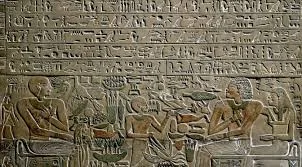
Definition & Purpose
Ascension Spells are a specialized subset of the Pyramid Texts designed to liberate the deceased King from the earth and propel him into the sky. Unlike the later "Book of the Dead" which focused on the underworld, these Old Kingdom texts were obsessed with vertical flight towards the heavens.
| Primary Goal | Rise from the Tomb to the Sky |
|---|---|
| Target Realm | The Field of Offerings (Celestial) |
| Key Metaphor | Bird flight, Ladder, Smoke |
| Ultimate State | Becoming an Akh (Effective Spirit) |
A Royal Privilege
Originating in the 5th and 6th Dynasties (c. 2400–2300 BCE), these spells were initially exclusive to the Pharaoh. The King was seen not as a mere mortal, but as a god returning home. "The King has not died the death; he has become a spirit," proclaims Utterance 213. Later, in the Middle Kingdom, these concepts were democratized in the Coffin Texts.
Ways to Reach the Sky
The texts offer multiple, often overlapping methods for the King to ascend:
| Method | Symbolism |
|---|---|
| As a Bird | Transforming into a Falcon (Horus) or Heron (Benu) to fly. |
| The Ladder | Climbing a divine ladder held by Ra and Horus. |
| Solar Barque | Boarding the boat of Ra to sail across the sky. |
| Natural Forces | Rising on smoke (incense) or riding a storm cloud. |
Among the Gods
The ascended King does not just watch the gods; he joins them as an equal. He sits on the throne of Osiris, rows the boat of Ra, and commands the stars. The texts describe the sky goddess Nut leaning down to lift him up, welcoming him as her son.
Divine Transformation
Ascension required a fundamental change in nature. The King shed his mortal shell to become an Akh (glorified spirit). The spells assert his identity aggressively: "I am Horus," "I am the Bull of the Sky." This ritual boasting was essential to convince the guardians of the sky gates to let him pass.
The Maqet Ladder
One of the most specific spells describes the Maqet, a divine ladder. The text says: "A ladder is knotted together by Ra before Osiris, a ladder is knotted together by Horus before his father Osiris, so that he may go to the sky on it." This imagery bridges the gap between the earthly tomb and the heavenly realm.
Divine Assistance
The ascent is a team effort involving the cosmos:
- Shu (Air): Lifts the king up on his arms.
- Nut (Sky): Reaches down to embrace him.
- Horus & Seth: Often depicted working together to help the king climb the ladder, putting aside their conflict.
- Ra: The destination and father figure waiting in the solar barque.
Poetry of the Stars
The language of ascension spells is soaring and poetic. "He flies who flies! The King flies away from you, O men. He is not of the earth, he is of the sky." The imagery is vast, invoking the Milky Way as a "Winding Waterway" that the king must ferry across to reach the Field of Offerings.
Triumph Over Gravity
Ascension Spells symbolize the ultimate triumph of the spirit over the physical limitations of death and gravity. They reject the tomb as a final resting place, viewing it instead as a launchpad. The pyramid structure itself was a stone machine designed to facilitate this upward trajectory.
Cosmic Politics
These spells reinforced the political dogma that the King was distinct from his subjects. His fate was cosmic, essential for the maintenance of the universe (Ma'at). By ascending, he continued to protect Egypt from the heavens, just as he did from the throne.
Mapping the Ancient Mind
Scholars study these texts to map the ancient Egyptian conception of the universe. They reveal an early stellar theology that focused on the North Star, which was later overlaid with the solar theology of Ra and the chthonic theology of Osiris, creating a rich, layered map of the afterlife.
Encyclopedia Summary
| Subject | Ascension Spells (Pyramid Texts) |
|---|---|
| Primary Goal | Union with the Sky/Gods |
| Key Symbol | The Ladder (Maqet) |
| Target Stars | Imperishable Stars (North) |
| Core Belief | Death is a Transformation, not an End |