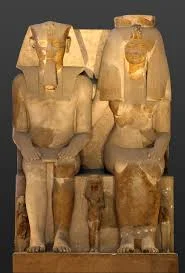
Basic Identity
Amenhotep III presided over an Egypt of unprecedented prosperity and artistic splendor. His reign is often considered the peak of the New Kingdom's power and influence, marked not by conquest, but by gold, international diplomacy, and monumental building projects.
| Throne Name | Nebmaatre (“Lord of the Truth of Ra”) |
|---|---|
| Dynasty | 18th Dynasty (Height of New Kingdom) |
| Reign | c. 1390–1353 BCE (Approx. 38 Years) |
| Capital | Thebes (Waset) |
A Golden Age
Amenhotep III is historically significant because he ruled during Egypt’s greatest era of stability. Instead of war, he practiced diplomacy; instead of expanding borders, he expanded the divinity of the king. He elevated the pharaoh to a near-divine status during his own lifetime, setting the stage for the religious revolution of his son, Akhenaten.
Royal Lineage
Son of Thutmose IV and Mutemwiya, Amenhotep III inherited a vast, secure empire while still young. With no major rebellions to crush, he was free to focus on administration and building. He married Queen Tiye, a woman of non-royal origin who became one of the most politically influential queens in history, appearing as his equal in statues and reliefs.
Diplomacy & Marriage
Amenhotep III avoided large-scale wars, preferring to maintain alliances through diplomatic marriages. He added princesses from Mitanni, Babylon, and Arzawa to his harem, cementing geopolitical ties. The famous Amarna Letters testify to his correspondence with "brother" kings who constantly asked for Egyptian gold.
Wealth of the Nile
Under his rule, tribute flowed in from the empire, and gold mines in Nubia produced vast wealth. This economic boom allowed for an explosion of art and culture. Trade routes were secure, and goods from the Aegean to Mesopotamia could be found in Theban markets.
The Dazzling Sun Disk
Amenhotep III emphasized solar theology, associating himself closely with Ra. He called himself the "Dazzling Sun Disk" and encouraged his own worship as a living god. This theological shift moved the focus of religion closer to the king and the solar disk (Aten), foreshadowing the radical changes to come.
Architecture of Glory
- Luxor Temple: He built the majestic colonnade and sun court of Luxor Temple, dedicated to the royal ka.
- Malkata Palace: A vast royal residence on the west bank, featuring an artificial lake (the Birket Habu) for the Queen’s barge.
- Artistic Style: His reign is known for "naturalistic elegance" and incredible craftsmanship.
The Colossi of Memnon
Two massive seated statues, each about 18 meters high, are all that remain of his enormous mortuary temple (which was once larger than Karnak). Known later as the Colossi of Memnon, they became legendary in antiquity for the "singing" sound one of them made at dawn due to an earthquake crack.
The End of an Era
In his later years, the king suffered from poor health, including severe dental abscesses and likely obesity. He died around his 39th regnal year and was buried in the Western Valley of the Kings (KV22). His death marked the end of the "Golden Age" and the beginning of the turbulent Amarna Period under his son Akhenaten.
Three Visions of Kingship
| King | Primary Focus | Strategy |
|---|---|---|
| Thutmose III | Empire Expansion | Military Conquest |
| Amenhotep III | Imperial Stability | Diplomacy & Wealth |
| Akhenaten | Religious Change | Radical Revolution |
📌 Visitor-Friendly Summary
Amenhotep III was the pharaoh who ruled an empire through wealth, beauty, and divine prestige. Under his reign, Egypt never looked richer.
👑 Key Title: The Magnificent Pharaoh
🌍 Strategy: Diplomacy over War
🏛️ Legacy: Luxor Temple & Colossi of Memnon